
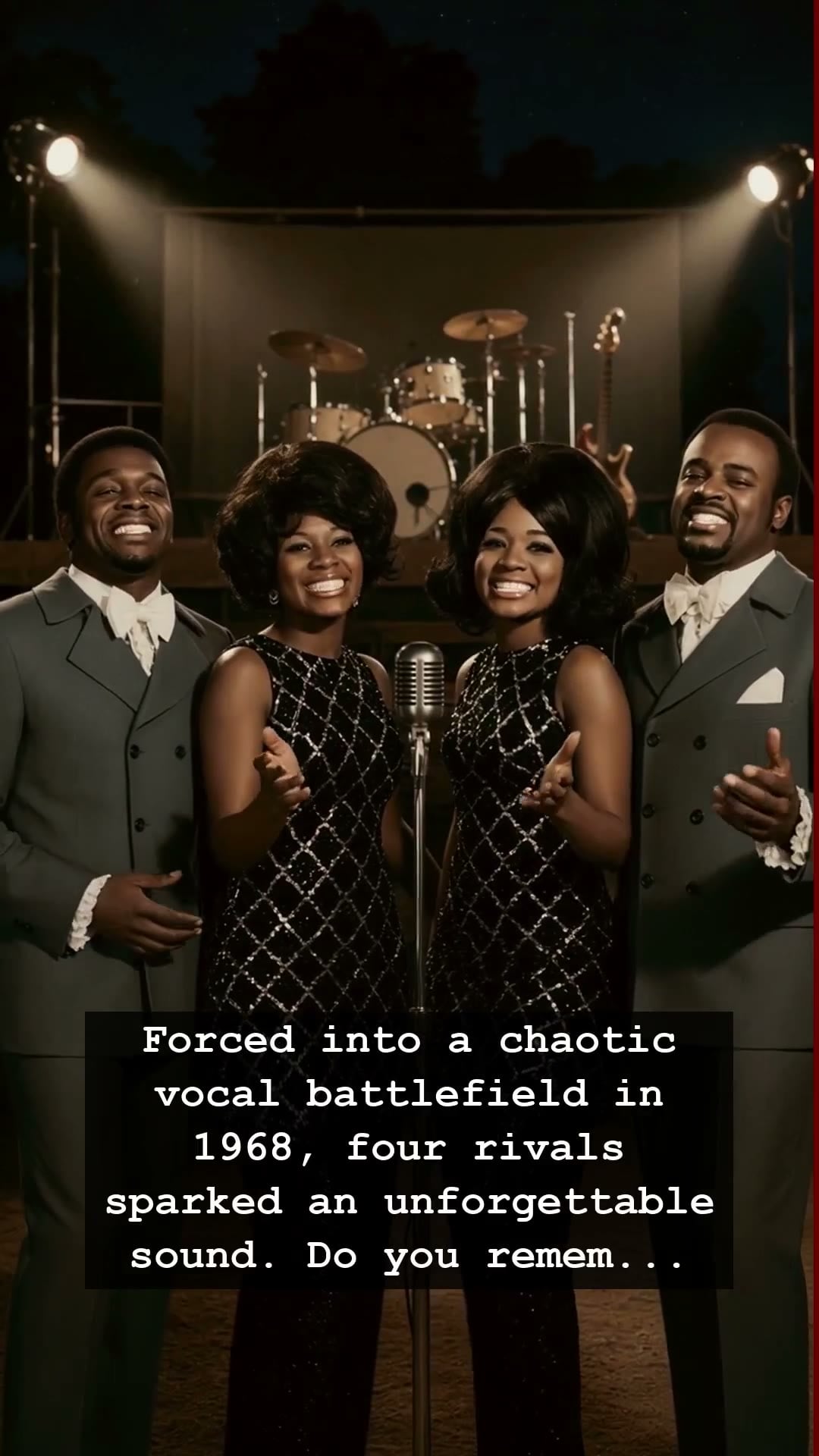
In the sweltering heat of Memphis in 1968, the air inside Stax Records was thick with more than just humidity; it was electric with the friction of clashing egos. Legendary producers David Porter and Isaac Hayes had an ambitious, perhaps reckless, plan. They gathered four gifted but fiercely rival soloists, locking them into a room with one clear ultimatum: harmonize or burn out. These four performers, destined to become The Soul Children, were not friends at the time. They were artistic adversaries, each vying for the spotlight in a landscape dominated by the radio hits of the era. The result of this forced proximity was not a meltdown, but a musical combustion that would define the Stax sound for a generation.
The Soul Children were born from this chaotic vocal battlefield, where every recording session felt like a high-stakes standoff. J. Blackfoot, Norman West, Anita Louis, and Shelbra Deane arrived with chips on their shoulders, yet the friction produced a diamond. As the needle dropped on their early tracks, the raw, unfiltered tension between them translated into a desperate, beautiful sound that resonated through every jukebox in America. They didn’t just sing songs; they performed exorcisms of their professional jealousy, weaving intricate harmonies that somehow captured the spirit of a nation undergoing rapid, often painful, change.
To understand The Soul Children is to understand the soul of 1968. It was a year of seismic cultural shifts, from the tragedy of Dr. Martin Luther King Jr.’s assassination to the rising tide of political unrest that spilled out of our television sets. While the radio waves were crowded with the polished pop of the time, The Soul Children provided a grittier alternative. Their music was a testament to the fact that when you force diamonds to form under immense pressure, the result is something that glows with a cold, hard brilliance. They were the voice of a Memphis scene that was pushing back against the polished, corporate sheen of Motown, opting instead for a sound that felt like sweat, velvet, and broken glass.
Listening to their records today—like the hauntingly soulful I’ll Understand or the rhythmic urgency of The Sweeter He Is—you can still hear the ghosts of those bitter rivals. You can hear the hunger they felt to prove themselves to one another, and ultimately, to the world. Their legacy isn’t just in the charts they climbed, but in the way they transformed their collective resentment into a shared, untouchable art form. It remains a fascinating study of how conflict can occasionally be the greatest catalyst for creative genius.
Decades later, the music of The Soul Children stands as a time capsule of an era when studio walls held more stories than the songs themselves. They remind us that the most profound beauty often emerges from the deepest friction. If you have ever felt the ache of a perfect harmony, you have felt the echoes of that legendary 1968 experiment. Go back and turn the volume up, let the needles hit the vinyl, and hear the sound of four rivals finally finding their way home.