
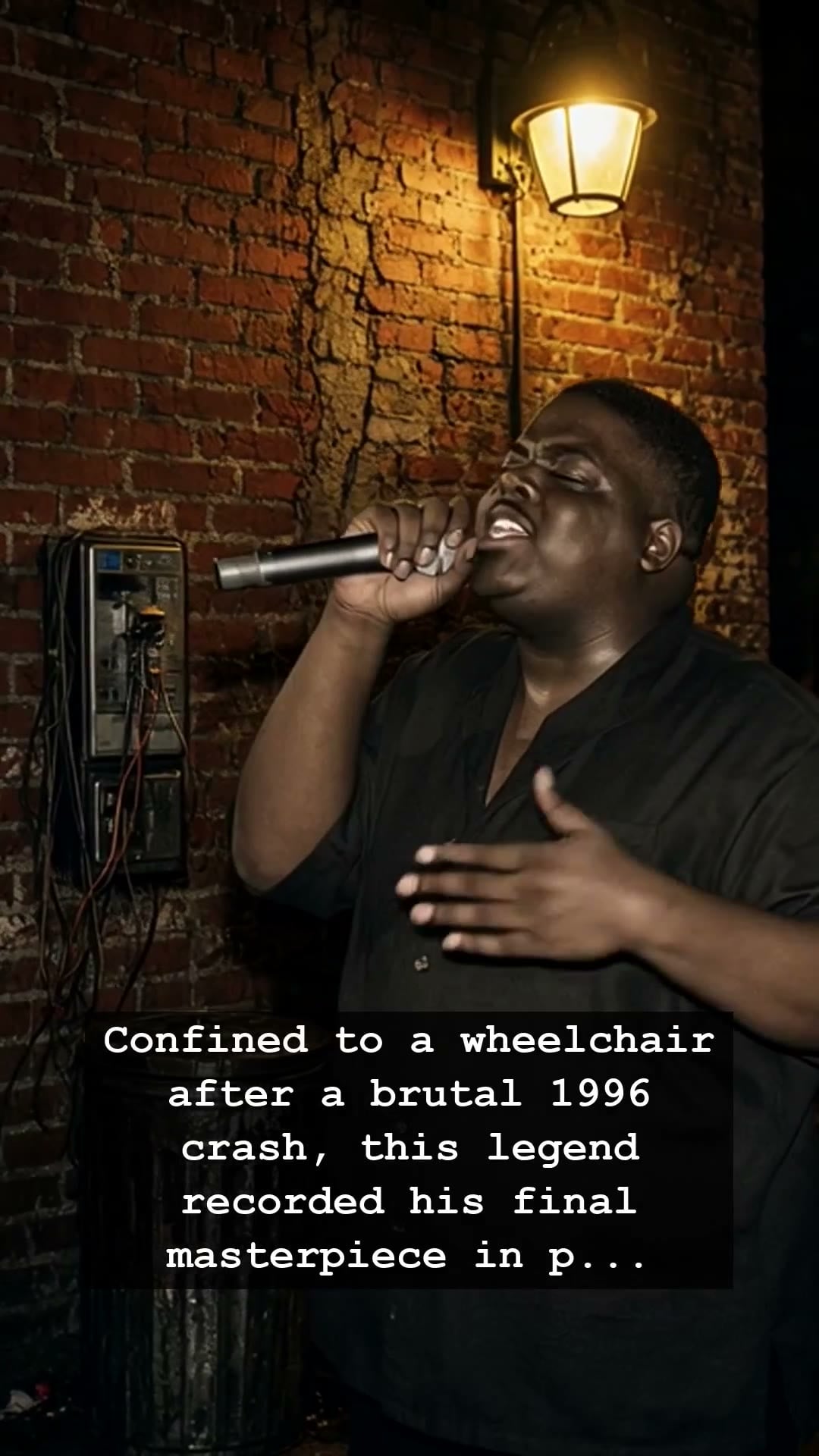
The year was 1996, and the air in New Jersey was thick with the scent of burning rubber and shattered glass. In a split second, a horrific car crash tore through the life of Christopher Wallace, better known to the world as The Notorious B.I.G. The aftermath was brutal, leaving the hip-hop titan confined to a wheelchair, his leg shattered, and his body ravaged by unimaginable pain. Most people would have retreated into the shadows to heal, but for Biggie, the rhythm of the streets and the weight of his legacy refused to let him rest. He was a man possessed by his craft, choosing to record his final, haunting masterpiece while shrouded in physical agony, proving that even a broken body could not cage a transcendent spirit.
As the golden era of nineties hip-hop reached its fever pitch, the industry was a neon-lit landscape of high-stakes rivalries and massive studio budgets. The Notorious B.I.G. stood at the epicenter of this cultural hurricane, navigating the explosive tension between the East and West Coast scenes. Behind the scenes, the pressure was relentless. When Biggie rolled into the studio, his crutches leaned against the mixing board like silent, jagged witnesses to his struggle. Yet, every time the red light flickered on, he transformed. He poured the entirety of his soul into the microphone, delivering verses with a technical precision and smooth, conversational flow that defied his fractured reality. It was a testament to his sheer force of will.
Many fans today remember the swagger, the designer suits, and the iconic cadence, but they often overlook the raw, unfiltered humanity that drove his final work. This was an era defined by the crackle of vinyl and the growing reach of MTV, where The Notorious B.I.G. became more than just a rapper; he became a cinematic narrator of urban life. He translated his own suffering and the turmoil surrounding him into poetry, capturing the essence of a generation caught between fame and fatality. The studio became his sanctuary, a place where he could escape the limitations of a body that had been betrayed by a highway accident, finding comfort only in the perfect placement of a rhyme.
His dedication during those final months remains one of the most poignant chapters in music history. The Notorious B.I.G. did not just record music; he breathed life into a vision that would define the genre for decades to come. His ability to remain focused while shrouded in pain showcased a level of artistic commitment that is rarely seen in the sanitized world of modern stardom. He was the undisputed King of New York, and even from the confines of a wheelchair, he commanded the room with the authority of a man who knew his time was fleeting.
Today, as we listen to his legendary tracks, we are not just hearing a voice from a bygone era; we are hearing the echo of a survivor who refused to surrender his creative spark. The story of The Notorious B.I.G. serves as a powerful reminder that true greatness is often forged in the most unlikely and difficult circumstances. His legacy remains etched in the foundation of music, a haunting and beautiful reminder that while artists may depart, the masterpieces they leave behind in the heat of their battle remain eternal. Close your eyes and listen closely; the King is still speaking.