
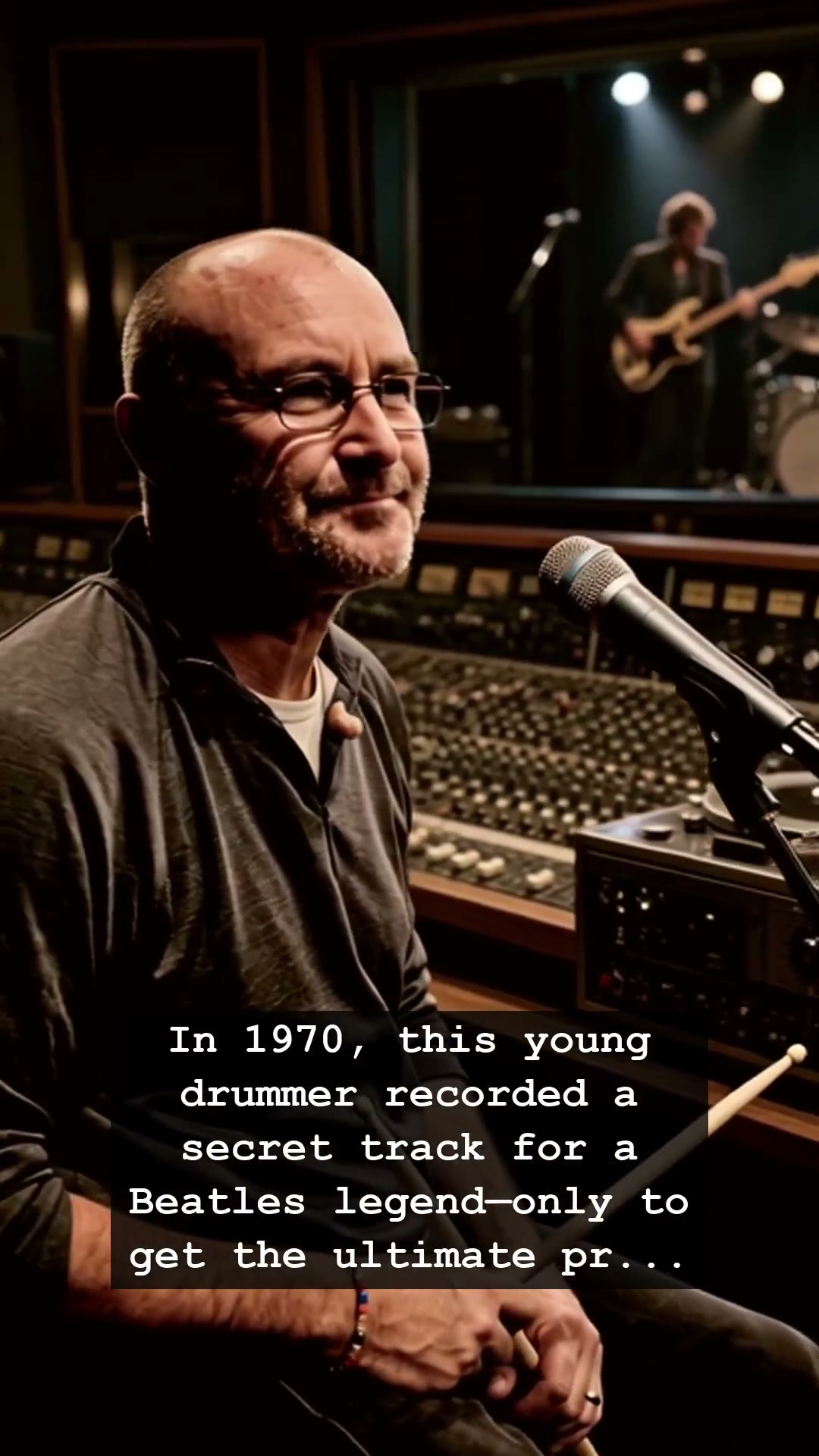
It was 1970, and the air in the studio was thick with the scent of cigarettes and the hum of analog tape machines. A young, relatively unknown drummer named Phil Collins, who would later redefine the sound of the eighties with Genesis, found himself in a dream scenario: he was invited to play congas on a track for a literal Beatle. George Harrison was recording his monumental triple album, All Things Must Pass, and he needed a specific percussion texture. For a budding musician in the London scene, this was the ultimate validation. Phil Collins threw his heart into the rhythm, layering his sound onto the track with the hope that his contribution would be immortalized on a record that would change rock history forever.
Yet, the music industry is a cruel beast, often leaving the most dedicated artists in the shadows. When the album finally hit the shelves, Phil Collins rushed to check the liner notes, his pulse racing with anticipation. But there was nothing. His name was nowhere to be found. In a move that felt like a slap in the face to his younger, ambitious self, his contribution had been completely wiped from the credits. For decades, Phil Collins lived with the sting of that mysterious disappearance, wondering if his performance had been deemed unworthy or if it was simply a casualty of the chaotic production sessions that defined the post-Beatles era.
Decades later, long after Phil Collins had become a global superstar selling out arenas worldwide, the truth finally surfaced in the most bizarre way imaginable. A package arrived at his home, containing a cryptic message that unraveled the mystery. It turned out that George Harrison, in a fit of mischievous, dry British humor, had intentionally had the percussion removed and hidden away as a long-running inside joke. It wasn’t about musical failure; it was a masterful, albeit brutal, prank that had been ticking like a time bomb for years. The realization transformed a long-held grudge into a hilarious, bittersweet anecdote about the unpredictability of fame.
This story is a window into the raw, unfiltered reality of the golden age of rock, where legends were made behind closed doors, often amidst clouds of smoke and endless experimentation. It reminds us that before the polished synths of the eighties and the global tours, these icons were just musicians navigating egos and practical jokes. For Phil Collins, the experience was a jarring reminder that even the most legendary collaborations could dissolve into nothingness, leaving behind only the rhythm in the room and a good story to tell.
Today, we look back at the era of the Jukebox and the spinning vinyl with a sense of romanticism, often forgetting the sharp edges of the industry. The incident remains a testament to the fact that rock stars, no matter their stature, were prone to the same petty grievances and playfulness as anyone else. It serves as a gentle reminder that some of the best musical history is found not in the charts, but in the forgotten archives and the secret pranks played between giants of the craft. Next time you drop the needle on a classic record, remember that behind every note, there is a lifetime of stories waiting to be unearthed.