
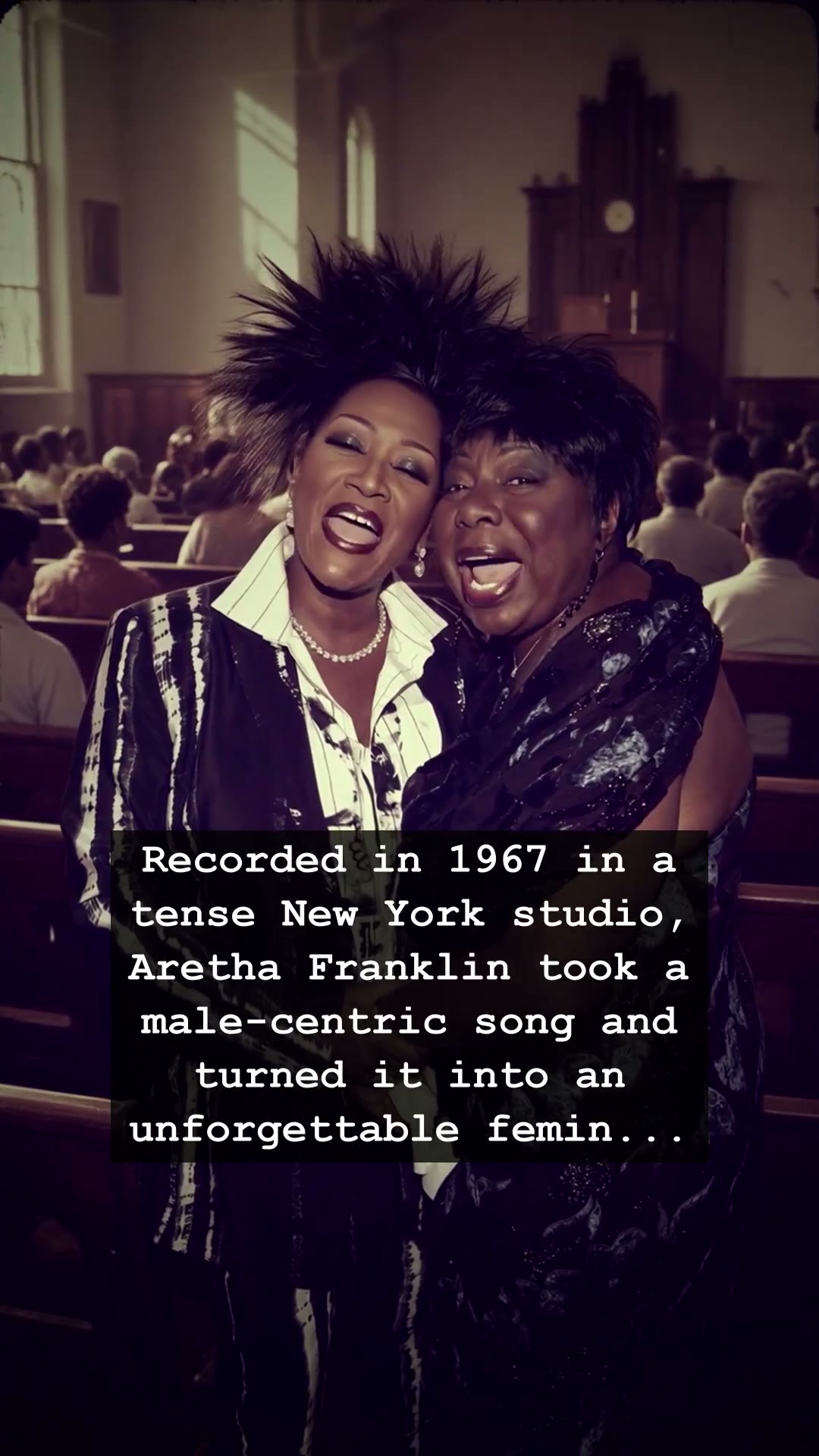
The year was 1967, and the air inside the New York City studio was thick with unspoken tension. Otis Redding had written and recorded a song called Respect, a track dripping with the perspective of a man demanding his due from a partner upon his arrival home. It was a standard soul tune of the era, but as the session progressed, a transformative force named Aretha Franklin stepped behind the microphone. With the sharp focus of a visionary, she didn’t just sing the song; she dismantled it, reassembled it, and turned it into the definitive anthem of the twentieth century. This was not merely a cover; it was a total reclamation of power.
Aretha Franklin approached the arrangement with an intensity that signaled she was finished with the status quo. Alongside her sisters, Erma and Carolyn, who provided the iconic backing vocals, Aretha added the rhythmic stutter of the R-E-S-P-E-C-T and the immortal imperative, find out what it means to me. What was once a plea for domestic obedience was suddenly transformed into a bold, defiant statement of self-worth. In an era where the Jukebox was the heartbeat of American culture, Aretha Franklin chose to speak for the voiceless, injecting a raw, feminine energy into the male-dominated landscape of 1960s soul music.
Behind the studio glass, the atmosphere was electric. This was the era of social upheaval, when the fight for civil rights and the burgeoning women’s movement were colliding with the polished veneer of radio hits. Aretha Franklin understood that her voice was a weapon against the systemic inequality of the time. By demanding respect, she captured the zeitgeist of a generation tired of being sidelined. Her performance was a masterclass in emotional endurance, channeling the weight of her own personal struggles and the collective hope of a changing nation into just a few minutes of perfectly captured audio.
The impact was instantaneous and, eventually, historical. When the track hit the airwaves, it became more than a song; it became a cultural landmark. It redefined what a woman could demand from the world, transcending the boundaries of soul and rhythm and blues. Aretha Franklin solidified her status not just as a powerhouse vocalist, but as a defining architect of American identity. Her phrasing, the commanding piano stabs, and the uncompromising gospel-infused delivery made the song impossible to ignore, leaving an indelible mark on every listener who felt unheard.
Decades later, the legacy of this 1967 session remains as vital as ever. We hear it in the echoes of protests, in the pride of new generations, and in every moment a boundary is firmly drawn. Aretha Franklin took a piece of music and gave it a soul that belonged to everyone. She proved that when art is born from authentic truth, it survives the decay of time. As we look back at the golden age of American music, we find that the most enduring anthem of them all was the one that simply asked for what was owed. The Queen of Soul didn’t just ask for respect; she taught the world how to command it, one unforgettable note at a time.