
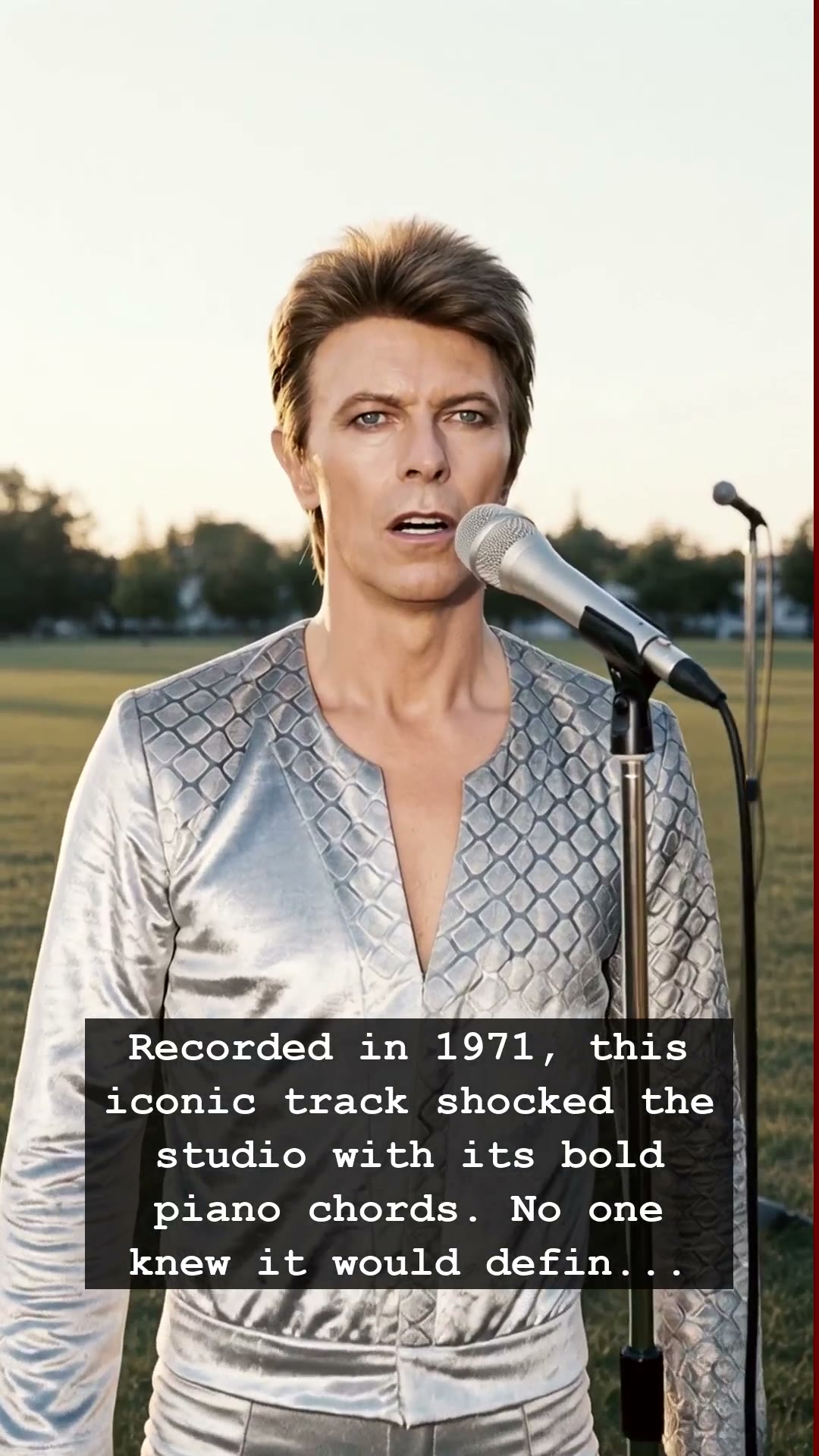
It was 1971, and the world was shivering in the cold wake of the sixties. Inside a quiet, unassuming London recording studio, a man draped in the enigma of his own imagination was about to shatter the pop music landscape. David Bowie, then a young artist flirting with obscurity, sat down at the piano. With a few sharp, crystalline chords, he didn’t just write a song; he penned a manifesto of total reinvention. That track was Changes, an anthem that would eventually cement his status as the ultimate musical chameleon, forever altering the trajectory of rock and roll history.
To understand the gravity of that moment, one must remember the atmosphere of the early seventies. The idealism of Woodstock had withered, the Vietnam War cast a long shadow, and the air felt heavy with the need for something new, something alien. David Bowie understood this better than anyone. He was not merely a musician; he was a curator of the future. When he recorded Changes for the Hunky Dory album, he wasn’t just performing; he was shedding his skin. The crisp, driving drums and those bold, signature piano stabs acted as a heartbeat for a generation that felt caught between the fading past and a neon-drenched, synthesizer-filled future.
The studio session itself was thick with anticipation. David Bowie was a master of detail, a perfectionist who demanded that every sonic texture felt intentional. He wanted to capture the dizzying speed at which the world was turning. Those listening in the control room that day couldn’t have known that they were witnessing the birth of a cultural icon. The song was a candid confession of a man who refused to be pinned down, a declaration that he would always be a stranger to his own previous incarnations. It was the antithesis of the static, predictable pop charts that dominated the airwaves at the time.
As the seventies progressed, the legacy of this track only deepened. It became the soundtrack to a decade defined by the grit of the street and the glamour of the stage. Whether you heard it drifting from a portable Walkman on a summer afternoon or felt the bass rattle your chest in a smoky club, David Bowie had managed to capture the ephemeral nature of time itself. He became the architect of his own mythology, proving that change was not just inevitable, but the only true form of artistic survival. His ability to leap from folk-rock to art-pop was revolutionary, and Changes was the fuse that lit the fire.
Today, we look back at that 1971 recording session as a pivotal turning point. David Bowie gave us permission to evolve, to fail, and to reinvent ourselves entirely. It is a testament to his genius that the song still resonates with a haunting, timeless quality, echoing through the halls of history like a ghost in the machine. As we navigate our own constantly shifting realities, we are still dancing to the rhythm that he perfected so many years ago. It is a song about growing up, letting go, and embracing the beautiful chaos of becoming someone new, long after the record stops spinning.