
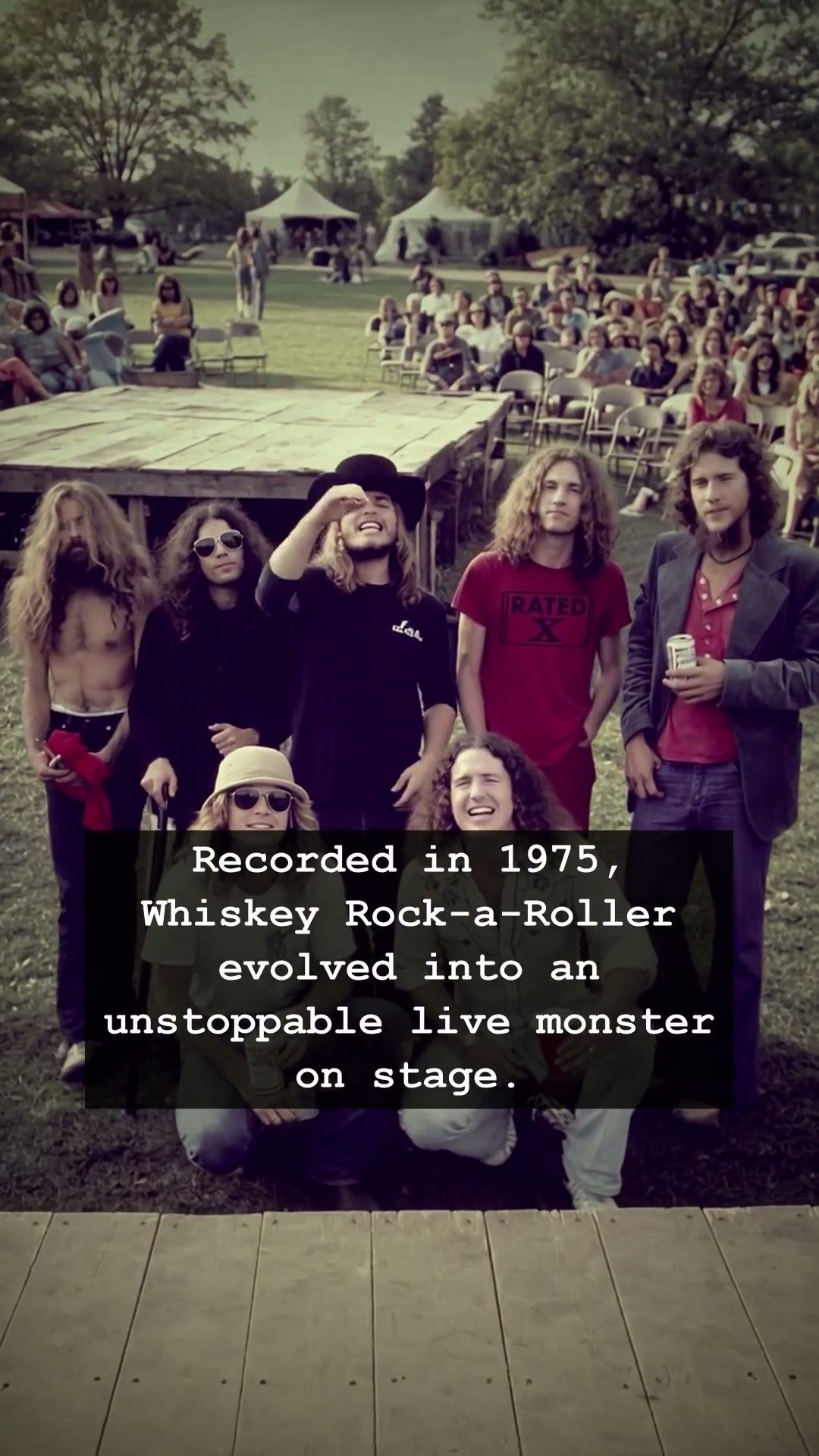
It was 1975, and the smell of cheap beer and stale cigarettes hung heavy in the air of every dive bar across the American South. On a stage somewhere in the heart of the country, a group of long-haired rebels known as Lynyrd Skynyrd were busy crafting more than just music; they were forging a lifestyle. Amidst the chaos of their rehearsals and the mounting pressure to follow up their massive hits, a gritty, hard-driving track called Whiskey Rock-a-Roller was born. At the time, nobody realized that these jagged, rebellious slide guitar solos would eventually transform into an unstoppable live monster, stretching well past the six-minute mark and searing themselves into the collective memory of a generation.
Lynyrd Skynyrd was never meant to be polite. They were the voice of the working class, a band that lived hard, played louder, and defied the polished expectations of the mainstream music industry. While the disco craze of the mid-70s was beginning to dominate the charts and the flashing lights of Studio 54 promised a glamorous escape, Ronnie Van Zant and his bandmates remained firmly rooted in the dirt and grit of reality. Whiskey Rock-a-Roller captured that specific tension—the push and pull between the desire to escape through a bottle and the relentless drive to make it big on the road.
The magic of this song, and much of the band’s catalog, lay in its unpredictability. During their live performances, the song became a living, breathing beast. When the slide guitar took over, the audience didn’t just listen; they surrendered to the momentum. It was in these moments, under the sweat-drenched heat of stage lights, that Lynyrd Skynyrd cemented their legend. The track was a testament to the band’s technical prowess and their refusal to be confined by the standard three-minute radio edit. They played for the people in the front row and the outcasts in the back, ignoring the ticking clock of the studio executives.
Looking back, it is impossible to separate the music of Lynyrd Skynyrd from the tragedy and triumph that defined their journey. The band was a brotherhood forged in fire, living a life that was as volatile as their sound. Their influence spread like wildfire, touching fans who traded their vinyl records like gold and obsessed over the intricate guitar interplay that defined the Southern Rock era. To hear that slide guitar kick in today is to be transported directly back to a time when music felt dangerous, raw, and incredibly honest.
Even decades later, Whiskey Rock-a-Roller stands as a monument to a band that never compromised their vision. They lived by their own code, fueled by high-octane rock and an unwavering dedication to their craft. Whether you were there in the front row or discovered them later through a crackling cassette in an old Walkman, the impact remains the same. Lynyrd Skynyrd didn’t just play rock and roll; they lived it, leaving behind a legacy that continues to echo through the halls of music history. As the final notes fade away, we are reminded that some songs were never meant to end.