
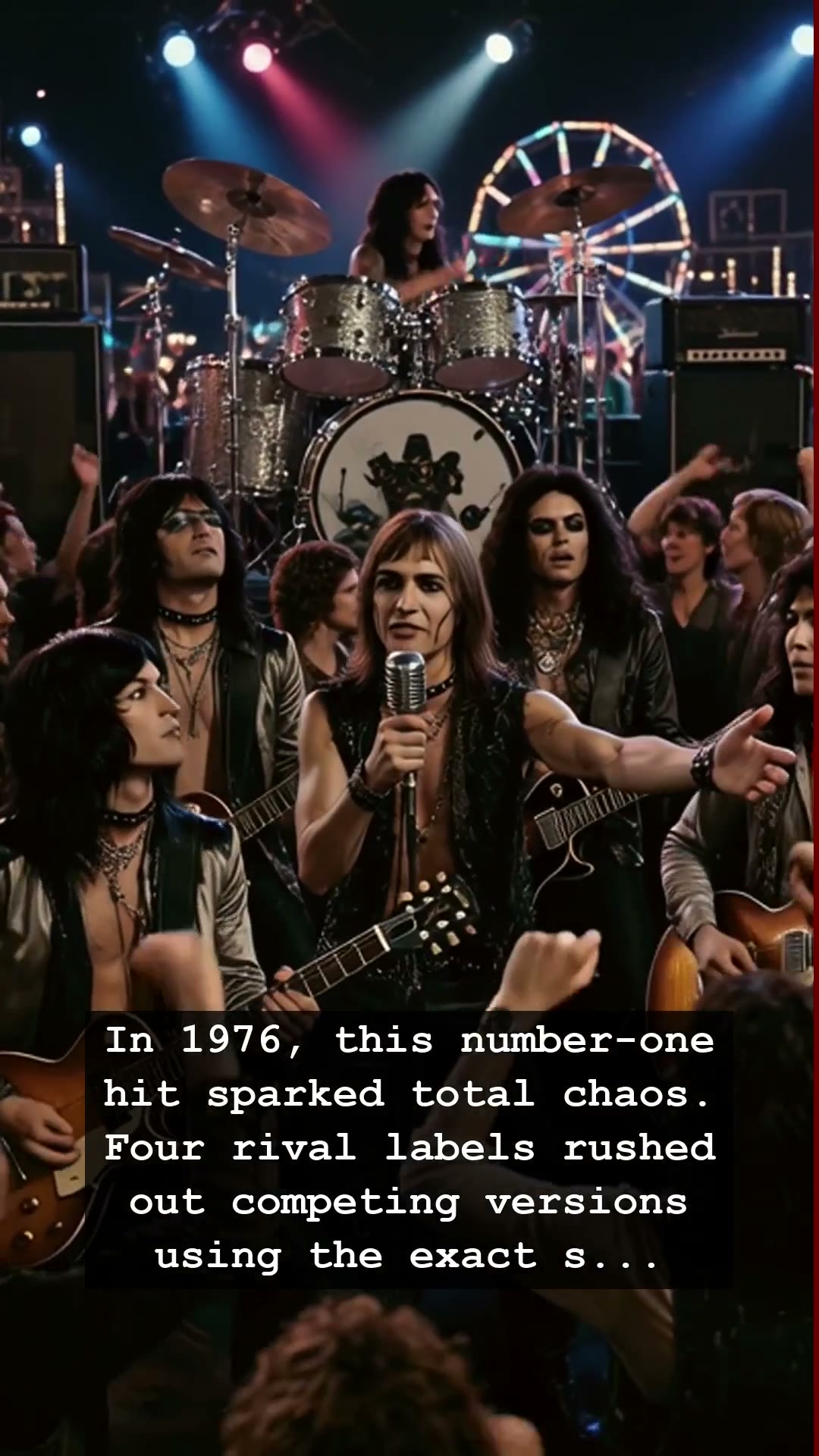
In 1976, the Canadian music industry erupted into a bizarre, high-stakes battle that would baffle even the most hardened executives today. It was the era of the Jukebox and the spinning vinyl record, a time when a catchy hook could turn a local artist into an overnight sensation. The song in question was a gritty, high-energy track that caught fire, creating a frantic scramble among record labels. In a desperate move to capitalize on the buzz, four rival labels rushed to release competing versions of the same song using the exact same backing track. It was chaos, and right in the middle of this madness was a sixteen-year-old kid with a raspy voice and a hunger for the stage: Bryan Adams.
Before he was filling stadiums around the world with anthems like Summer of ’69, Bryan Adams was the young frontman for a rock group called Sweeney Todd. The band had found a lightning-in-a-bottle moment with their hit song Roxy Roller. While the song itself was undeniably catchy, the corporate maneuvering behind it was cutthroat. Because the instrumental track was so infectious, producers thought they could swap out the lead vocals to create multiple radio-ready hits. This decision triggered a fierce rivalry that played out across Canadian airwaves, pitting the original Sweeney Todd version against a sea of copycats, leaving fans confused and labels fighting for supremacy.
For a teenager like Bryan Adams, the experience was a brutal crash course in the reality of the music business. He was suddenly caught in a crossfire of lawsuits and competing press releases. This was an era before the internet, where the struggle for airtime was fought in back rooms and smoky studio corridors. The sheer audacity of four labels pushing the same backing track is something that feels almost impossible in our modern streaming age, yet it remains a defining, if chaotic, chapter of 1970s rock history. It was the perfect storm of commercial greed meeting pure, unfiltered rock and roll energy.
Looking back, this 1976 incident highlights the desperation that often lurked behind the glossy surface of the music industry. While the technology of the day relied on physical tapes and analog warmth, the competitive drive was as sharp as any digital-era rivalry. Bryan Adams navigated this turbulence with a raw determination that would eventually define his legendary career. Sweeney Todd might have been a short-lived vehicle, but it provided the bedrock of experience necessary for a future superstar to survive the pressures of international fame.
Today, we look back at the 1976 Roxy Roller wars as a fascinating relic of a wilder time. It reminds us that every legend has a story of struggle and bizarre industry politics hidden in their past. As the needle drops on a scratchy vinyl copy of that original recording, you can almost hear the youth and the ambition of a young Bryan Adams, blissfully unaware of the global icon he was destined to become. It serves as a gritty, honest reminder that the road to stardom is rarely a straight line; sometimes, it is a chaotic scramble fueled by nothing but a great melody and a little bit of bad luck.