
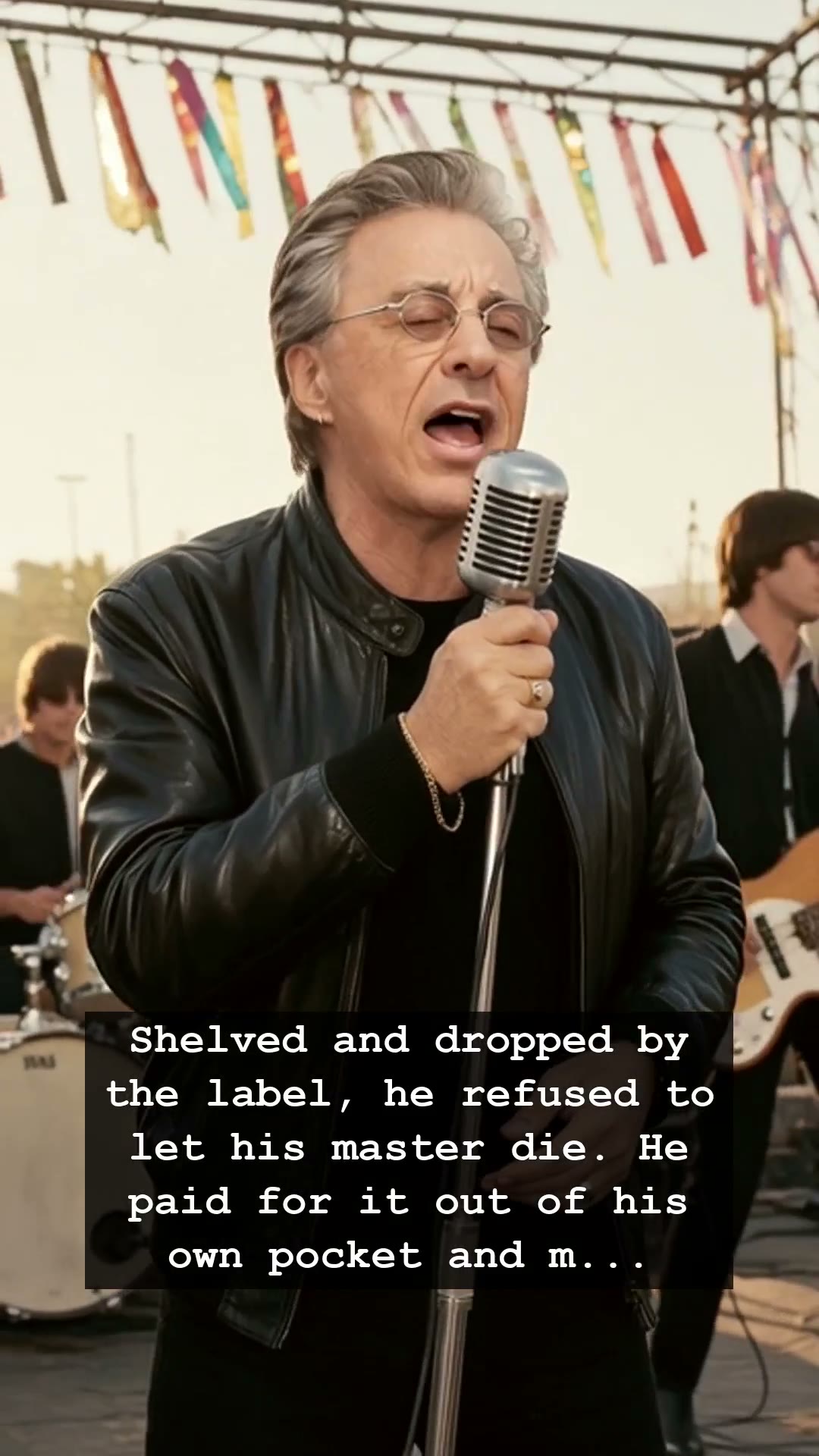
Picture the scene in the mid-1970s. The jukeboxes were humming with the slick, polished sounds of a changing musical landscape, and the industry was becoming a cold, corporate machine. Frankie Valli, the golden-voiced icon behind The Four Seasons, found himself staring into the abyss of artistic rejection. After years of defining the sound of a generation, the suits at Motown Records decided his new work wasn’t the sound they wanted to sell. They shelved his master recordings, effectively killing his comeback before it could even breathe. To the executives, it was just business—another tape relegated to a dusty shelf. To Frankie Valli, it was a tragedy, a masterpiece silenced by the stroke of a pen.
Most artists would have folded under the pressure of such a public dismissal. The music industry in that era was brutal, often chewing up legends and spitting them out once they stopped producing guaranteed hits. But Frankie Valli possessed the stubborn grit of a man who grew up on the hard streets of New Jersey. He knew exactly what he had in those shelved tapes. It wasn’t just a record; it was a testament to his evolution as an artist. Refusing to let his song fade into the shadows of obscurity, he made a move that would define his legacy. He reached into his own pockets and pulled out four thousand dollars—a staggering sum at the time—to buy back the rights to his own work from the label that had discarded him.
It was a gamble of epic proportions, a desperate, high-stakes bet on his own talent. He was effectively betting his life savings on a song that the industry giants had deemed unworthy of the airwaves. With no label support, no marketing machine, and the weight of failure looming over him, Frankie Valli pushed the track forward. He navigated the murky waters of distribution and independent promotion, driven by nothing but sheer instinct and an unwavering belief in the music. It is a story that feels like it belongs in a gritty, cinematic drama, reflecting the raw, behind-the-scenes turmoil that defined the lives of mid-century icons caught between artistic passion and cold commercialism.
Then, the impossible happened. The track didn’t just find an audience; it exploded. It climbed the charts with a momentum that left the record executives baffled and humbled. The song became a massive number one hit, proving that the heart of a true performer can triumph over the short-sighted calculations of the board room. That moment of victory wasn’t just about the charts; it was a triumphant reclaiming of agency in an industry that rarely allows artists to dictate their own fate. It stands as one of the most satisfying underdog stories in the annals of pop music history.
Today, we look back at the career of Frankie Valli and see the echoes of that defiance in every note. It serves as a reminder that the most enduring music is often born from personal stakes and authentic struggle. Whether you remember hearing it on a crackling transistor radio or discovering his voice later, the story of this legendary crooner remains a beacon for anyone who has ever been told that their dream was over. He didn’t just sing a hit; he fought for it, and in doing so, he cemented his place in the pantheon of American music forever.