
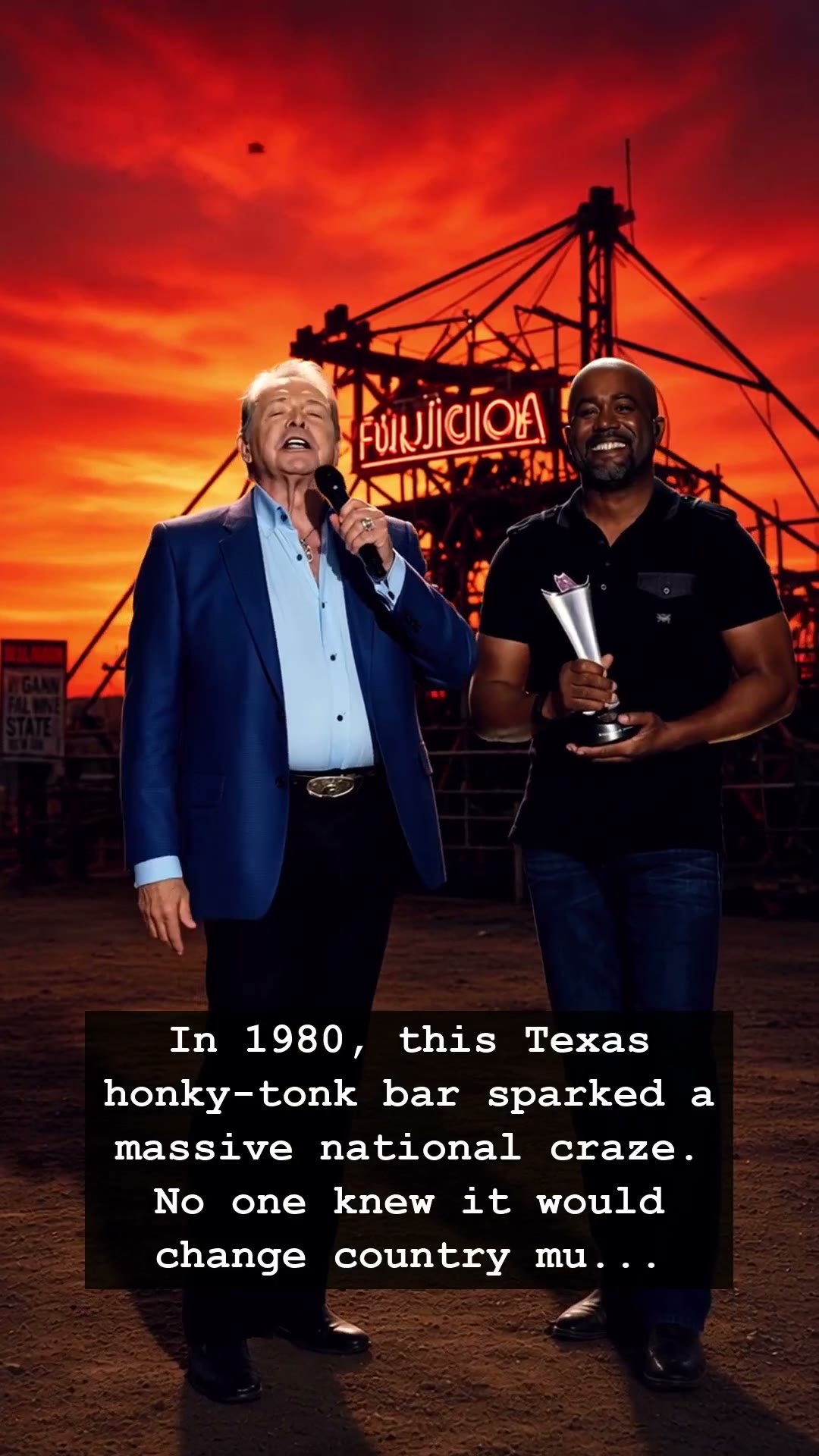
It was 1980, and the air inside a sprawling, unassuming Texas honky-tonk was thick with the scent of sawdust, cheap beer, and the unmistakable tension of a cultural revolution. Music executives in Nashville were terrified, watching their polished, conservative grip on country music slip away as a phenomenon erupted from the heart of Pasadena, Texas. This wasn’t just another bar; it was Gilley’s, the brainchild of cousin-of-a-legend Mickey Gilley. What started as a local drinking spot for blue-collar workers transformed into the epicenter of the Urban Cowboy craze, a movement that would tear down the walls between traditional country and mainstream pop music overnight.
Mickey Gilley, already a seasoned piano player, suddenly found himself at the helm of the most famous honky-tonk in the world. As the iconic mechanical bull began to throw patrons in the center of the dance floor, the sound of the era shifted. With the release of the film Urban Cowboy, Mickey Gilley became the face of a new generation. His smooth, soulful take on country standards didn’t just fill jukeboxes; it defined a lifestyle that saw polyester shirts and Stetson hats flooding the suburban landscape. The sheer audacity of his success sent shockwaves through the industry, proving that country music wasn’t just for the rural hills anymore—it was ready for the bright lights of the city.
Yet, behind the neon lights and the rotating dance floor, the story was far more complex. The massive influx of fame brought an intense spotlight on Mickey Gilley, creating a whirlwind of pressure and expectation that rarely accompanies the life of a bar owner. There was a raw, authentic energy to those nights at Gilley’s, but it was also a place where the line between genuine musical expression and commercial artifice blurred. Executives scrambled to replicate the success, but they could never quite capture the lightning in a bottle that Mickey Gilley had cultivated within those four walls. It was a golden age of excess, where the spirit of the late seventies disco movement collided head-on with the rootsy tradition of Texas honky-tonk.
Looking back, the legacy of that era remains etched in our collective memory like a grainy photograph of a crowded dance floor. It was a time when the world seemed to hold its breath, caught between the analog grit of the past and the flashy, MTV-saturated future that was just around the corner. Mickey Gilley stood as the bridge between those two worlds, a musician who understood that fame was fleeting, but the impact of a song could linger for decades. Whether you spent your nights gripping the rope of that mechanical bull or just heard the music drifting from a local tavern radio, the influence of that period is impossible to deny.
Today, when we hear the signature piano licks that made Mickey Gilley a household name, we aren’t just listening to a hit song. We are transported back to a time of unfiltered ambition and a seismic shift in American culture. It is a reminder that sometimes the biggest revolutions don’t start in a high-end recording studio in Nashville or Los Angeles, but in a dusty corner of Texas, led by a man who knew exactly how to make a crowd dance. Do you still remember the heat of that era?