
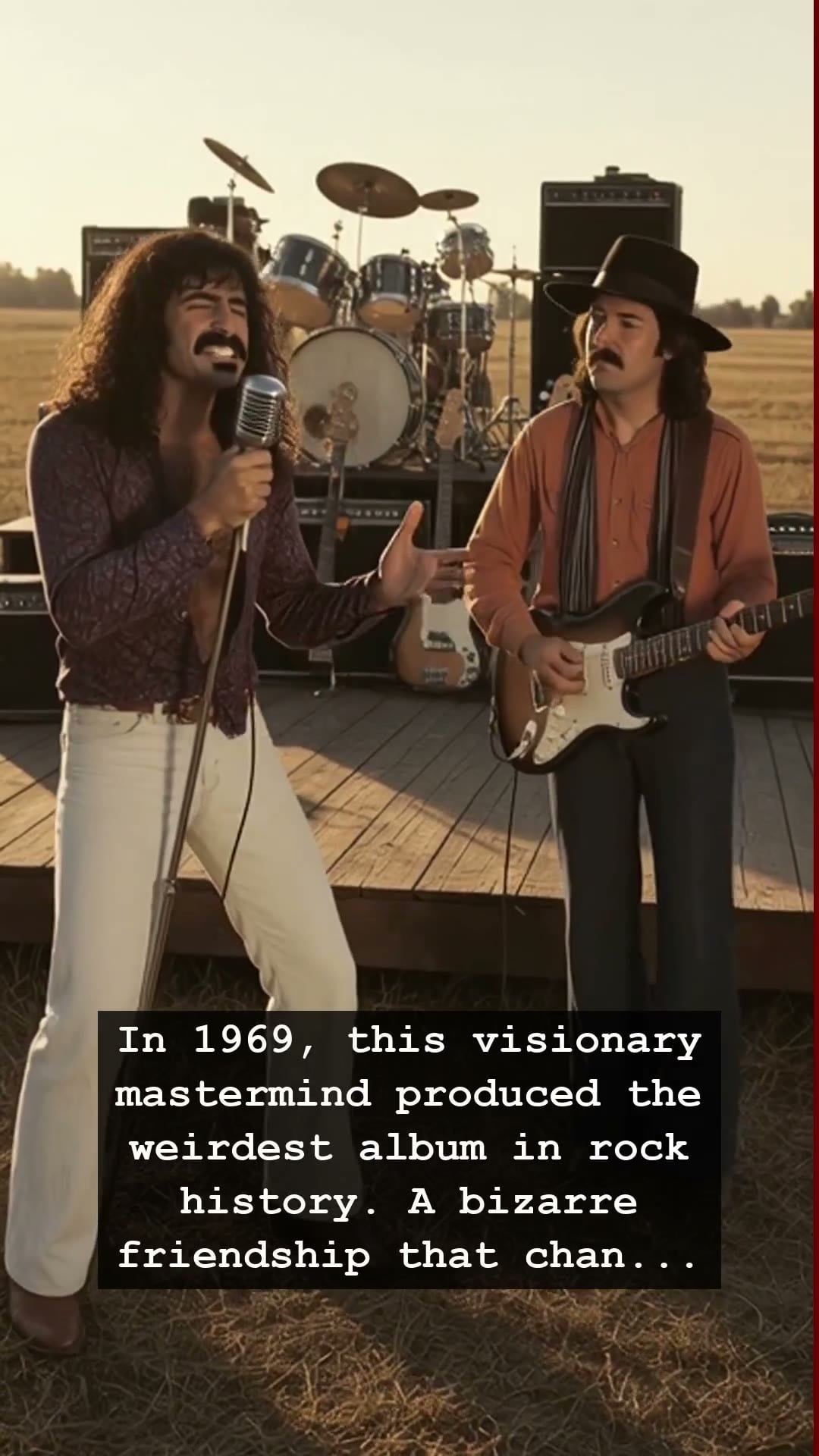
In 1969, while the world was distracted by the psychedelic haze of Woodstock and the fading echoes of the Summer of Love, two childhood friends were busy concocting something entirely different. They locked themselves in a dimly lit studio, fueled by an uncompromising vision and a shared sense of the absurd. The result was Trout Mask Replica, an album that remains arguably the most difficult, chaotic, and revolutionary piece of music ever pressed onto vinyl. This was the moment Frank Zappa, the mastermind of experimental satire, decided to produce his longtime companion, Don Van Vliet, better known as Captain Beefheart, in a collision of avant-garde madness that would baffle critics and thrill cult followers for generations.
The dynamic between Frank Zappa and Captain Beefheart was not your typical rock and roll partnership. It was a volatile mix of deep-rooted affection and creative tyranny. Growing up together in the high-desert landscapes of California, they bonded over bizarre radio broadcasts and R&B records that few others understood. By the time they entered the studio, Zappa had already established himself as a composer of immense stature, yet he deferred to the eccentric genius of Captain Beefheart to lead this sonic experiment. The recording process was nothing short of a psychological endurance test. The Magic Band members were effectively sequestered, living in a communal house and practicing for hours on end under the Captain’s intense, sometimes grueling, direction, all while Zappa navigated the logistics of capturing their frantic, disjointed energy.
To understand the magnitude of this project, one must place it in the context of the late sixties. While mainstream radio was gravitating toward the polished sounds of AM pop and the nascent arena rock movement, this collaboration stood as a deliberate affront to convention. It was an era defined by the crackle of the Jukebox and the rising influence of FM radio, yet this album defied any format. It was a jagged, polyrhythmic, and atonal assault on the senses that mirrored the growing cynicism and complexity of the American cultural landscape. For those brave enough to listen, it was not just music; it was a radical dismantling of what rock could actually be.
What makes the story of Frank Zappa and Captain Beefheart so compelling today is the absolute lack of compromise. In an age where digital production allows for endless refinement, there is something deeply nostalgic and human about the raw, unfiltered friction of their 1969 sessions. The album was not intended to be a hit. It was a challenge to the listener, an invitation to discard their expectations of melody and structure. Decades later, it remains a touchstone for experimental artists, proving that genuine creativity often thrives in the shadows of the avant-garde rather than in the spotlight of fame.
Even now, the legacy of their work hangs in the air like the smoke of an old club. It reminds us that behind the greatest legends of our history lie messy, human stories of friendship and creative obsession. If you ever find yourself looking for a record that refuses to play by the rules, turn back to the weirdness of 1969. Frank Zappa and Captain Beefheart did not just make an album; they left behind a jagged, unforgettable scar on the history of music, one that still demands we pay attention.