
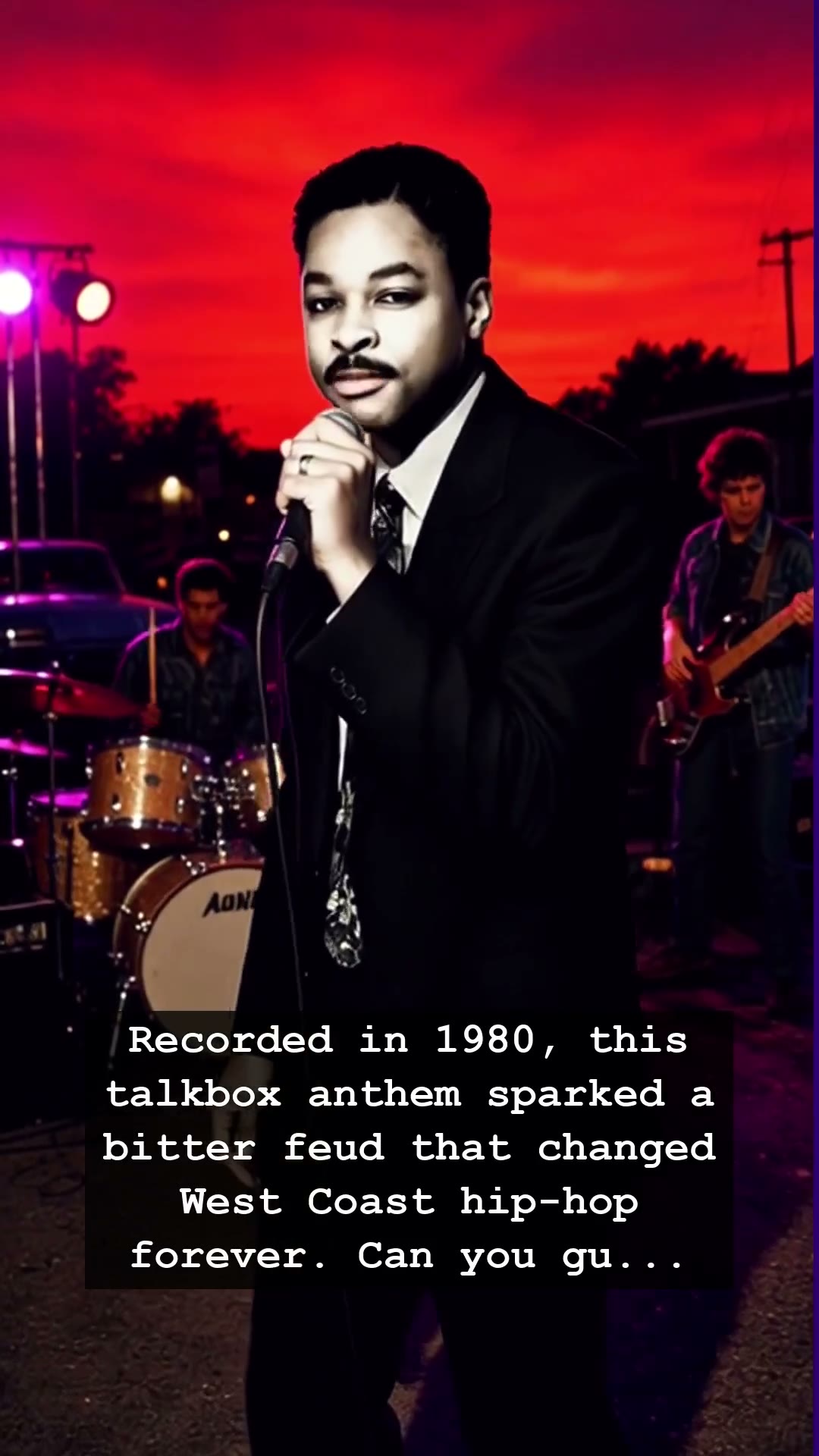
It was 1980, a time when the Jukebox still reigned supreme in local diners and the synthetic hum of the future was just beginning to bleed into the grooves of American soul. Out of the speakers came a sound like nothing else on earth—a voice that was neither human nor machine, warped through a plastic tube and a pedal. This was the revolutionary talkbox sound of Roger Troutman, the man who redefined funk and accidentally laid the sonic foundation for the West Coast hip-hop explosion. While the world danced to the slick, robotic melodies of More Bounce to the Ounce, few knew that beneath the polished veneer of Zapp’s success lay a landscape of bitter professional rivalries and an intense, almost obsessive perfectionism that would eventually fracture the very soul of the band.
Roger Troutman was more than just a musician; he was a sonic architect who treated his talkbox like an extension of his own vocal cords. Growing up in the shadow of the Ohio funk scene, he brought a gritty, industrial precision to the smooth Motown sensibilities of the era. However, the rise of his fame brought sharp friction. Internal band dynamics were constantly under fire as Roger’s iron-fisted leadership often collided with the creative aspirations of his own siblings. This tension was the dark fuel that powered their records, creating a sound that felt both celebratory and deeply claustrophobic. It was an era where fame was a double-edged sword, cutting as deep into personal relationships as it did into the charts.
When the golden age of G-funk arrived later in the decade, the industry looked back to Roger Troutman’s 1980s catalog as the holy grail of sampling. Artists like Dr. Dre and Tupac Shakur turned his forgotten melodies into the anthems of a generation, effectively anchoring the West Coast sound in the legacy of a man who had already pushed the boundaries of instrumentation decades prior. Yet, this revival was bittersweet. The feud that emerged between Roger and former collaborators regarding songwriting credits and royalties mirrored the larger, often ugly disputes that defined the hip-hop industry during the nineties. It was a clash between the legacy of analog funk masters and the aggressive new wave of hip-hop stardom.
The tragedy of Roger Troutman’s life is that he never truly got to see his final evolution. In 1999, his life ended in a senseless act of violence that left the music world in complete shock. The man who taught the world how to make a synthesizer weep was gone, leaving behind a legacy that remains inextricably linked to the history of West Coast street culture. He was a pioneer who lived through the transition from the era of disco balls to the gritty, bass-heavy reality of modern rap.
Today, whenever you hear that unmistakable, wavering voice cut through a track, you are listening to the spirit of Roger Troutman. He remains the king of the talkbox, a visionary whose life was a series of creative triumphs and heartbreaking conflicts. His music continues to echo through the halls of history, a haunting reminder that behind every legendary hook is a human story of struggle, innovation, and the relentless pursuit of perfection. As the needle drops on another record, we remember the man who turned a simple tube into an instrument of pure emotion.