
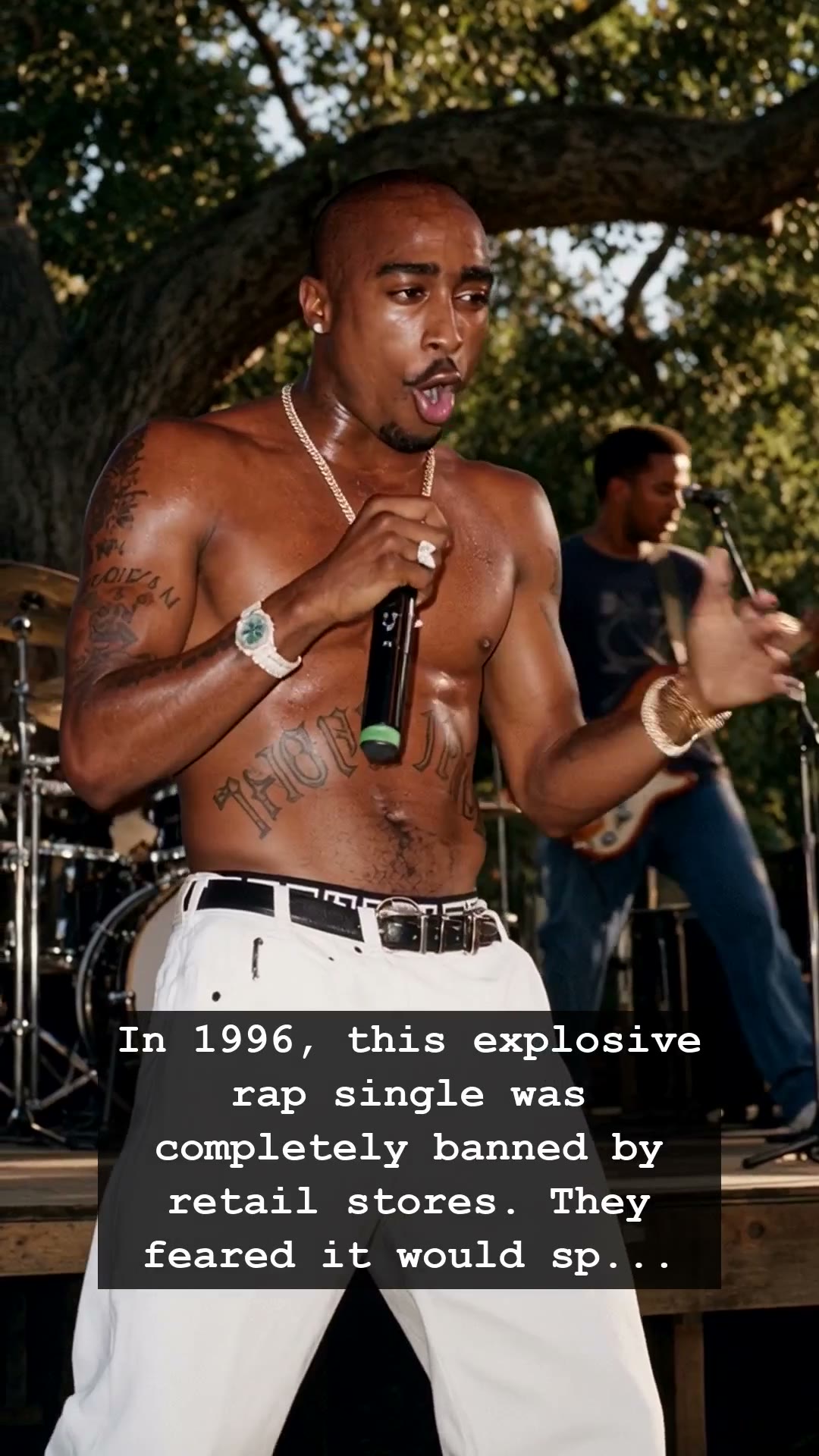
In the sweltering heat of the summer of 1996, a piece of plastic encased in a cassette shell became the most dangerous object in America. Retailers across the nation made a collective decision that echoed through the halls of suburban malls and urban record stores alike: they would not stock the single. It was not just a song; it was perceived as a powder keg. Tupac Shakur, a poet of the streets whose words carried the weight of a thousand grievances, had unleashed a recording so visceral and so targeted that the powers that be feared it would ignite an all-out war on the streets. For those who remember the crackle of a Walkman and the ritual of hunting for tapes in independent shops, this moment remains etched in history as the pinnacle of the East Coast versus West Coast rivalry.
The song in question was a masterclass in aggression and raw honesty. Tupac Shakur did not just rap; he threw down a gauntlet. In an era where MTV was the ultimate arbiter of cool and radio airplay could make or break a career, being banned from retail shelves was supposed to be a death sentence. Instead, it turned the track into forbidden fruit. Young listeners, hungry for the unfiltered truth of the streets, retreated into underground networks, trading copies like illicit currency. The cultural tension of the mid-nineties was palpable, and Tupac Shakur stood at the center of the storm, a man fueled by paranoia, passion, and an unrelenting need to express his reality, no matter the consequences.
Looking back, the controversy feels like a lightning rod for the era. The late twentieth century in hip-hop was a time of immense artistic achievement shadowed by deep-seated personal feuds and systemic scrutiny. Tupac Shakur was the face of this duality—a Shakespearean figure of hip-hop who could swing from soulful introspection to lethal rhetoric in a single verse. The banning of his track was not merely about the content; it was a societal reaction to the power he wielded over a generation. Major retail chains were terrified of being held responsible for the fallout of a lyrics-driven conflict, proving just how much influence this man held over the public consciousness.
The memory of those days is inseparable from the tactile nature of the music industry back then. You did not just download a file; you held the artwork, you read the liner notes, and you felt the texture of the cassette tape. The fact that fans had to go through such lengths to get their hands on a Tupac Shakur record only added to the legend. It turned a simple musical release into a piece of underground lore that defined the nineties, a decade that felt like it was moving toward an inevitable, high-stakes collision.
Even today, the legacy of that moment resonates because it highlights a time when music still carried real-world danger. Tupac Shakur may have been silenced by the industry, but he proved that the truth cannot be contained by store shelves. As we look back at the history of those electric times, we are reminded that some voices are too loud to be muted by bureaucracy. His music remains a vital, complicated part of the American story, echoing from the golden age of hip-hop into the present day. If you listen closely, you can still hear the intensity that once shook the foundations of the music industry, reminding us all of the power of a single, unstoppable voice.