
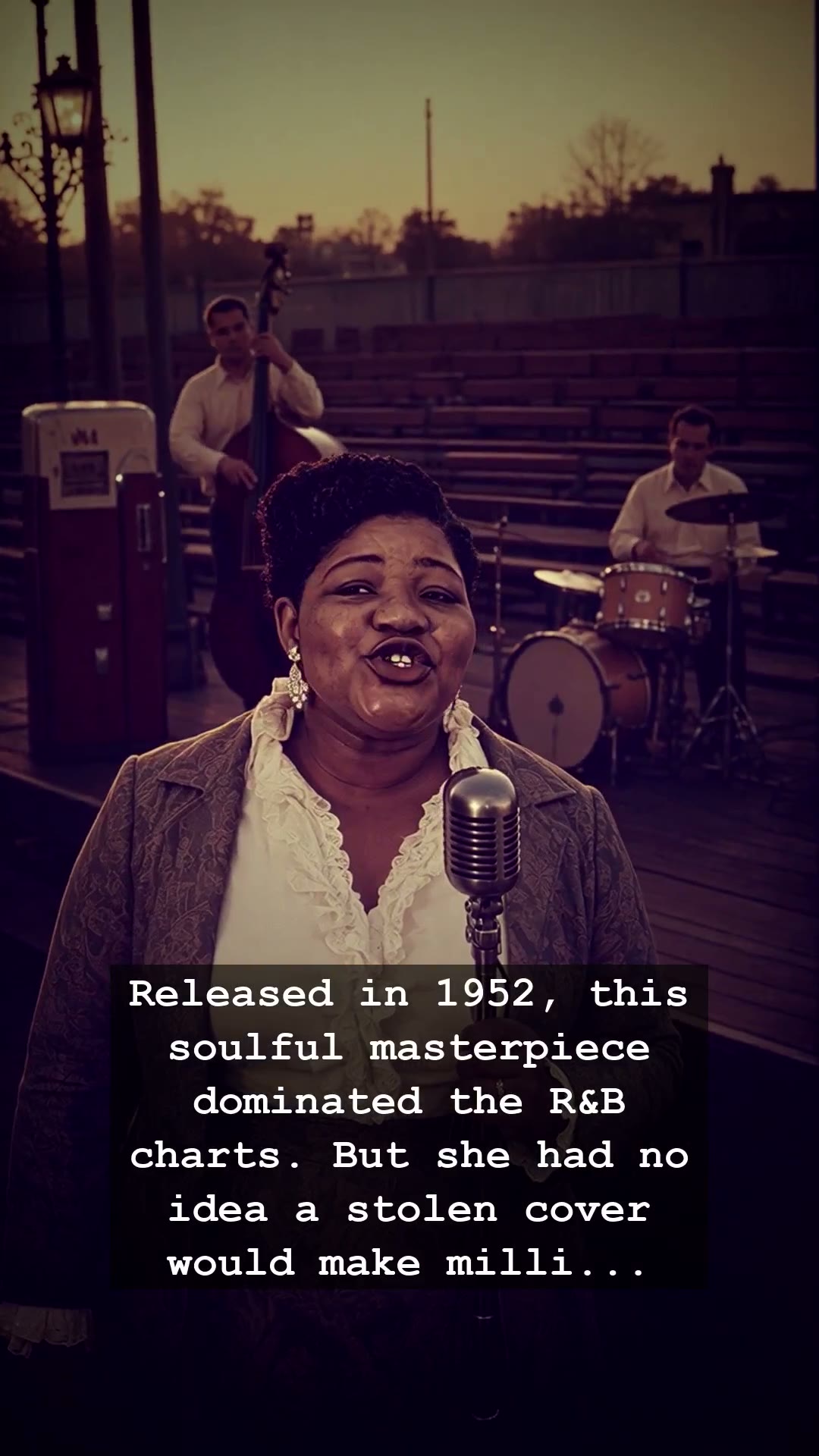
In the sweltering heat of the 1952 American music scene, a voice erupted from the juke joints that would forever change the trajectory of rock and roll. Big Mama Thornton, a towering force of nature, stepped into a Los Angeles studio and unleashed Hound Dog. It was raw, it was defiant, and it was undeniably hers. The track climbed the R&B charts with a vengeance, holding the top spot for seven grueling weeks. Yet, behind the grit of that legendary vocal performance lay a shadow that would haunt the music industry for decades. While Big Mama Thornton poured her very soul into the microphone, the machinery of the business was already preparing to strip the masterpiece away from its rightful creator.
To understand the magnitude of this betrayal, one must step back into the world of the early fifties. It was an era where the radio was the king of the living room and vinyl records were the primary pulse of American culture. Big Mama Thornton was not just a singer; she was a blues powerhouse who had clawed her way out of the Alabama delta. When she recorded Hound Dog, the arrangement was distinct, heavy with the percussive stomp of her own life experiences. She was a pioneer in a landscape that was often hostile to Black women, creating a blueprint for the rock anthems that would soon define the decade.
Then came the shift that would leave Big Mama Thornton in the dust. A young, charismatic newcomer walked into a studio, borrowed the essence of her arrangement, and repackaged it for a mass audience. This new version exploded across the airwaves, fueled by the rising influence of television and the growing appetite of a suburban youth culture. As the newcomer ascended to stratospheric levels of fame, the original architect of the song saw almost nothing of the riches it generated. She had been paid a single, meager flat fee, leaving her to watch from the sidelines as her own creation became a global cultural phenomenon.
The tragedy of Big Mama Thornton is a mirror held up to the dark side of the music industry’s Golden Age. It highlights a recurring pattern where the pioneers—the women and men who forged the sound—were pushed aside by industry titans looking for a more marketable face. Despite the widespread success of the song, Big Mama Thornton continued to live a life far removed from the glamour of the charts, struggling to make ends meet while her voice echoed through every corner of the country. Her story is not just one of stolen royalties; it is a story of resilience against a system designed to silence those it exploited.
Today, we look back at the 1950s with a sense of nostalgia for the birth of rock, but we must also acknowledge the ghosts in the machine. Big Mama Thornton was a titan whose influence ripples through the work of every artist who picks up an electric guitar. When you listen to those early tracks, remember that behind every massive hit, there was a real human being with a story that deserved to be heard. The next time the familiar beat of Hound Dog fills the room, take a moment to honor the woman who started it all, whose voice remains as powerful and honest as it was the day she first let it roar.