
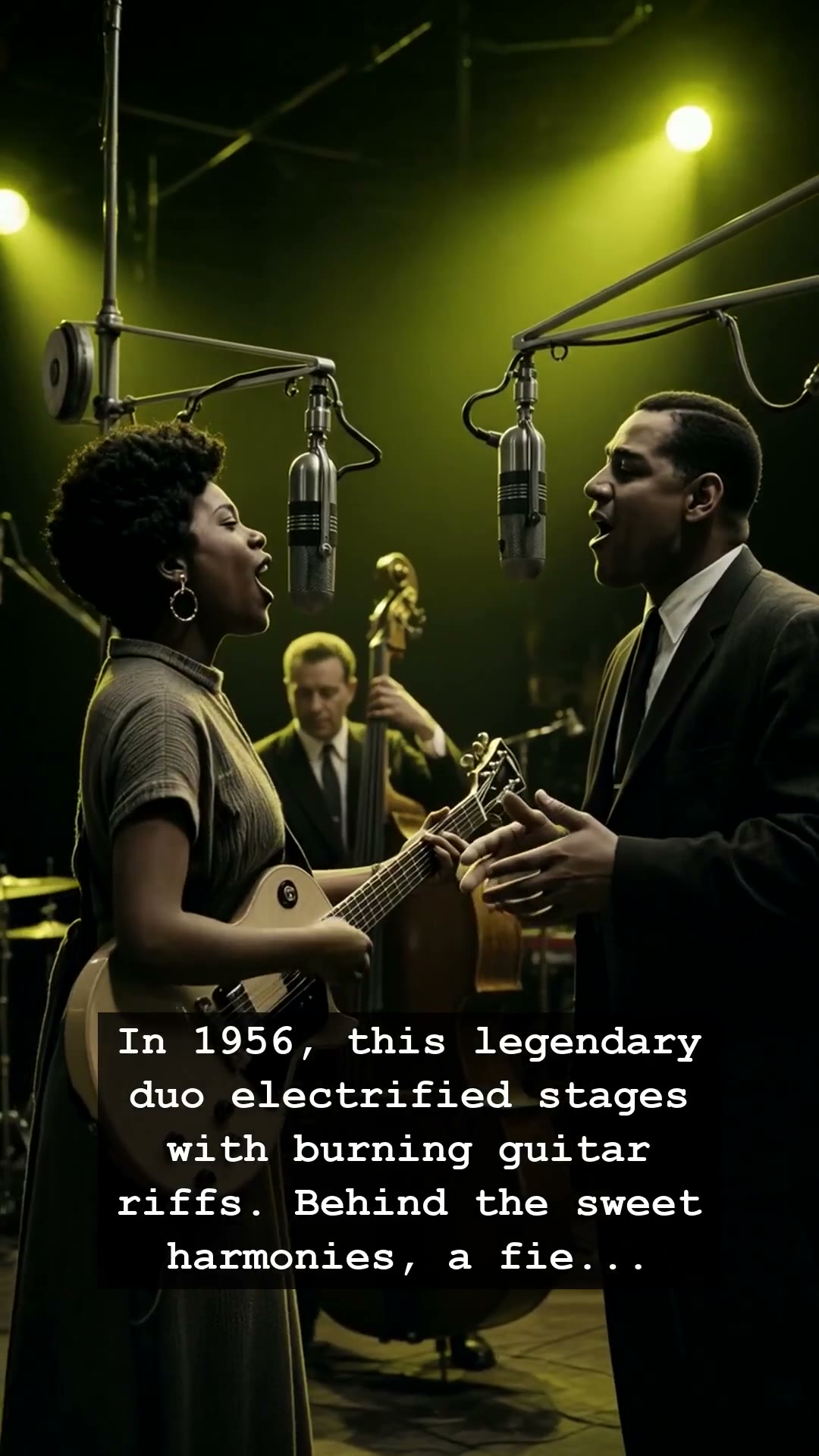
In the golden age of 1956, when the jukebox was the heartbeat of every American diner and the radio airwaves crackled with the promise of rock and roll rebellion, one song stood out for its impossibly sweet, teasing chemistry. Love Is Strange by Mickey and Sylvia became an instant cultural touchstone. Their voices intertwined with a velvet smoothness that suggested a deep, unbreakable connection. Yet, for those looking past the polished vinyl, a volatile backstage storm was brewing that threatened to shatter the duo at any given moment. The world saw a romanticized musical marriage, but the reality was a high-tension partnership fueled by clashing ambitions and the grinding pressure of a changing industry.
Mickey Baker, a virtuosic guitarist who could make his instrument growl or whisper, and Sylvia Vanderpool, a singer with a voice that could pierce the loudest clamor, were a strange musical alchemy. Before the hits, they were already seasoned players navigating a cutthroat New York music scene. When they stepped into the spotlight, their stage presence was electric, perfectly choreographed to capture the hearts of a post-war generation hungry for new sounds. They were a staple of the late fifties, riding the wave of rhythm and blues transition into the mainstream. But beneath the veneer of stardom, their relationship was less a love story and more a cold war fought in the shadow of studio microphones and cramped dressing rooms.
The tension within Mickey and Sylvia was a classic tale of two strong-willed artists vying for creative control. Mickey, a musical purist who obsessed over every technical riff, often found himself at odds with Sylvia’s intuitive, ambitious drive to shape their commercial identity. The backstage area was less a sanctuary and more a pressure cooker. Tales of heated arguments, creative outbursts, and the crushing exhaustion of constant touring defined their reality. It is a haunting thought that while millions danced to the iconic tremolo guitar riff that opens Love Is Strange, the creators of that magic were often barely speaking to one another.
This friction is exactly why their story remains so compelling today. It reminds us that the music we love, which soundtracked our youth or our parents’ teenage years, was rarely born from a place of perfect harmony. The era of the fifties, characterized by the rise of the guitar and the birth of the teenager as a demographic, was built on these fragile alliances. We romanticize the era of the Walkman or the local radio station, forgetting that every hit record was often the result of significant emotional turmoil. Mickey and Sylvia left an indelible mark on the landscape of American soul and pop, proving that even the most volatile unions can produce timeless art.
Today, listening to their work offers a bittersweet experience. We hear the perfection of their sound, but now we also hear the jagged edges of a story hidden by time. Their legacy is not just the melody, but the human messiness that fueled it. As we look back at the giants of the mid-century, let us remember Mickey and Sylvia not just as a hit-making machine, but as two human beings who turned their friction into a symphony that still lingers in the airwaves long after the needle has lifted.