
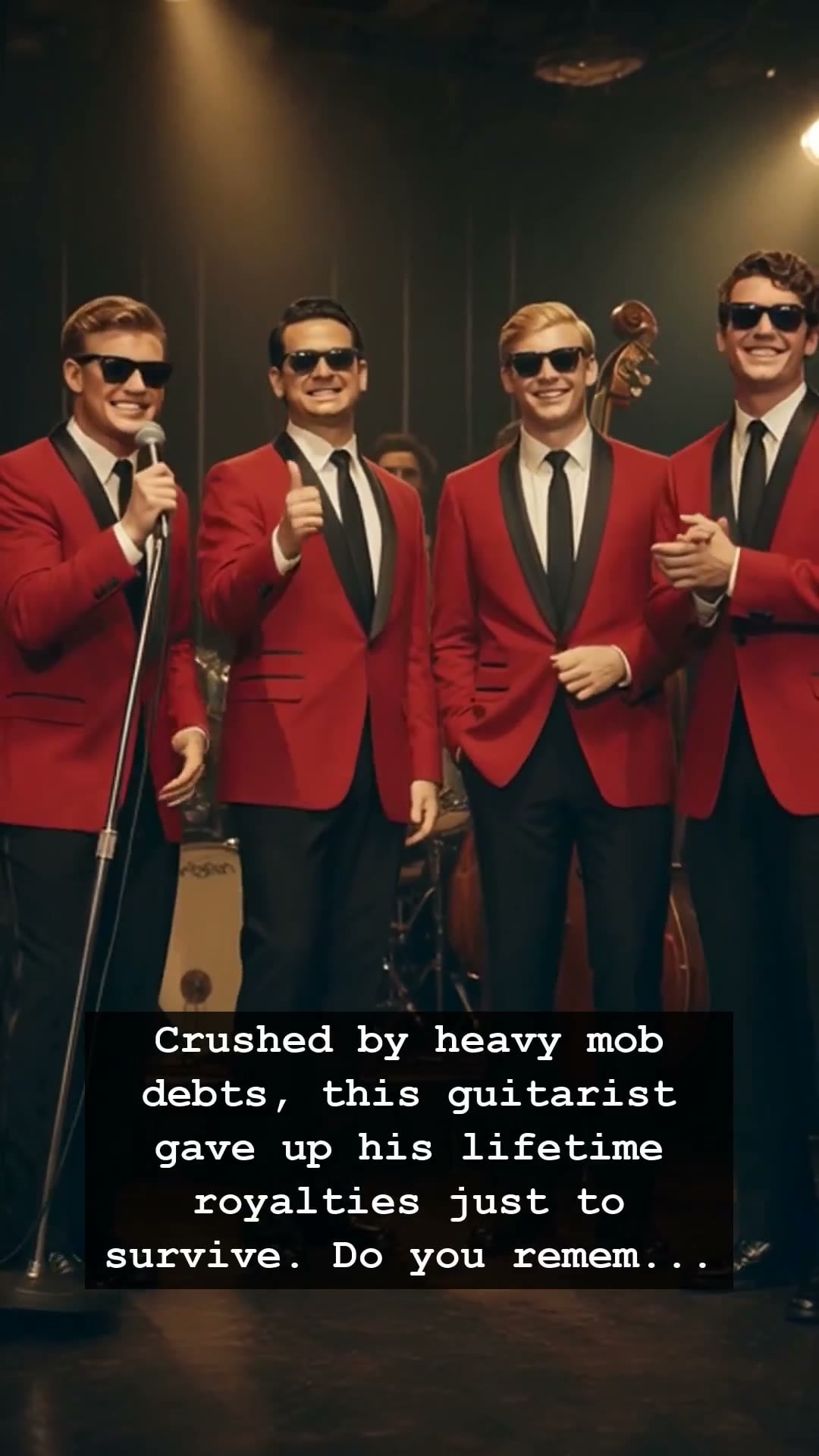
It was the golden era of the jukebox, where the sound of Frankie Valli and The Four Seasons defined the radio waves of the early 1960s. Their harmonies were as polished as the chrome on a Cadillac, yet behind the scenes of hits like Sherry and Big Girls Don’t Cry, a darker, grittier reality was unfolding. Tommy DeVito, the founding guitarist and the man whose vision helped cement the group’s sound, found himself trapped in a nightmare that no amount of chart success could resolve. While the world danced to the beat of the American Dream, DeVito was spiraling deep into the unforgiving world of underworld loan sharks, forced to choose between his creative legacy and his very life.
The pressure of fame in the music industry during the mid-twentieth century was often a double-edged sword. For Tommy DeVito, the high-stakes world of illegal gambling became an addiction that spiraled out of control. As the debts to mob-connected lenders mounted, the consequences stopped being about money and started being about survival. In a move that shattered his future, DeVito was forced to relinquish his lifetime royalty rights to settle his crushing debts. It is a chilling reminder of the cold reality that often hid behind the velvet curtains of the recording studios where The Four Seasons crafted their timeless melodies.
To listen to The Four Seasons today is to be transported back to a time of diners, transistor radios, and the birth of the suburban pop anthem. Yet, knowing the story of Tommy DeVito adds a haunting layer to every chord he played. When you hear the crisp, rhythmic guitar work that underscored those iconic falsetto vocals, you are listening to a man who was fighting a desperate battle in the shadows. His departure from the group in the early 1970s was not merely a matter of creative differences, but the closing act of a personal tragedy born from the pressure of the streets.
This story remains one of the most sobering tales of the music industry from that era. While many bands of the 1960s faced the temptations of the spotlight, few encountered the lethal intersection of fame and organized crime quite like Tommy DeVito. It serves as a stark contrast to the shiny, polished image that the band projected to millions of fans. For those who grew up watching the evolution of rock and pop, the sacrifice of these royalties remains a poignant symbol of the dark costs often hidden behind the greatest hits of our generation.
Today, the legacy of The Four Seasons is secure, etched into the annals of American music history as legends who defined the sound of a decade. We celebrate the harmonies, the rhythm, and the memories they created for us all. However, as we reminisce, let us remember the human cost buried beneath the vinyl. Next time you drop a coin into a classic jukebox and hear those opening notes, take a moment to reflect on the complex, bittersweet story of the man who helped start it all, and the price he paid to keep the music playing.