
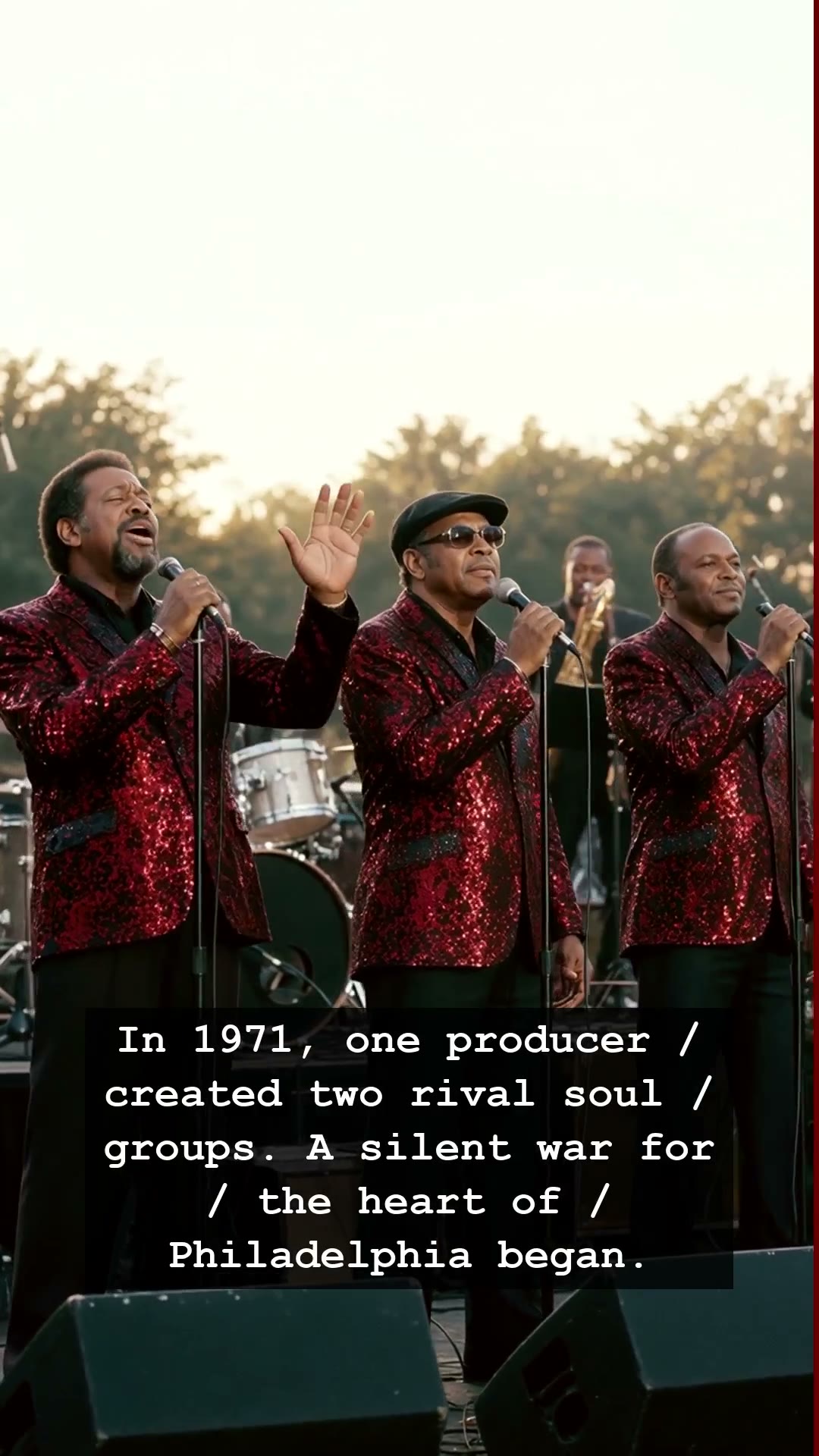
In the golden era of 1971, while the neon lights of Studio 54 were beginning to flicker in the distance and the soulful melodies of the Jukebox defined the American dream, a silent war was brewing beneath the surface of the Philadelphia music scene. It was a tale of artistic brilliance marred by a bizarre internal conflict, engineered by one of the most enigmatic figures in the industry. At the center of this storm stood The Delfonics, the pioneers of the lush, orchestral Philly Soul sound, and a rival group that would soon compete for the very same airwaves and hearts. It was a cold, calculated masterpiece of management that set brother against brother, and voice against voice, in a struggle for sonic supremacy.
The architect of this tension was Thom Bell, the visionary producer who helped mold the silky, sophisticated harmonies that defined the era. Having already cemented the legacy of The Delfonics with timeless classics like La-La (Means I Love You), Bell found himself in a position of god-like control. In a twist of fate that reads like a gritty music industry thriller, he sought to expand his reach by cultivating a rival group, creating a competitive atmosphere that was intended to push both acts to musical perfection. However, what started as a professional challenge quickly spiraled into a bitter, silent war for the soul of Philadelphia. The Delfonics, with their fragile falsettos and deeply emotional lyrics, suddenly felt the pressure of a new, polished contender rising in their own backyard.
The tragedy of this rivalry lay in the talent itself. The Delfonics had brought a distinct, cinematic quality to soul music that resonated with a generation coming of age in the shadow of the Vietnam War and the shifting cultural tides of the seventies. Yet, the internal dynamics turned sour. Members of The Delfonics, weary of the constant comparisons and the Machiavellian maneuvering of their management, began to feel the weight of their own stardom. The studio became a pressure cooker, filled with unspoken resentments and the heavy atmosphere of a changing industry where the artist’s identity was often overshadowed by the producer’s vision.
Looking back, the legacy of The Delfonics remains untarnished, even amidst the shadows of that strange era. Their music serves as a haunting reminder of a time when soul was at its most elegant and introspective. When you listen to those sweeping strings and that signature falsetto today, you are hearing more than just a hit record; you are hearing the sound of a group struggling to maintain their integrity while being pitted against the very essence of their own creation. It is a story of how the quest for commercial perfection can sometimes cost the artists their peace of mind.
Even decades later, the story of this internal Philadelphia conflict feels remarkably raw. It serves as a poignant reminder of the hidden prices paid for musical greatness. As we look back at the era of the Walkman and the slow-dance classics, we are left to wonder how many other masterpieces were born from such turmoil. The Delfonics gave us the soundtrack to our memories, but they also carried the silent scars of a war that most fans never knew existed. Next time you drop the needle on one of their records, take a moment to listen closely to the yearning in their voices; you might just hear the ghosts of that long-forgotten battle still echoing through the melody.