
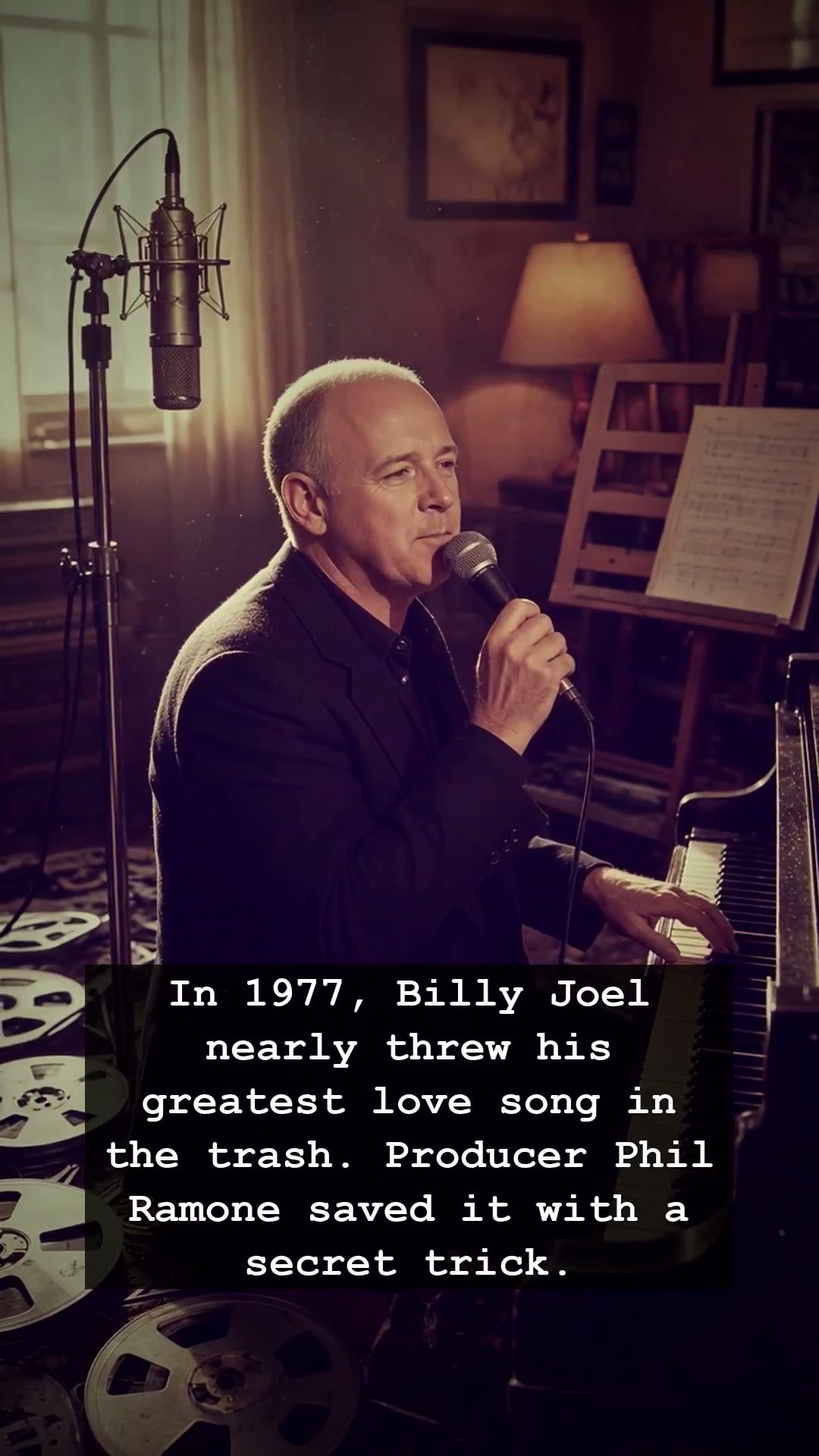
It is 1977. The air in the recording studio is thick with cigarette smoke and the tension of an artist reaching for something he cannot quite grasp. Billy Joel, the Piano Man who would soon become a global icon, is standing over a trash can. In his hand is a crumpled sheet of paper—the lyrics to what would eventually become one of the most beloved love songs in human history, Just the Way You Are. To Billy Joel, the song felt too soft, too sappy, and frankly, too unlike the gritty rock and roll he wanted to define his career. He was ready to discard it as a mistake, a relic of a creative moment that had missed the mark.
Music history is littered with these near-misses, moments where a legendary track nearly vanished into the ether. Luckily for us, the legendary producer Phil Ramone was in the room. Recognizing the raw, aching honesty beneath the melody, Ramone intervened. He did not just plead with the artist; he employed a secret studio trick, adjusting the arrangement and the pacing to pull the song out of the ballad graveyard. He insisted that the melody had a heartbeat that Billy Joel had simply stopped hearing in the exhaustion of the session. It is a chilling thought to imagine a world where this track never graced the radio waves of the late seventies.
That era was a strange, transitional time in American music. The disco fever of Studio 54 was beginning to dominate the charts, and the radio airwaves were being crowded by synthesizers and high-gloss production. In this landscape, a sincere, piano-driven love song written by Billy Joel stood out as a defiant act of vulnerability. It captured the intimacy of a Walkman moment, that private space where a listener could feel like the song was being played specifically for them. It was a masterpiece of classic songwriting, proving that while trends change, the universal desire to be loved for exactly who we are remains a constant, pulsing force in our lives.
When you listen to the final recording today, you can hear the ghosts of those long studio nights. The smooth saxophone licks and the gentle, rolling piano chords carry the weight of a man who almost walked away from his own masterpiece. Billy Joel would go on to win a Grammy for this song, solidifying his place in the pantheon of songwriting greats, but the story of its near-destruction adds a layer of human fragility to the performance. It serves as a reminder that even the most confident legends struggle to recognize their own brilliance when they are too close to the fire.
Decades later, the song remains a fixture at weddings, funerals, and lonely drives home. It persists not because it was perfect, but because it feels real. Every time that iconic melody kicks in, we are transported back to 1977, to a small studio in New York, and to a singer who learned that his deepest doubts were actually his greatest strengths. Next time you hear the opening notes, remember the crumpled paper in the trash, and be grateful for the music that survived to find us.