
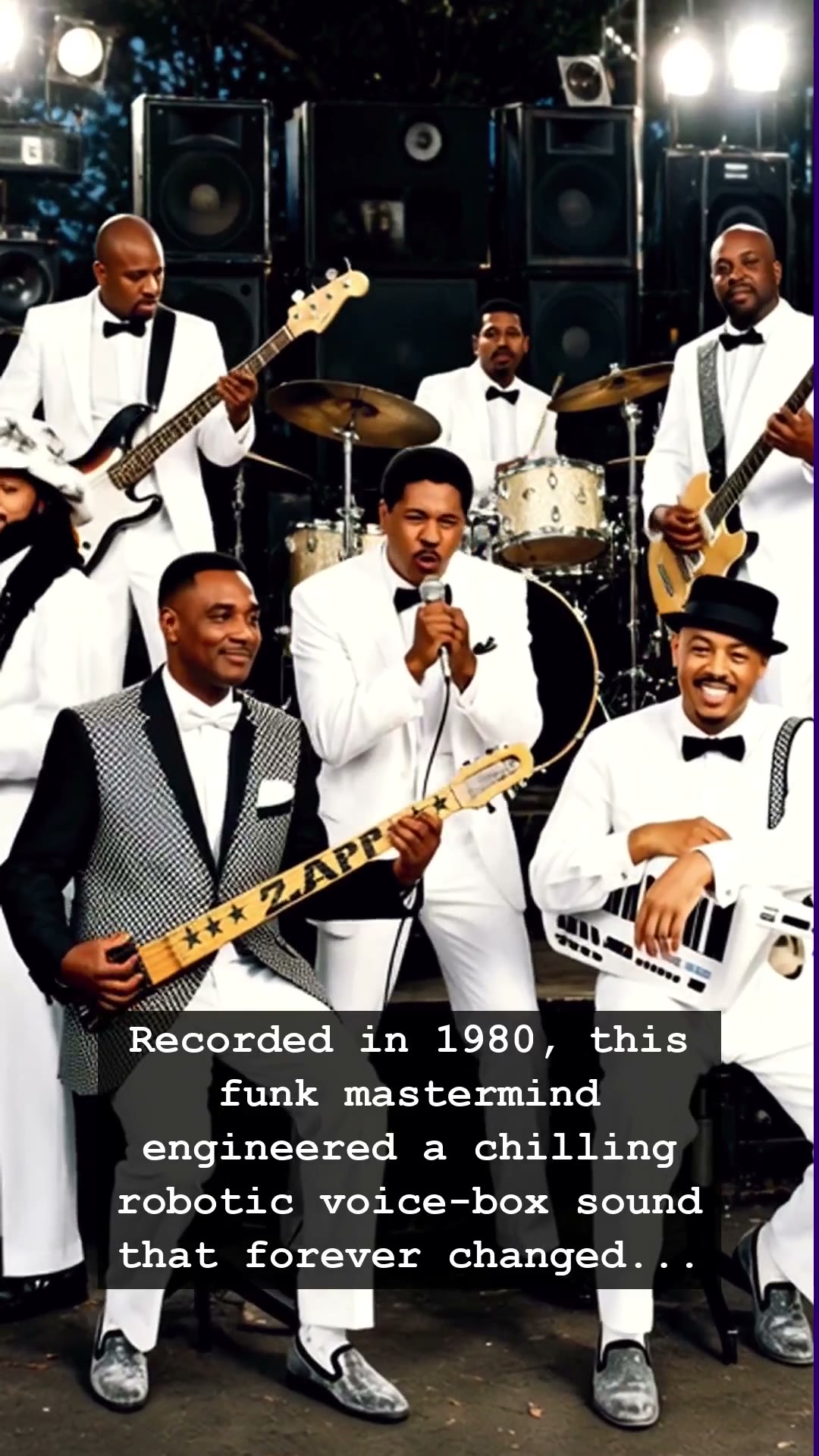
It was 1980, a time when the Jukebox was still the heartbeat of every neighborhood diner and the airwaves were dominated by the transition from gritty soul to the polished sheen of the coming decade. Amidst this musical revolution, a group of brothers from Dayton, Ohio, stepped into the studio with a contraption that sounded less like human vocal cords and more like a transmission from a distant, chrome-plated galaxy. The Zapp Band, led by the visionary Roger Troutman, was about to unleash a sound so distinct that it would become the sonic DNA of the West Coast groove forever.
Most listeners were stopped in their tracks by the debut of More Bounce to the Ounce. It wasn’t just a song; it was a rhythmic assault, driven by a talk-box effect that turned the human voice into a pulsating, metallic synthesizer. Before the days of digital production and pristine home studios, Roger Troutman meticulously engineered this sound by routing his vocals through a plastic tube held in his mouth, vibrating against a guitar pickup. It was raw, mechanical, and deeply soulful all at once. For those who lived through the era, it felt like the future had finally arrived, wrapped in a thick layer of funk.
Behind the innovation lay a story of relentless obsession. The Zapp Band didn’t just stumble upon success; they carved it out of sheer dedication to the craft. Roger Troutman was a perfectionist who understood that to stand out in the crowded landscape of disco and R&B, you had to challenge the very definition of a pop vocal. The Zapp Band aesthetic was a bridge between the analog warmth of the past and the synthetic, high-tech pulse that would soon fill the clubs from Studio 54 to the streets of Los Angeles. They brought a sense of playful arrogance to their music, a strutting confidence that made the talk-box sound feel like a dare to every other artist in the industry.
Years later, the legacy of the Zapp Band remains untouched, even as the medium of music consumption shifted from vinyl records to the portability of the Walkman and eventually to the digital age. You can hear the ghosts of Roger’s innovations in the rhythm of countless West Coast hip-hop tracks and modern dance anthems. It was a sound born from technical ingenuity and a blue-collar work ethic, proving that true artistry often requires tearing down the established rules of how a record should be made.
Listening to a Zapp Band track today is like stepping back into a neon-lit time capsule. It captures that unique tension between the humanity of the lyrics and the cold, unyielding precision of the talk-box, a combination that keeps the groove alive decades after the original tape reels stopped spinning. Do you remember where you were when the robotic pulse of Roger Troutman first caught your ear? That sound still lingers, reminding us that true musical pioneers never really fade away.