
December 8, 1980, remains etched in the collective memory as the day the dream of peace was shattered forever. In the cold, biting air of a New York winter, the world stood still when the news broke: John Lennon, the poet laureate of a generation and the heart of The Beatles, had been silenced by gunfire outside his home at The Dakota. The transition from the optimism of the late sixties to the harsh reality of the eighties seemed to coalesce in that single, tragic moment. For millions who had grown up with the soundtrack of his evolution from a mop-top star to a global activist, the world suddenly felt quieter, colder, and far more cynical.
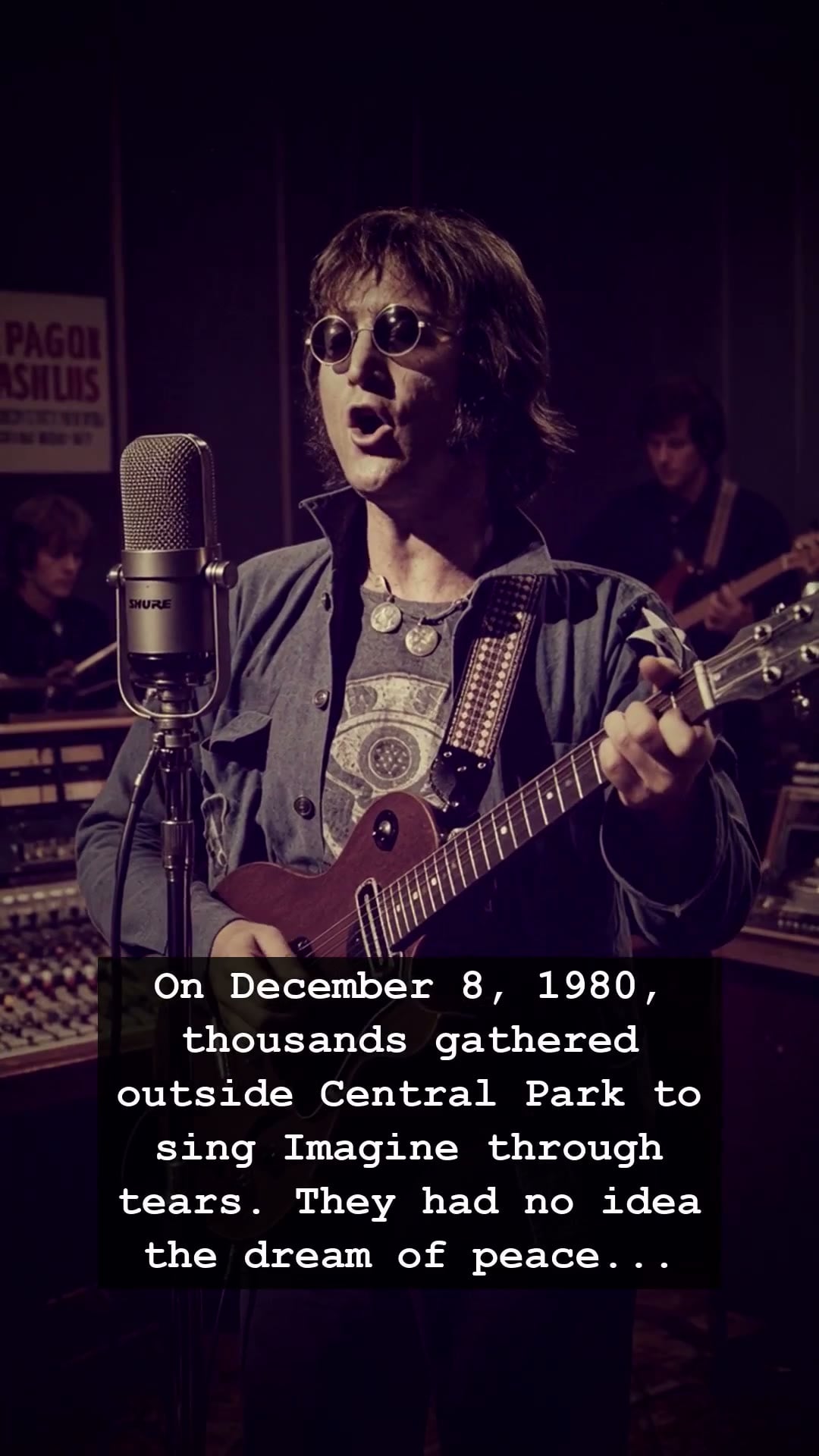
Hours after the incident, a scene of surreal sorrow unfolded outside Central Park. Thousands of fans, many clutching their Walkmans or vinyl sleeves, gathered in the encroaching darkness. There were no cell phones to record the event, only the raw, crackling energy of human grief. As if guided by a singular, invisible hand, the crowd began to hum the opening chords of Imagine. It was not a performance; it was a prayer. Tears streamed down faces illuminated by flickering candlelight, turning the lyrics into a haunting anthem of collective mourning. The song, once a hopeful blueprint for a better future, transformed into a desperate eulogy for the man who dared to imagine it.
John Lennon had always been a figure of intense contradiction and profound humanity. From his early days in the smoke-filled basements of Liverpool to the experimental, psychedelic landscapes of the late sixties, he lived his life in the public eye. By 1980, he had stepped back from the chaos of fame to embrace the quiet life of a father, only to be cut down just as he was finding his stride again. His life was a tapestry of artistic rebellion and quiet introspection, a journey that defined the soul of rock and roll during the most turbulent decades of the twentieth century.
Even decades later, the shadow of his absence looms large. We look back at that era—a time of vinyl records, analog radio waves, and the burgeoning influence of MTV—and see John Lennon as the anchor of a cultural shift that prioritized questioning authority and seeking emotional truth. His music did not just entertain; it challenged the status quo, demanding that we consider what it meant to be human in an increasingly divided world. The tragedy at The Dakota was more than just a crime; it was the final, abrupt end to the idealism that had propelled the post-war generation.
Today, when those iconic piano notes drift through the air, they serve as a reminder of the fragility of our heroes and the enduring power of a song to bridge the gap between grief and hope. John Lennon may have been taken from us in the dark of that December night, but his voice remains an unshakable force in the tapestry of American music history. As long as we remember the man behind the glasses, the dream he sang about will never truly fade away.