
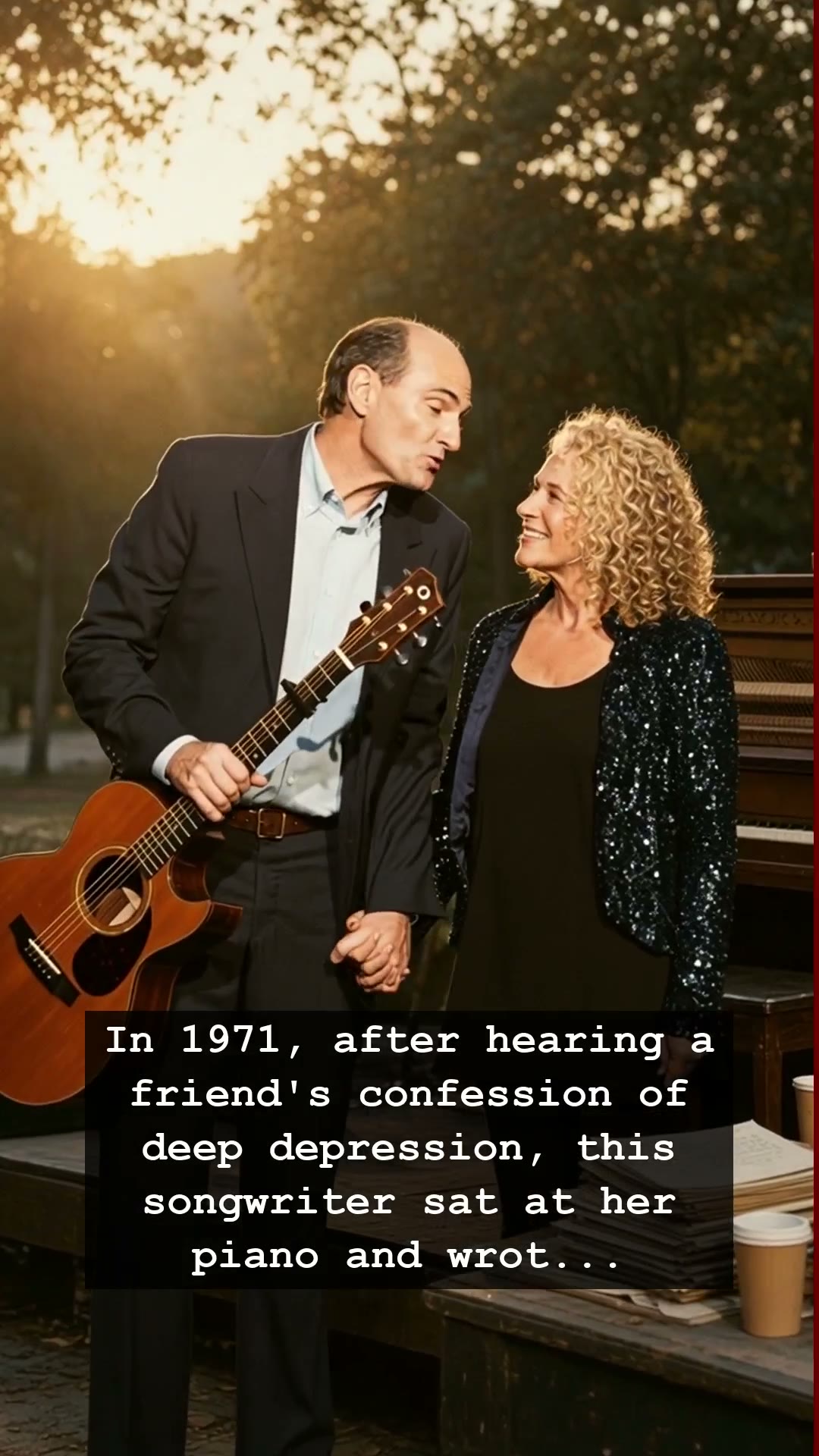
The year was 1971. While the world was reeling from the post-Woodstock hangover and the neon pulse of the emerging disco era was just a whisper away, a quiet revolution was happening inside the walls of a recording studio. Carole King, already a legendary songwriter, found herself moved by the fragile state of her dear friend and collaborator, James Taylor. He was a man fighting his own ghosts, battling a profound, suffocating darkness that threatened to consume his gentle spirit. In that moment of vulnerability, the piano became a sanctuary, and the iconic anthem You’ve Got a Friend was born.
Carole King sat at her piano, her fingers finding chords that felt like an embrace. She wasn’t just writing a song; she was crafting a lifeline. James Taylor had spoken openly about his struggles with depression, a topic rarely discussed in the polished, glam-drenched music industry of the early seventies. The song was a direct response to a verse in Taylor’s own track, Fire and Rain, where he sang about the loneliness of fame and the hollow echo of personal tragedy. Carole King wanted to let him know, through the universality of melody, that no matter how deep the trench, no one truly walks the path of life alone.
The resulting masterpiece became the emotional centerpiece of her landmark album Tapestry, a record that defined an entire generation’s yearning for intimacy. It was the antithesis of the stadium-filling, high-octane rock anthems that would soon dominate the airwaves. Instead, it was raw, honest, and devastatingly simple. When James Taylor recorded his own version, it soared to the top of the charts, carrying with it the weight of two souls tethered by mutual pain and artistic brilliance. For listeners who carried their heavy Walkmans through the streets or played their vinyl records on rainy afternoons, this song was a confession that mirrored their own silent struggles.
Looking back, the chemistry between Carole King and James Taylor represents the golden age of the singer-songwriter movement, a time when vulnerability was a superpower rather than a liability. They were the architects of an era where folk-inflected pop music could heal wounds that television couldn’t reach. The track reminds us that beneath the glamour of the industry, the legends were just people trying to find their footing in a world that often moved too fast. It was a time of Jukebox dreams and late-night studio sessions, where every note was a piece of the creator’s soul being laid bare for the public to hold.
Even decades later, the message of You’ve Got a Friend remains a timeless beacon. It is a testament to the fact that empathy is the most enduring language of music. Whether you are revisiting your worn-out record collection or discovering these legends for the first time, the song serves as a reminder that we are all, in some way, looking for someone to call out to in the dark. Carole King gave James Taylor, and the rest of the world, exactly what they needed: a promise that hope is never out of reach. Perhaps it is time to put the record back on and listen to the promise again.