
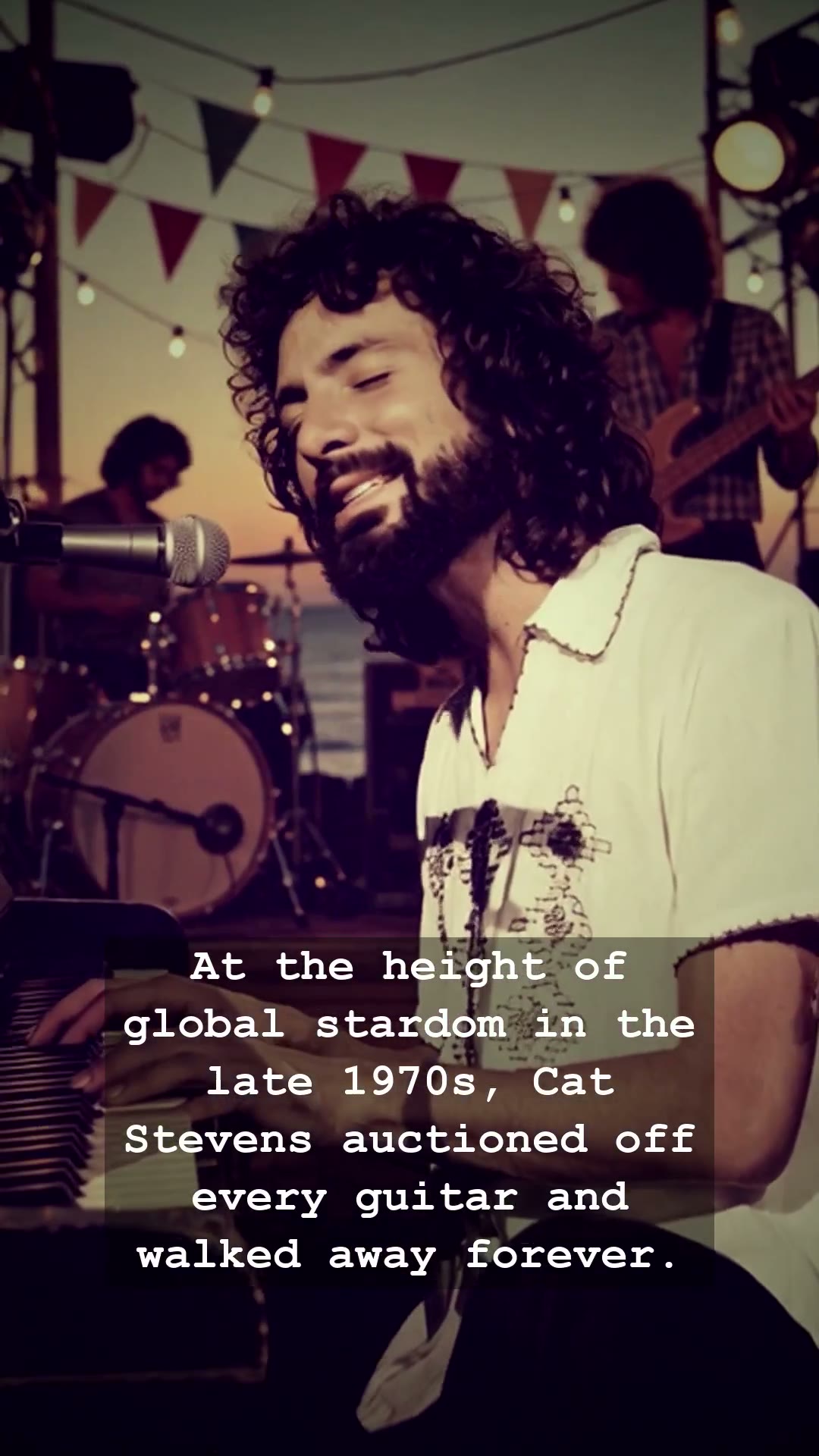
The year was 1978, and the world was spinning to the pulse of the disco era, yet one of folk-rock’s most haunting voices was quietly preparing to go silent. Cat Stevens, a man who had captured the hearts of millions with the soul-baring melodies of Tea for the Tillerman and the gentle, melodic ache of Wild World, stood at the absolute zenith of his career. He was a global icon, a name synonymous with the introspection of a generation finding its way through the turbulent aftermath of the Woodstock era. But behind the glitz of gold records and sold-out stadium tours, a deep, internal transformation was taking hold, leading to a decision that would leave the music industry in a state of stunned disbelief.
At the height of his fame, Cat Stevens made an announcement that felt like a phantom limb being severed from the body of popular music. In a move that defied every logic of the late 20th-century entertainment machine, he did the unthinkable: he auctioned off every single guitar he owned and walked away from the spotlight forever. It was not a calculated hiatus to build mystery; it was a total renunciation of the life he had known. Fans who grew up clutching their Walkmans, listening to the soft acoustic strums of his ballads on late-night radio, were left wondering how a man could simply trade the applause of millions for a life of profound, monastic seclusion.
To understand why Cat Stevens made this choice, one must look at the immense pressure that defined the late seventies. The music industry was a ravenous beast, fueled by endless tours and the relentless demands of constant commercial growth. For Cat Stevens, the fame that had once felt like a liberation had transformed into a cage. He had spent years navigating the high-stakes world of studios and chart positions, but he found himself searching for a truth that no stage could provide. When he finally walked off that stage for what he believed would be the last time, it wasn’t just a departure from a career; it was an act of personal reclamation.
Decades later, the legend of that final auction still resonates because it touches a nerve in anyone who has felt overwhelmed by the noise of modern life. It remains one of the most enigmatic chapters in the history of rock and folk music. While he would eventually return to the industry years later under a new name, that pivotal moment in the late 1970s remains frozen in time, a testament to a man who prioritized his soul over the siren song of celebrity. It serves as a stark reminder that even at the very peak of human achievement, the most important journey one can take is the one that leads back to the self.
Looking back at his discography today, the songs hit differently, carry a weight that only comes from understanding the price of the voice behind them. Cat Stevens reminds us that while the music may be eternal, the humans who create it are fragile. His decision to auction his instruments wasn’t just a goodbye; it was a profound human statement. Perhaps it is time to dust off those old records and listen again, hearing not just the notes, but the story of a man who dared to walk away when the world wanted him to stay.