
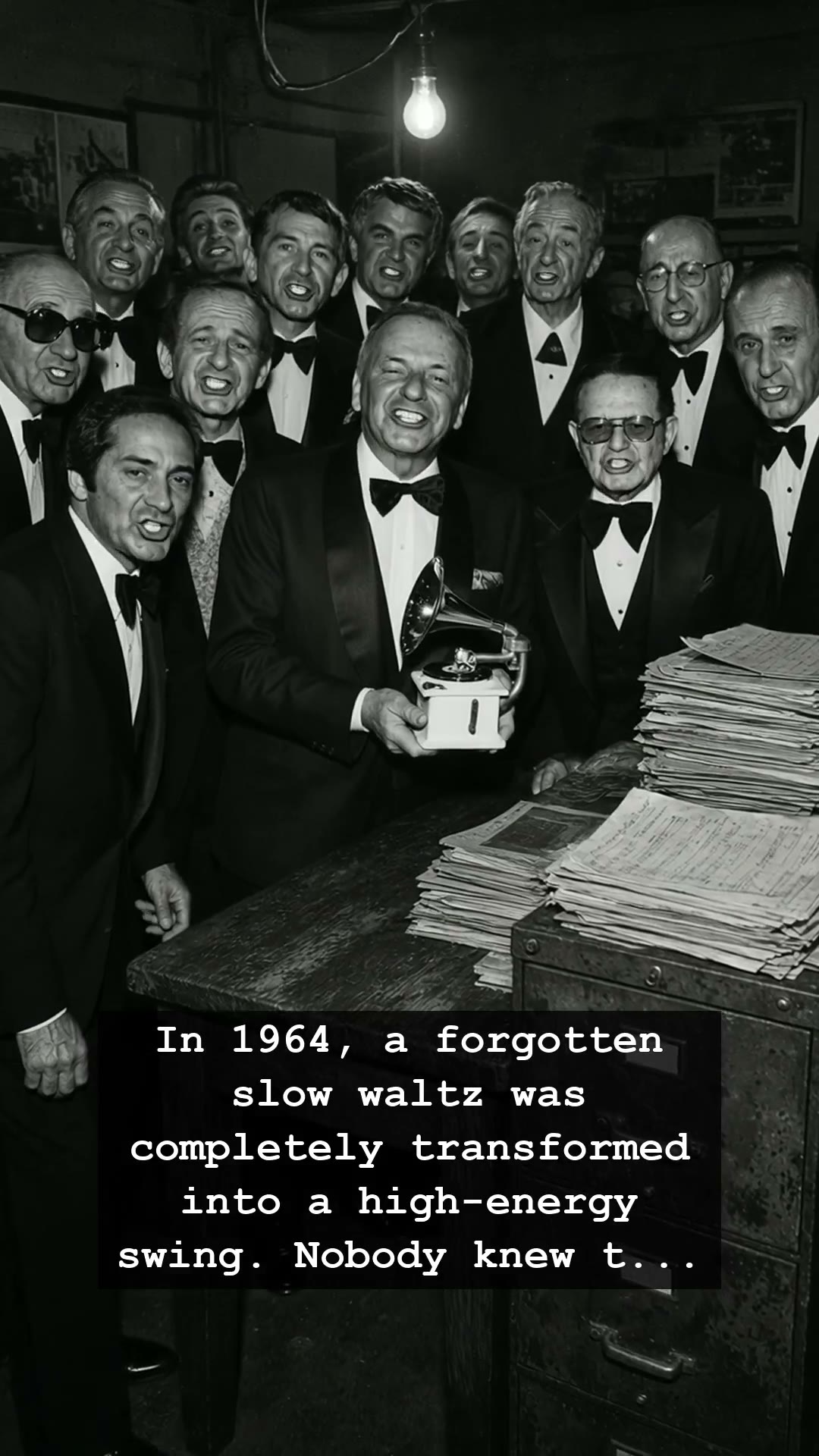
It was 1964, a time when the crackle of a jukebox in a dimly lit lounge defined the pulse of American nightlife. The song was Fly Me to the Moon, a tune that had been lingering in the shadows as a sluggish, unremarkable cabaret waltz. It felt like a relic of a bygone era, destined to gather dust in the archives of forgotten jazz standards. Then, an unlikely collision of genius occurred. Quincy Jones, a young, visionary producer with an ear for the tectonic shifts in music, stepped into the studio with the undisputed king of cool, Frank Sinatra. They weren’t just recording a song; they were about to craft a piece of musical immortality.
Quincy Jones had a radical idea that defied the conventions of the time. He took that weary, slow-tempo ballad and stripped it down to its bones, injecting it with a high-energy swing that felt as sharp and crisp as a tailored tuxedo. He swapped the lethargic rhythm for a punchy, brass-heavy arrangement that demanded attention. When Frank Sinatra stepped up to the microphone, his delivery was effortless yet charged with a newfound swagger. The tension in the room was palpable as the band found a groove that felt both timeless and urgent. It was an alchemical transformation—a slow waltz reborn as an interstellar anthem that would soon transcend the atmosphere itself.
This wasn’t just a makeover; it was a cultural pivot point. During an era where the world was looking toward the horizon of space exploration, the music of Frank Sinatra, polished by the brilliant mind of Quincy Jones, became the soundtrack to humanity’s greatest ambition. The song became synonymous with the Apollo missions, eventually being played on the moon during the historic 1969 landing. It is a staggering thought that a track birthed in a smoky studio evolved into a bridge between the elegance of the mid-century swing era and the infinite mystery of the stars.
The collaboration between Sinatra and Jones serves as a haunting reminder of how fragile a masterpiece truly is. Without that specific creative friction—the audacity to change a classic—Fly Me to the Moon might have remained a minor footnote in music history. Instead, it became an untouchable standard, a testament to the fact that greatness is rarely accidental; it is the product of vision, risk, and the courage to flip the script when everyone else is playing it safe. It resonates today because it captures the essence of a dream that refuses to be grounded.
Looking back, we are reminded of the power of those golden years. From the clink of ice in a glass to the grandiosity of the concert stage, the partnership between these two giants echoes through the decades. It invites us to pause, look up at the night sky, and remember that some melodies are simply destined to fly forever. Does the opening brass blast still send shivers down your spine like it did in 1964?