
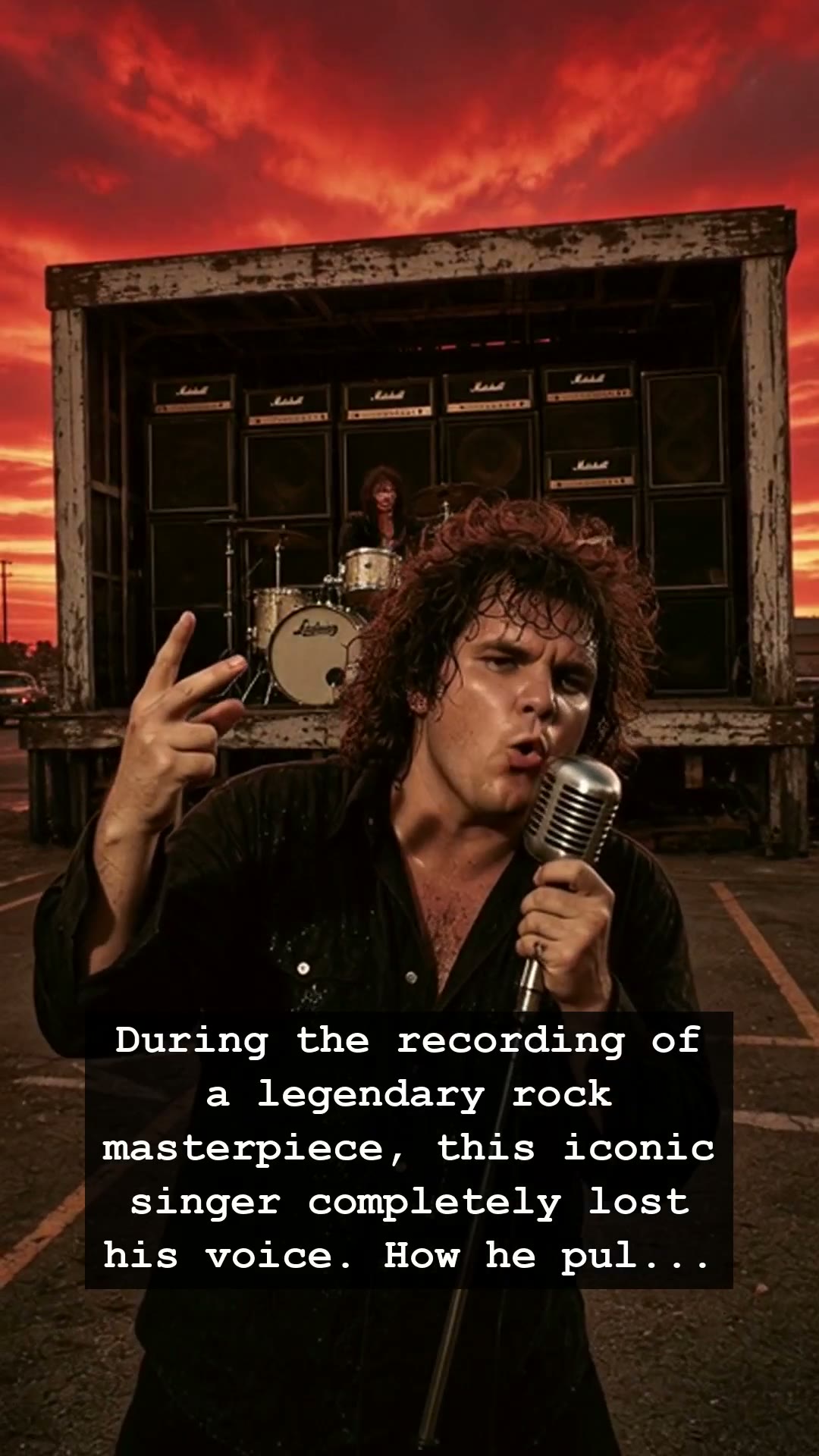
It was 1977, the era of gritty stadium rock and the impending explosion of the punk scene, yet one man was busy crafting a theatrical masterpiece that would defy every rule in the industry. Meat Loaf, the larger-than-life powerhouse, was deep in the trenches of recording what would become Bat Out of Hell. This was a time when excess was the standard, studio sessions stretched into the early hours of the morning, and the pressure to deliver a hit was crushing. But beneath the neon glow of the recording studio lights, a silent catastrophe was unfolding that threatened to derail rock and roll history forever.
During one of the most grueling sessions for the record, Meat Loaf suffered a terrifying physical setback: he completely lost his voice. For a performer whose entire identity was built upon soaring, operatic deliveries and raw, gut-wrenching screams, this was not just a minor ailment; it was a career-ending nightmare. The vision that Meat Loaf and producer Todd Rundgren had cultivated—a sprawling, symphonic wall of sound—suddenly felt like it was crumbling into dust. The studio grew quiet, the tension palpable, and the dream of capturing that specific brand of manic energy seemed to vanish into the night air.
Faced with total devastation, Meat Loaf did not retreat. He entered a period of intense, grueling vocal rehabilitation that pushed his body to its absolute limits. It was a race against time and exhaustion, a dark, lonely road back to the microphone. Most artists would have crumbled under the weight of such high stakes, but Meat Loaf possessed a relentless, almost desperate drive to finish the work he had started. He treated his vocal cords like a professional athlete would a torn ligament, meticulously rebuilding his instrument until that unmistakable, thunderous roar returned with even more ferocity than before.
When he finally returned to the booth, the resulting performance was nothing short of miraculous. Meat Loaf delivered vocals that didn’t just sound recorded; they felt lived-in, battered, and triumphant. The finished track pulsed with a sense of survival that resonated with listeners across the globe, transforming the album into one of the best-selling records in history. That moment of near-silence had somehow birthed a voice that would echo through arenas for decades, immortalizing the man behind the myth.
Even today, listening to the swelling piano lines and the dramatic crescendos of that legendary era, one can still hear the ghosts of those high-pressure studio nights. Meat Loaf proved that true rock and roll isn’t just about the melody; it is about the grit required to reclaim your sound when everything else goes dark. His story remains a testament to the fact that legends are not born in comfort, but forged in the fires of near-defeat. If you ever find yourself spinning an old vinyl copy of his magnum opus, remember the silence that almost swallowed the music whole. It serves as a haunting, beautiful reminder of the passion that fuels the heartbeat of American rock history.