
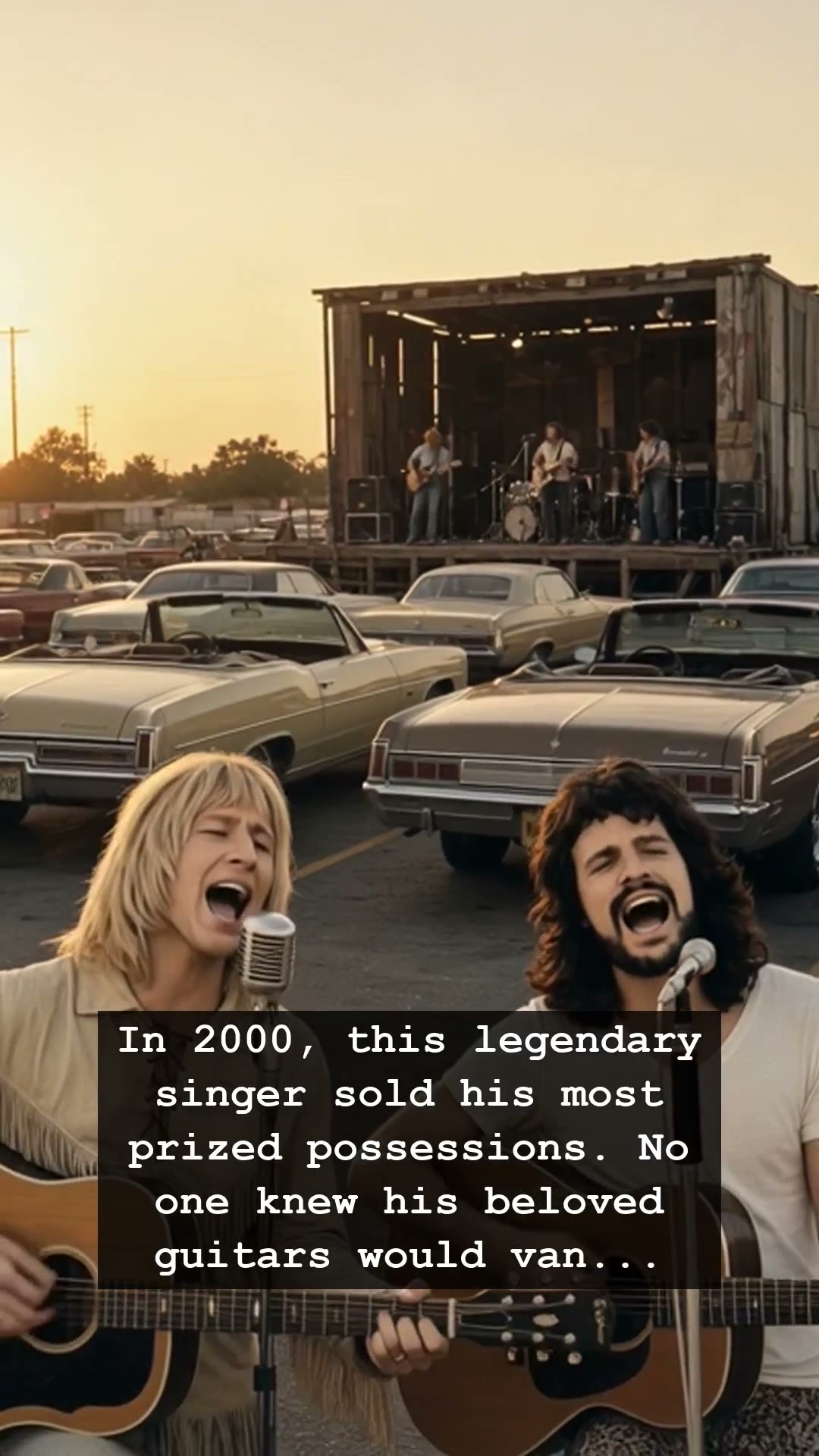
The year was 2000, and the world of music was still reeling from the echoes of the twentieth century. For millions of fans, the acoustic melodies of Cat Stevens were synonymous with the search for meaning and the gentle introspection of the folk-rock era. Yet, at the turn of the millennium, the man who had penned timeless anthems like Wild World and Father and Son made a decision that sent shockwaves through the industry. In a quiet, heartbreaking act of renunciation, Cat Stevens chose to auction off his most prized signature guitars for charity. It was not just a sale of instruments; it was a symbolic farewell to a secular past that had defined his youth.
To understand the weight of this moment, one must travel back to the golden era of the sixties and seventies. Cat Stevens was a titan of the folk circuit, a voice that captured the raw emotional turbulence of a generation finding its footing after the idealistic fervor of Woodstock. His music, often recorded in smoke-filled studios, carried the scent of rebellion mixed with spiritual longing. When he stepped away from the limelight, it felt as though a piece of the Jukebox era was being permanently silenced. The guitars he auctioned were the very tools that had crafted the soundtracks of our lives, instruments that had likely been held close during his most vulnerable moments of songwriting.
Many wondered why he would part with the very objects that solidified his legacy. For Cat Stevens, the act was rooted in a profound shift in his spiritual life, a desire to shed the skin of his former rock-star persona. Selling these guitars meant letting go of the fame, the glitz, and the heavy expectations that come with being a global icon. As the hammers fell at the auction house, it felt like the final page of a long, bittersweet memoir. The music world watched, stunned, as these instruments—each scratch and worn fret telling a story of past tours and concert halls—disappeared into the hands of private collectors, potentially never to be played with the same soul again.
Yet, the story of Cat Stevens is not one of a permanent goodbye, but of a winding, complex journey. Though he stepped away, the resonance of his work never faded. Like the crackle of a vinyl record playing on a Sunday morning, his songs remained embedded in the cultural fabric. He proved that even when an artist retreats into the shadows, the art itself possesses a heartbeat of its own. His decision to donate the proceeds to charity transformed a personal loss into a public good, ensuring his legacy was anchored in kindness rather than mere commercial success.
Looking back, we realize that music is not just about the notes played, but the life lived behind them. Cat Stevens reminds us that there is a time to hold on and a time to let go. As we listen to his classics today, we are reminded of the power of transition and the beauty of finding peace beyond the stage lights. While his guitars may have vanished into the annals of history, the magic he created remains untouchable, still waiting for us in the quiet corners of our memories.