
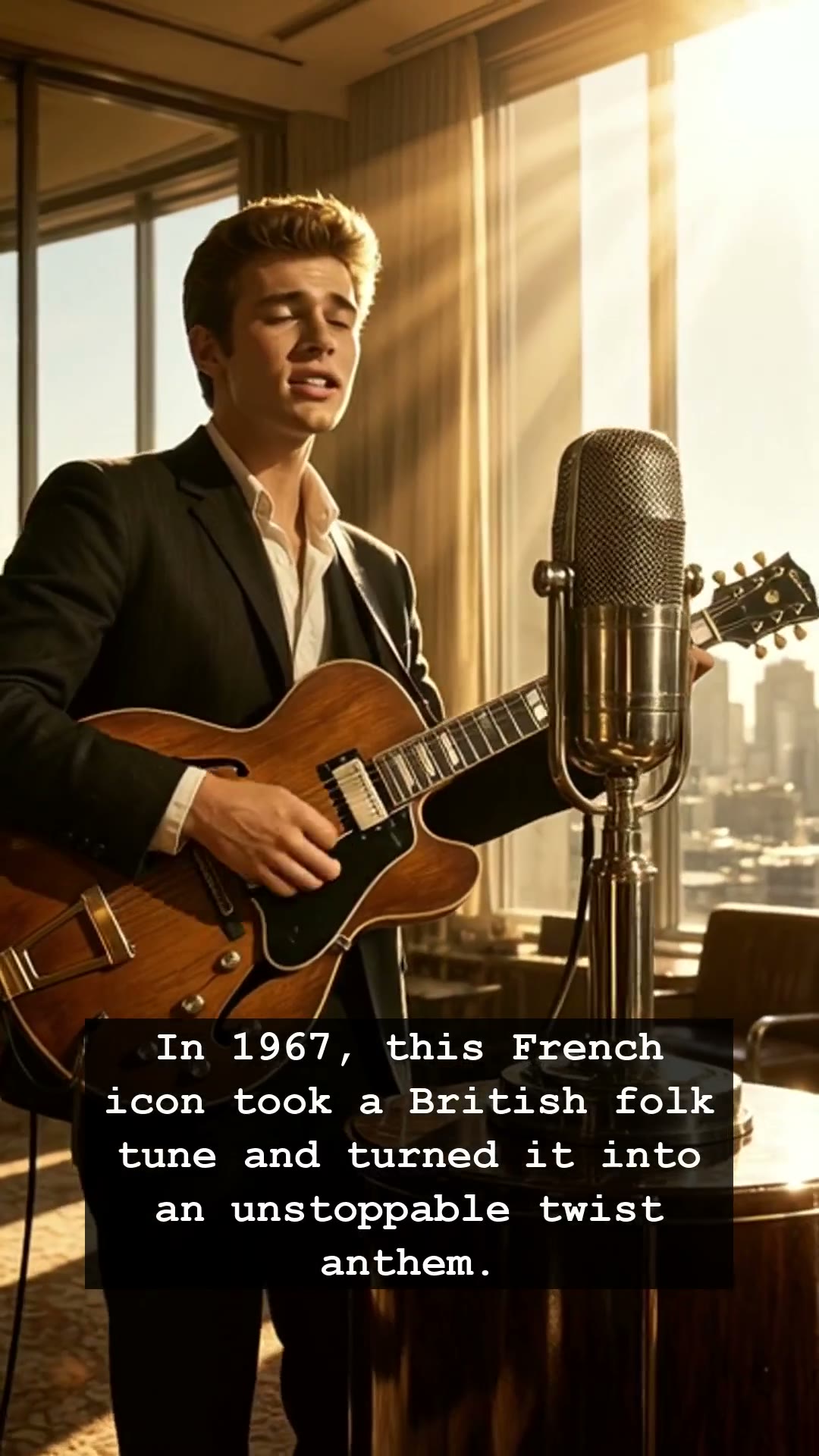
It was 1967, a year when the world was shifting beneath our feet. While the Summer of Love was blossoming in San Francisco and the psychedelic sounds of the British Invasion were drowning out the old guard, a seismic shift was happening in a smoke-filled Parisian studio. Johnny Hallyday, the man who single-handedly brought the rebellious spirit of American rock and roll to the heart of France, was about to take a melancholic British folk tune and mutate it into something entirely his own. He was the French Elvis, a leather-clad force of nature, and when he grabbed a microphone, he didn’t just sing; he commanded history to bend to his will.
The song in question, a modest folk piece, seemed an unlikely candidate for a global twist anthem. Yet, under the electric glare of the spotlight, Johnny Hallyday transformed the composition into a high-octane frenzy. He injected it with the raw, gritty energy of the American blues-rock he idolized. For a generation raised on the pristine melodies of the past, this was a revelation. It wasn’t just a cover; it was a total reclamation of sound, a bridge built between the dusty archives of folk tradition and the frantic, hedonistic pace of the mid-sixties disco dance floors that were just beginning to flicker into existence.
Johnny Hallyday was never just a singer; he was an icon of survival. His career was a tapestry of neon-lit highs and hollowed-out lows, marked by the roar of motorcycles and the quiet solitude of hotel rooms across Europe. During those late nights in 1967, while the world hummed along to the radio, Johnny Hallyday was crafting the soundtrack to a cultural collision. He navigated the immense pressure of fame with a charisma that bordered on the dangerous. Behind the scenes, the friction of his life—the legendary feuds, the romances, and the relentless hunger for relevance—fueled his performances, making every note vibrate with a frantic, desperate intensity that fans could feel in their bones.
To listen to his 1967 transformation is to step back into a world where the Jukebox was the heartbeat of every café. It captures that specific, elusive energy of an era teetering on the edge of the modern age. The instrumentation is sharp, the percussion is unrelenting, and his vocals carry that signature gravelly ache that defined his entire legacy. It remains a testament to his ability to take the familiar and make it feel like a sudden, explosive discovery. For those who grew up in the shadow of his stardom, Johnny Hallyday remains the tether to a time when music was dangerous, real, and utterly transformative.
Decades have passed since that tune first hit the airwaves, yet the resonance of Johnny Hallyday’s work has only deepened. He lived the life of a dozen men, leaving behind a trail of broken hearts and immortal records. As we look back, we aren’t just hearing a song; we are revisiting the ghost of an icon who refused to play by anyone else’s rules. His legacy is etched into the very fabric of rock history. Close your eyes, let the needle drop, and remember what it felt like when the world truly felt like it belonged to the music.