
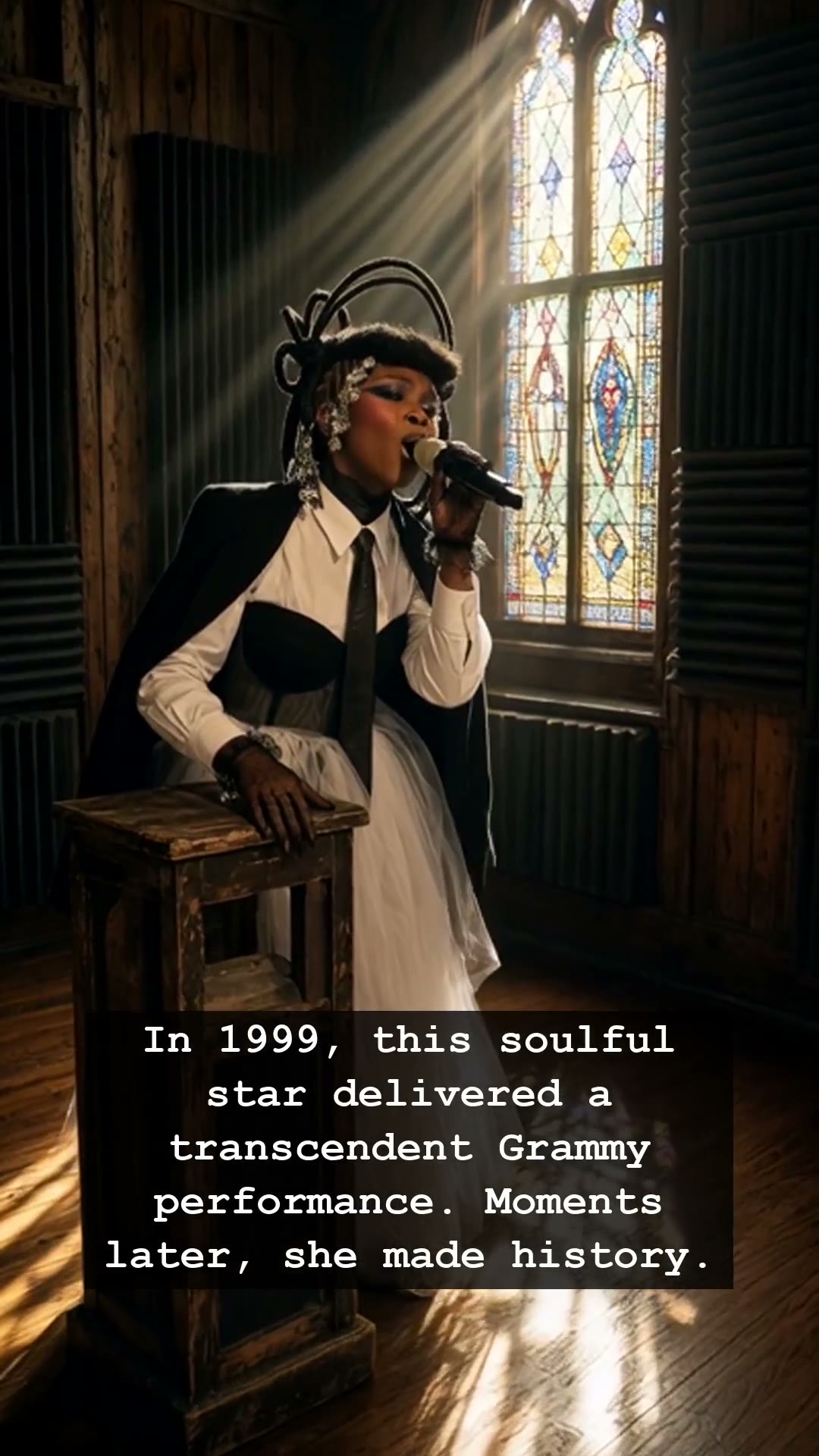
It was February 1999, the dawn of a new millennium, and the air inside the Shrine Auditorium was thick with expectation. For those of us glued to our television screens, the evening felt like a cultural shifting point. When Lauryn Hill took the stage, the room didn’t just listen; it went silent. She was fresh off the earth-shattering success of her debut solo album, The Miseducation of Lauryn Hill, a record that had already redefined the landscape of Neo-Soul and Hip-Hop. As she poured her soul into a live rendition of her music, there was an undeniable electricity in the air, a sense that we were witnessing a generational talent standing at the absolute peak of her creative powers. Moments later, she would achieve the impossible, shattering industry barriers by taking home five Grammy Awards in a single night.
To understand the magnitude of Lauryn Hill in the late nineties, you have to remember the cultural context. This was the era of the burgeoning internet, the final years of the Walkman, and the constant cycle of MTV music videos that shaped our musical identity. Lauryn Hill wasn’t just a singer; she was a voice that bridged the gap between the gritty street poetry of the Fugees and the deeply personal, introspective soul that resonated with millions. Her Grammy dominance wasn’t just a collection of trophies; it was a validation that raw, unpolished honesty could conquer the commercial machine of the music industry. It was a golden moment for a genre that had often been overlooked by the traditional establishment.
Yet, the story of Lauryn Hill is as much about the shadow of fame as it is about the glitter of the spotlight. The record that won those five Grammys was forged in the fires of personal heartbreak and intense creative pressure. Behind the accolades and the flashing bulbs of the red carpet lay a young woman navigating the treacherous waters of sudden, global superstardom. The intensity of that 1999 night became a double-edged sword, setting a bar of expectation that would haunt her for decades to come. It serves as a stark reminder that even at the height of artistic triumph, the human cost of greatness is often far higher than the public ever imagines.
Looking back, her performance that night feels like a time capsule. It captures the transition from the analog nostalgia of our youth to the complex digital world we inhabit today. Every note she hit was a testament to the influence of Motown and the rhythmic roots of soul, yet it felt entirely futuristic. When we talk about Lauryn Hill today, we aren’t just talking about a set of songs; we are talking about a cultural icon who dared to bare her soul in an industry that preferred artists to be manufactured and managed.
Even now, years after the world stood still for her, the echoes of that 1999 Grammy night remain. Lauryn Hill remains an enigma, a figure whose artistic legacy is cemented in the halls of history regardless of her absence from the mainstream. We still find ourselves reaching for The Miseducation of Lauryn Hill, finding comfort in the lyrics that defined a decade. It is a beautiful, melancholic reminder of a time when one woman’s voice was enough to change everything. Do you remember where you were when the world finally recognized the genius of Lauryn Hill?