
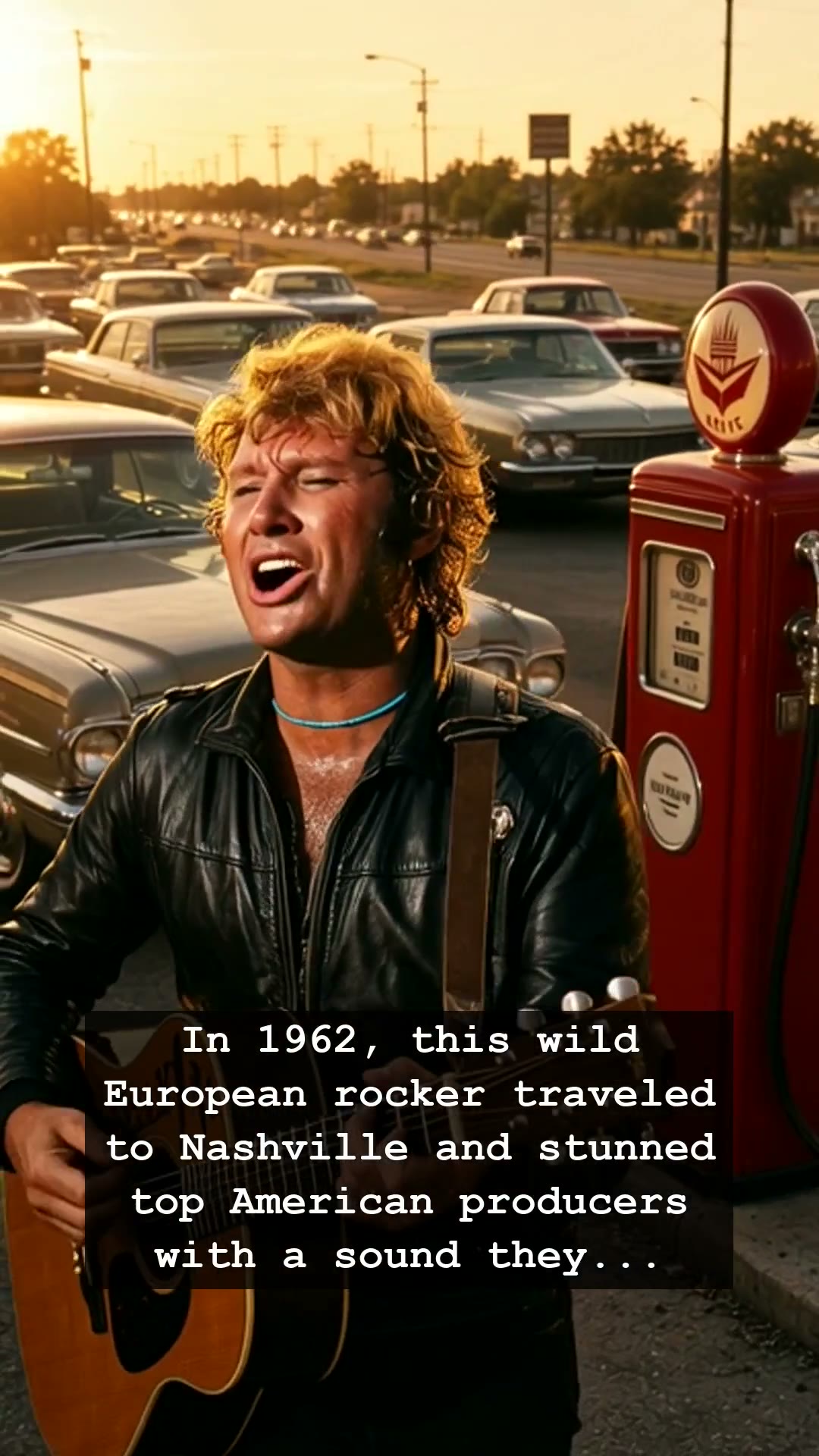
In 1962, the air in the hallowed Nashville recording studios was thick with the scent of cheap coffee, stale tobacco, and the expectations of seasoned session musicians who thought they had seen it all. They were the architects of the classic American sound, men who had played behind the giants of Country and Rock ‘n’ Roll. Then, a wild, leather-clad European teenager walked through the door. Johnny Hallyday, the man who would eventually be christened the French Elvis, did not just walk into the studio; he stormed it. With a raw, untamed fury that felt as volatile as a lit match in a powder keg, he stunned the room. These professionals, accustomed to the polished precision of hit-making machinery, were suddenly confronted with a volcanic intensity they had never witnessed on this side of the Atlantic.
Johnny Hallyday was a force of nature, an enigma who had taken the spirit of American Rock ‘n’ Roll and distilled it into something sharper and more dangerous. At a time when the world was beginning to turn its gaze toward the jukeboxes of the future, Johnny Hallyday brought a bridge between two musical universes. His voice possessed a gravelly grit that defied his youth, and his stage presence was a spectacle of kinetic energy that would later define the golden era of European pop and rock. While the radio waves of the early sixties were dominated by clean-cut harmonies and budding boy groups, Johnny was channeling the darker, more visceral side of the music that had captivated a generation.
The drama of that Nashville trip was not just about the technical recording process; it was a cultural collision. It was the moment the epicenter of American music had to reckon with the fact that their greatest export—the rebellious fire of rock music—had been adopted and radicalized by a kid from across the ocean. Throughout his legendary career, Johnny Hallyday remained a lightning rod for controversy and adoration, constantly walking the fine line between stage-managed pop stardom and the gritty reality of a rock ‘n’ roll lifestyle. His life was a whirlwind of sold-out stadiums, fleeting romances, and the relentless pressure of keeping that initial 1962 spark burning bright until his final days.
Looking back, the impact of Johnny Hallyday is inextricably linked to the atmosphere of the era. He was the soundtrack to a generation that lived through the rise of the Walkman, the glitter of Studio 54, and the transition from the vinyl crackle of the jukebox to the polished production of the MTV age. He remained a constant, a rugged icon in a world that changed its fashion and its technology overnight. His story is one of profound resilience, a testament to how one individual can absorb the sounds of a nation and transform them into a unique identity that transcends borders.
Today, the legend of Johnny Hallyday serves as a haunting reminder of why we fell in love with music in the first place. It was never about the perfection of the track; it was about the blood, sweat, and sheer audacity captured on tape. Whenever we hear those early, distorted guitar licks, we are transported back to that Nashville studio, feeling the electric shock of a young rebel changing the course of his destiny. Does the fire he ignited still burn in your soul, or is it just a faint echo from a lost decade?