
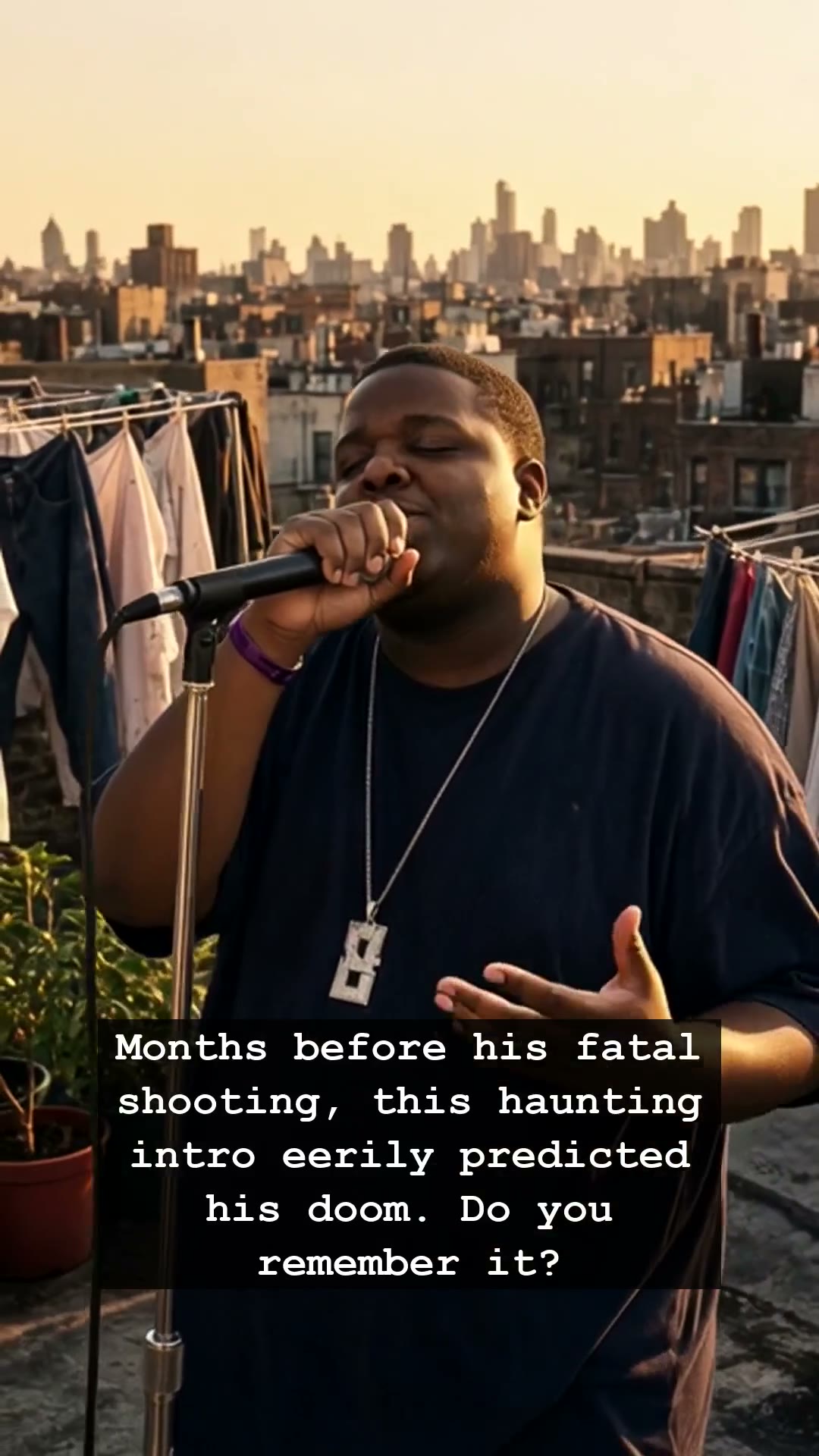
It is one of the most haunting ironies in the history of hip-hop. Months before the neon lights of Los Angeles dimmed forever on a fateful night in March 1997, the world was treated to a cinematic masterpiece that felt less like an album intro and more like a grim premonition. As the needle dropped on The Notorious B.I.G.’s sophomore album, Life After Death, listeners were not greeted by a celebratory hook or a golden-age funk sample. Instead, the silence was shattered by the jarring, cold reality of screeching tires, wailing police sirens, and the unmistakable, terrifying crack of gunfire.
This sonic landscape was not merely for theatrical effect; it was an eerie reflection of the volatile climate that defined the mid-nineties. The Notorious B.I.G., born Christopher Wallace, stood at the epicenter of a cultural earthquake. The tension between the East Coast and West Coast rap factions had spiraled from lyrical competition into a lethal standoff that no one—perhaps not even the artists themselves—could fully control. The intro of his final studio album captured that anxiety with a chilling precision, freezing a moment in time where fame, paranoia, and violence converged into a singular, tragic narrative.
To listen to The Notorious B.I.G. today is to revisit the absolute pinnacle of lyricism, where storytelling was elevated to an art form. Before the tragic end, Biggie was the undisputed King of New York, a man who could paint vivid pictures of street life with a cadence that flowed like honey over jazz-infused boom-bap beats. The era was defined by the transition from the golden age of analog recording to the high-stakes digital exposure of the nascent MTV generation. While fans were busy popping tapes into their Walkmans and studying his rhyme schemes, the man behind the music was grappling with the crushing weight of a crown he never expected to wear.
Looking back, the foreshadowing within his work is impossible to ignore. Whether it was the dark thematic choices or the constant lyrical references to his own mortality, The Notorious B.I.G. seemed to exist in a space between myth and reality. He navigated the glitz of award shows and the grit of Brooklyn with an authenticity that made him feel like a neighbor, even as he ascended to global stardom. His story remains a cautionary tale about the hollow nature of fame and the fragility of life at the peak of creative power.
Today, the legacy of The Notorious B.I.G. survives not just in the records, but in the echoes of a generation that mourns what could have been. That haunting intro remains a stark reminder of a life cut short at twenty-four, leaving behind a void in the tapestry of American music that has yet to be filled. As you listen to those sirens fade out today, take a moment to remember the man who turned his reality into a prophecy we are still trying to understand.