
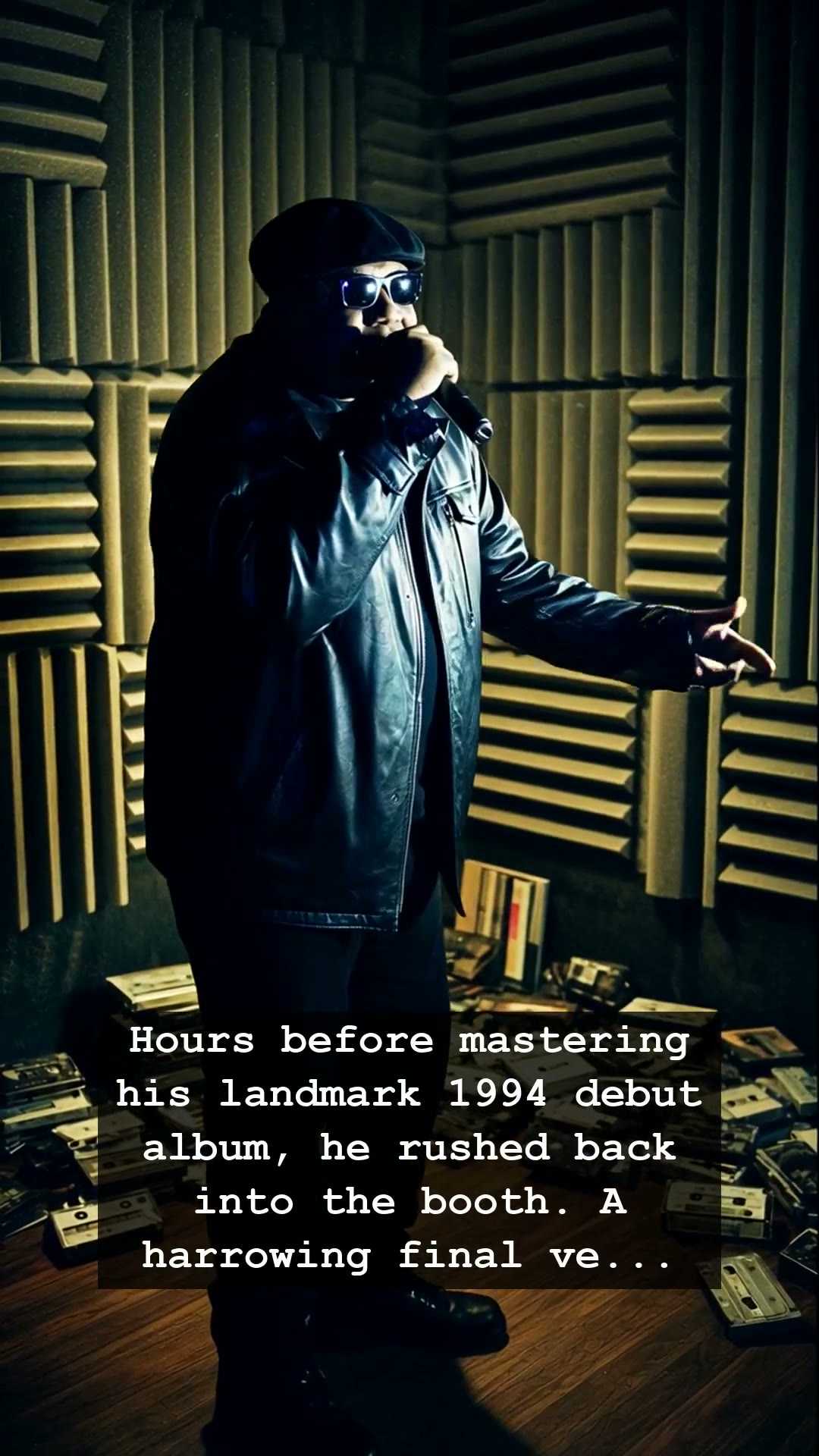
It was 1994, and the air in the studio was thick with the scent of cheap cigarettes and the nervous electricity of impending greatness. Christopher Wallace, better known to the world as The Notorious B.I.G., stood before the microphone, his massive frame casting a long shadow against the soundproofing foam. His landmark debut album, Ready to Die, was sitting on the mixing console, polished and seemingly complete. Yet, as the clock ticked toward the final deadline for mastering, a restlessness consumed him. He felt something was missing—a missing piece of his soul that needed to be transcribed onto the wax before the tapes were shipped off to the pressing plant.
Most artists would have settled for the perfection already achieved, but The Notorious B.I.G. was haunted by a narrative that demanded a darker, more harrowing conclusion. With the producers pleading for him to finalize the project, he rushed back into the vocal booth one last time. The resulting verse was not merely a lyrical addition; it was a visceral, terrifying exploration of his own psyche and the grim realities of the Brooklyn streets that had birthed him. It was a moment of raw creative urgency that nearly didn’t make the cut, caught in a tug-of-war between commercial viability and the unfiltered truth of his lived experience.
To understand the gravity of that moment, one must remember the landscape of the mid-90s. While the world was obsessed with the emerging sounds of grunge and the lingering echoes of the synth-pop era, hip-hop was carving out its own gritty identity. The Notorious B.I.G. was at the vanguard of this shift, turning the studio into a confessional booth. The tension in that recording session was palpable, echoing the kind of artistic friction that once defined legendary moments at Woodstock or the hidden, drug-fueled anxieties behind the glamour of Studio 54. His lyrics were not just rhymes; they were cinematic snapshots of a life balanced precariously on a razor’s edge.
That final, eleventh-hour verse added a layer of complexity to Ready to Die that cemented The Notorious B.I.G. as a lyrical titan. By capturing that specific moment of dread and existential reflection, he transformed a standard debut into a cultural monolith. It remains a testament to the idea that the greatest works of art are rarely finished—they are simply abandoned at the precise moment their creator finds the courage to bleed on the track. This impulsive, desperate addition forever altered the trajectory of hip-hop history, leaving an indelible mark on the ears of anyone who ever slipped a cassette into a Walkman.
Decades later, the legend of The Notorious B.I.G. continues to flicker in the neon glow of our collective memory. We return to his music not just for the beats, but for the haunting vulnerability he shared in those tiny, cramped rooms. When you listen to those final notes, remember that you are hearing the sound of a man risking everything to ensure his story was told exactly as it needed to be. Turn up the volume and let the ghosts of 1994 speak to you once again.