
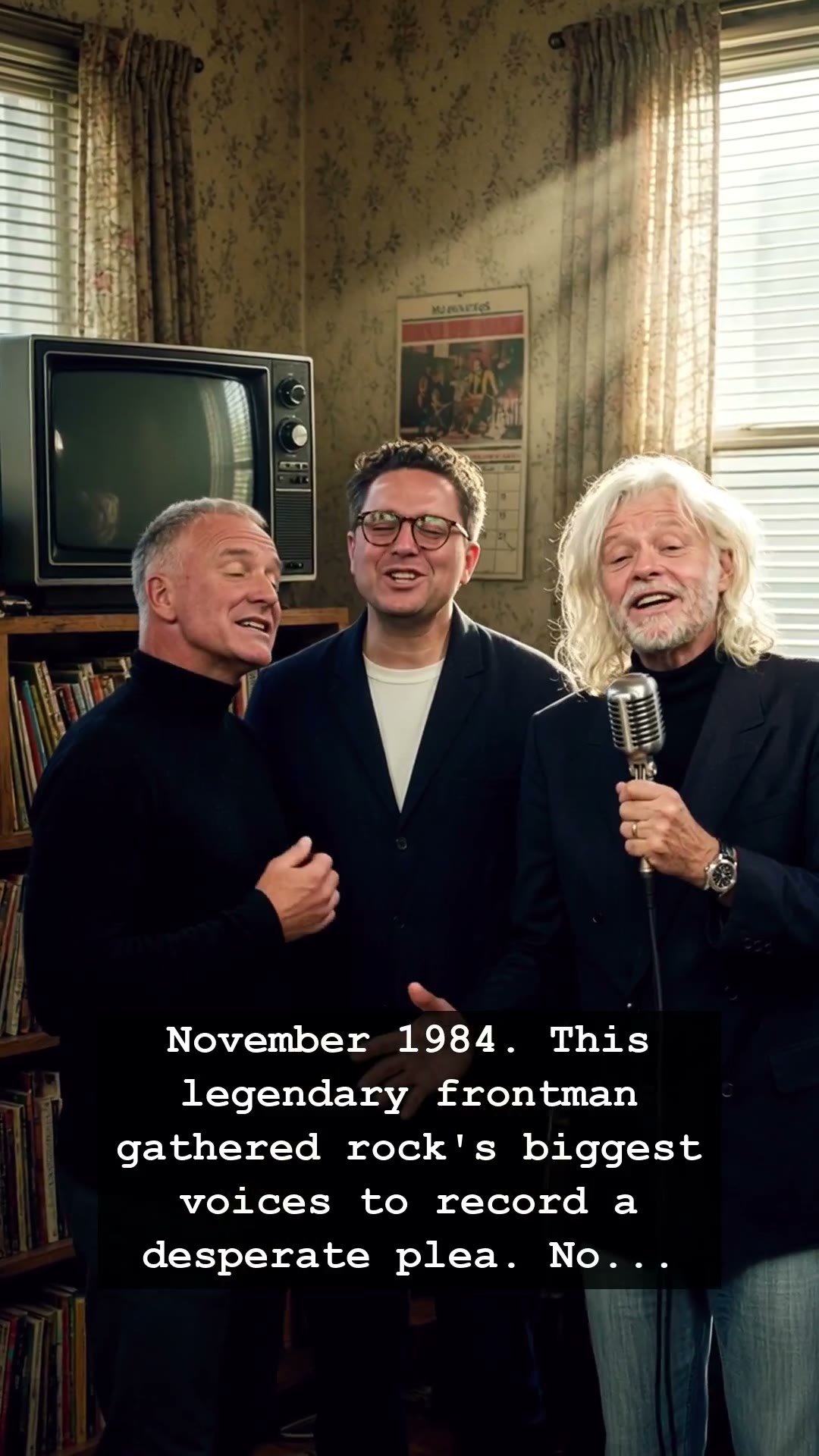
November 1984. While the world was dancing to the neon-soaked synth-pop pulses of the decade and spinning records on their Walkmans, a different kind of electricity was brewing behind the closed doors of a London recording studio. Bob Geldof, the fiery frontman of The Boomtown Rats, had seen a BBC documentary on the famine in Ethiopia that shattered his soul. He didn’t just want to write a song; he wanted to mobilize an entire industry. In a moment of raw, desperate brilliance, he decided to gather the biggest voices in rock to record a plea that would echo through history. No one knew it at the time, but that single track, Do They Know It’s Christmas?, was about to spark a global movement.
The energy in that room was palpable, vibrating with the kind of tension and ego you could only find in the mid-80s music scene. Bob Geldof was a man possessed, juggling the massive personalities of artists like Sting, Bono, and George Michael. This wasn’t just a recording session; it was a high-stakes standoff between rock royalty and humanitarian catastrophe. The narrative of the era was often defined by excess—the debauchery of the arena rock tours and the glittering allure of Studio 54—but on this night, the party stopped. For a few hours, the petty conflicts that usually kept bands apart were set aside in favor of a singular, haunting melody.
Bob Geldof pushed these musicians to their breaking point. He was notorious for his uncompromising vision, famously snapping at artists who didn’t capture the urgency of his mission. It was a gritty, unvarnished scene. There were no digital workstations to fix mistakes, just analog tape and the weight of millions of lives on the line. The result was a track that dominated the charts, but more importantly, it proved that rock and roll could be a weapon for good. It transcended the music; it became a cultural flashpoint that defined the mid-80s as a time when music fans finally stood up and looked beyond their own front doors.
Decades later, the legacy of that session remains a blueprint for modern activism. When we look back at the footage of Band Aid, we don’t just see the fashion of the era or the youthful faces of icons before they became global legends; we see the sheer intensity of Bob Geldof’s conviction. He proved that a single voice, if amplified by the right collective, could shift the tide of public opinion. He forced a generation comfortable in their own privilege to confront the stark, uncomfortable realities of the world.
Today, the story of Band Aid feels like a relic from a time before the digital age, yet it remains incredibly resonant. Bob Geldof’s gamble turned into a catalyst for Live Aid, the greatest concert of the 20th century. It serves as a reminder that before we had the connectivity of the internet, we had the collective power of a record, a radio, and a frontman who refused to take no for an answer. As the needle drops on that classic vinyl, it is worth remembering that sometimes, the most profound changes in history begin with one person deciding that enough is finally enough.