
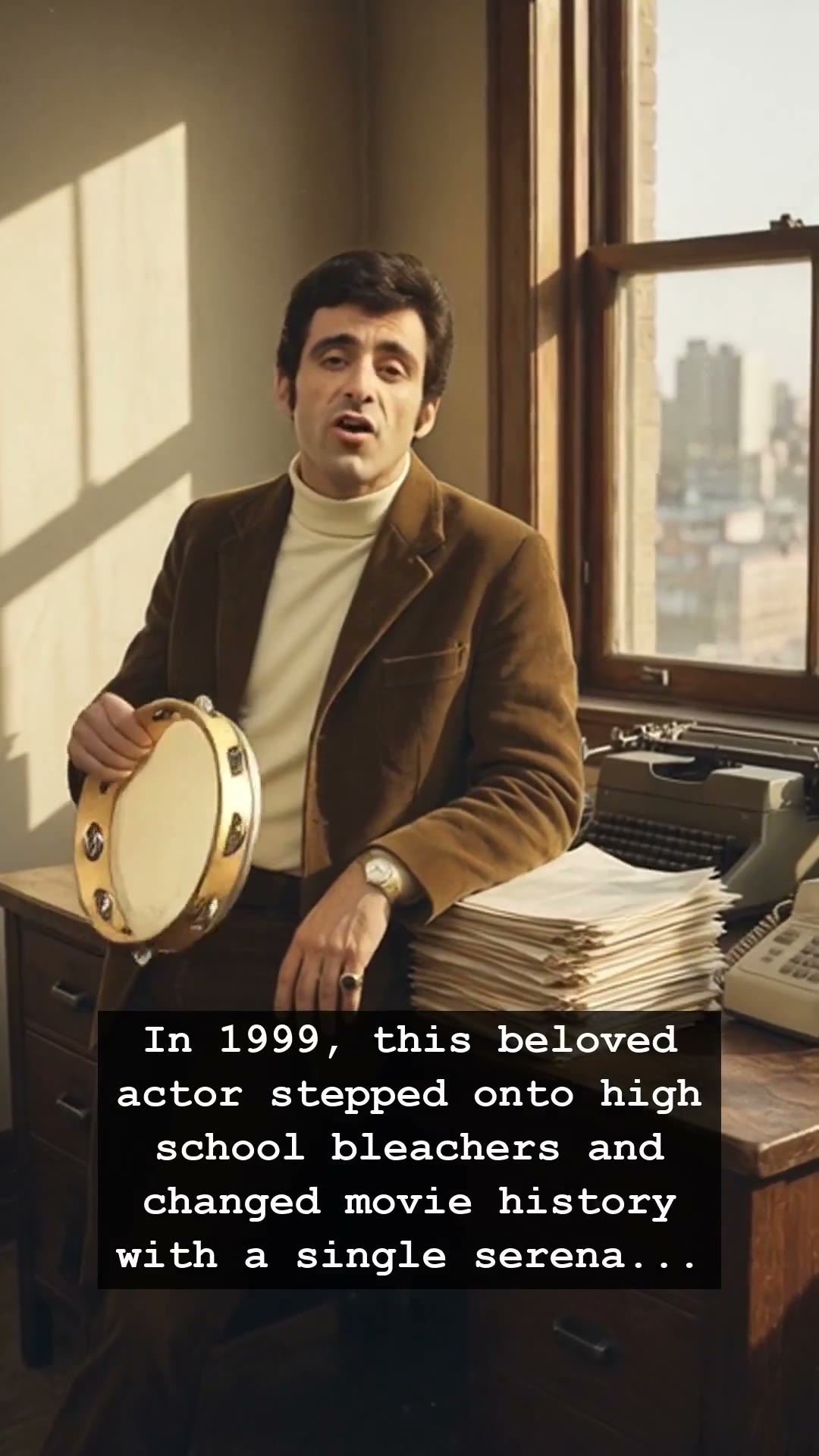
In 1999, movie history was rewritten on a humble set of high school bleachers. While teenagers across the world were glued to their screens for the climax of 10 Things I Hate About You, they didn’t just witness a romantic gesture; they experienced a resurrection of 1960s cool. When Heath Ledger grabbed that megaphone and sprinted through the Stadium High marching band to perform Can’t Take My Eyes Off You, a new generation fell head over heels for the unmistakable, falsetto-drenched magic of Frankie Valli. It was a moment that felt spontaneous and raw, yet it carried the weight of a song that had already defined an entire era of American pop culture.
Released in 1967, the original recording of Can’t Take My Eyes Off You was the defining breakthrough for Frankie Valli as a solo artist outside of The Four Seasons. At the time, the world was shifting from the innocence of early rock ‘n’ roll toward the more complex, psychedelic soul of the late sixties. While bands like The Beatles and The Doors were pushing boundaries, Frankie Valli maintained a uniquely Italian-American crooner charm that resonated deeply with the working-class soul of the American heartland. Behind the scenes, the recording sessions were anything but smooth, characterized by the pressure to maintain the commercial success that the radio charts demanded during that competitive period.
Frankie Valli was a perfectionist, often clashing with producers and arrangers to ensure that his signature high-register vocal delivery cut through the heavy orchestral arrangements of the time. The song itself, with its building horn sections and dramatic lyrical shifts, mirrored the volatility of the decade. By the time it climbed the Billboard charts, it became a staple of the jukebox culture, synonymous with prom nights and the flickering neon lights of local diners. It captured that precise, fleeting intersection of desperation and adoration that defined the American youth experience long before the digital age took over.
Decades later, the song became a cultural phenomenon all over again, proving that the artistic integrity of Frankie Valli could bridge the gap between the Boomer generation and the MTV era. The scene in 1999 served as a nostalgic bridge, turning a classic golden oldie into a modern anthem for a generation that had otherwise moved on to grunge and teen pop. It is rare for a song to survive multiple cultural shifts without losing its identity, yet Frankie Valli has remained a constant, haunting presence in the American songbook, his voice serving as a sonic time capsule for millions of listeners who grew up in the shadow of the Vietnam War and the rise of disco.
Looking back, the enduring success of this track highlights why we continue to return to the music of the fifties and sixties. It was an era where the songwriting was deliberate, the emotions were heightened, and the production was grand in scale. Frankie Valli provided the heartbeat for those years, offering a soundtrack that felt as personal as a letter tucked into a diary. Even now, whenever that iconic chorus hits, we are transported back to a simpler time of stadium bleachers and first loves. Music this powerful doesn’t just age; it simply waits for the next generation to rediscover the light.