
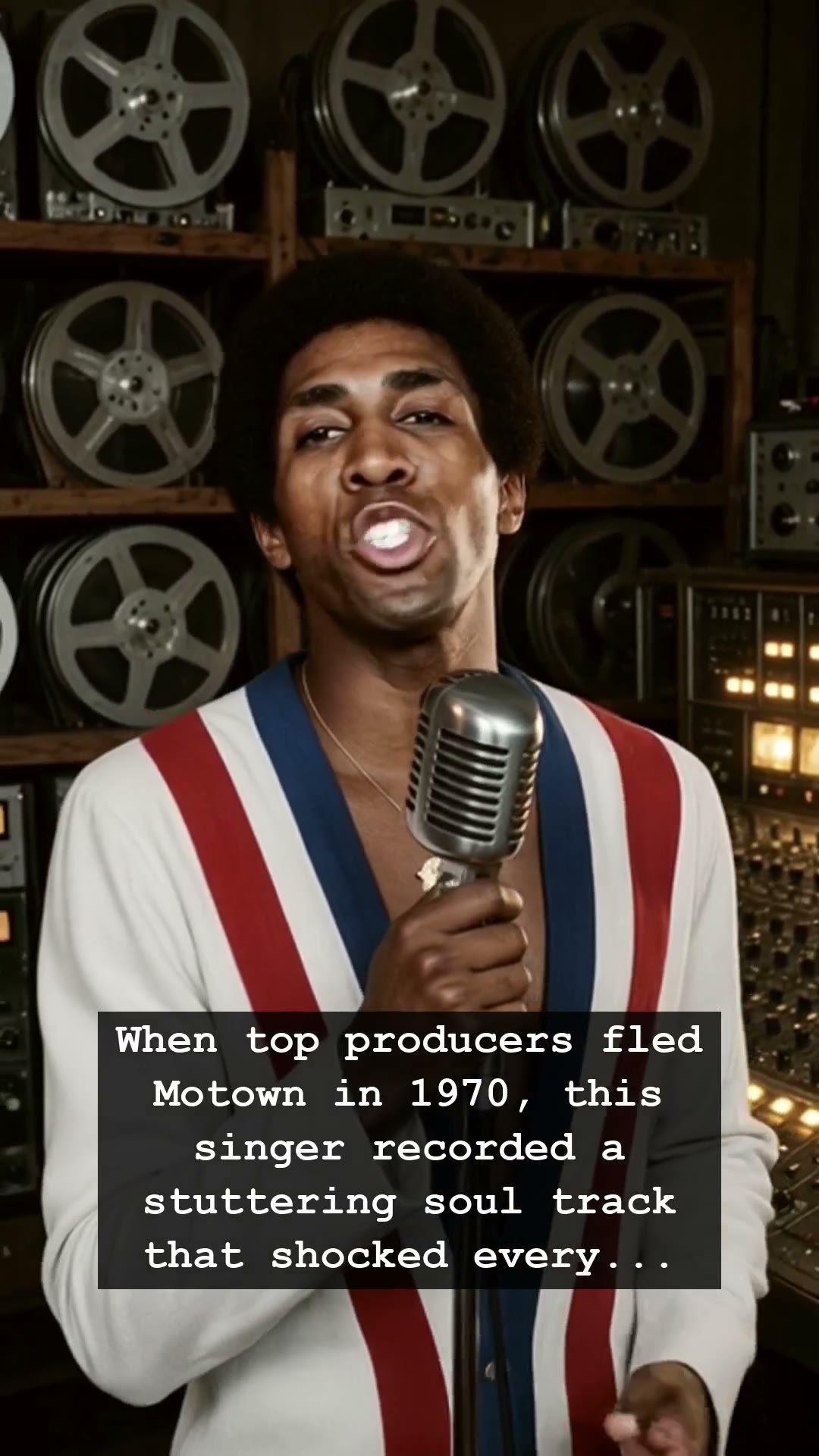
The year was 1970, and the sound of Detroit was fracturing. As the industry giants of Motown saw their legendary producers packing their bags and departing for the sun-drenched, uncharted territories of the West Coast, a void opened in the heart of soul music. Amidst the uncertainty and the shifting winds of the record industry, one man dared to do the unthinkable. General Johnson, the soulful architect behind the Chairmen of the Board, didn’t just step into the silence; he shattered it with a rhythmic, stuttering vocal tic that left executives reeling and radio programmers scratching their heads in disbelief.
That track was Give Me Just a Little More Time. When General Johnson first walked into the studio with that hesitant, nervous vocal delivery, industry gatekeepers were convinced it was a recipe for disaster. In an era where polished, seamless R&B was the gold standard, the idea of a song built around a stammer felt like a gamble destined for the bargain bin. But General Johnson understood something the suits didn’t: that true soul isn’t found in perfection, but in the raw, human vulnerability of a performance. He poured his frustration and his longing into every syllable, turning a simple lyrical choice into a revolutionary hook that defined the transition from the golden age of sixties soul to the grit of the seventies.
It was a moment of pure musical alchemy. As the needle dropped on turntables across America, from the corner jukeboxes in smoke-filled diners to the budding living room stereo systems of the early seventies, the public didn’t just listen; they were hooked. The stutter wasn’t a flaw; it was a rhythmic anchor that forced listeners to lean in, capturing the anxiety and the urgency of a generation caught between the idealism of the Woodstock era and the emerging cynicism of a new decade. The record surged, selling a million copies and proving that the spirit of soul couldn’t be manufactured or managed by the big studios—it had to be lived.
This was the era when the portable Walkman was still a dream, and the magic of a song was tied to the communal vibration of a dance floor or the shared static of a transistor radio. General Johnson transformed a precarious career moment into a cultural phenomenon, forever etching his name into the annals of rhythm and blues. His ability to turn a perceived weakness into his greatest strength remains a testament to the grit of that time. While the Motown exodus marked the end of an assembly-line era for music, General Johnson proved that a single, authentic spark was enough to ignite a fire that would burn for decades.
Even today, listening to the crackle of that original pressing, you can hear the defiance in his voice. General Johnson wasn’t just singing a love song; he was asserting his place in a landscape that was rapidly changing. We look back at these moments not just for the melody, but for the story of the man behind the microphone who refused to fold when the pressure was at its peak. Do you remember the first time those stuttering opening notes hit your ears? Tell us your favorite memory of that timeless soul classic in the comments below.