
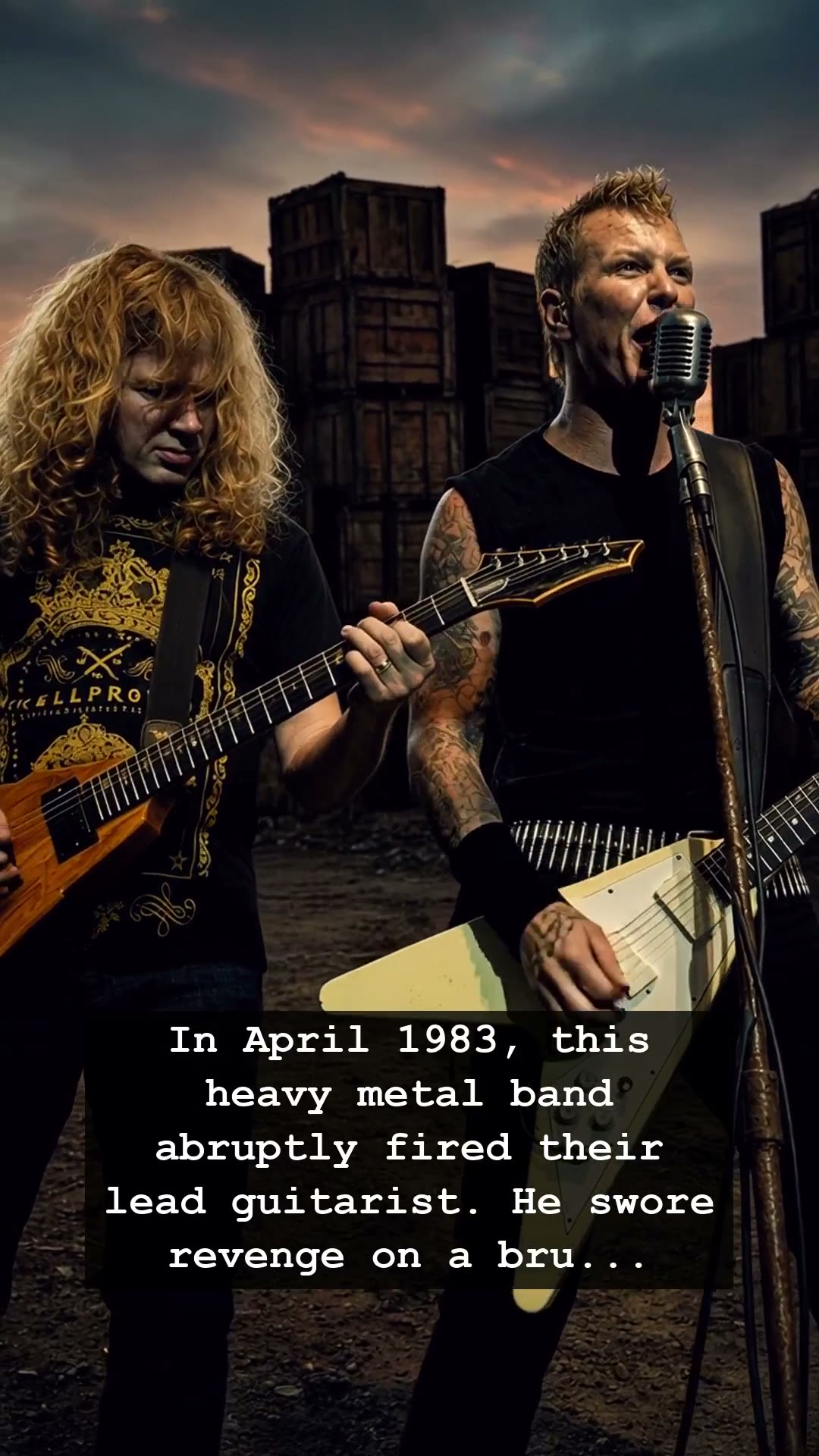
It was April 1983, a time when the scent of hairspray and leather began to dominate the Sunset Strip, and the raw energy of early thrash metal was about to change music history forever. In a cramped, dimly lit room, Metallica, on the cusp of greatness, made a cold, clinical decision that would ripple through the decades: they abruptly fired their lead guitarist, Dave Mustaine. He was handed a bus ticket back to California, left to stew in his own fury during a brutal four-day journey across the American landscape. As the miles ticked by, the roar of the highway fueled a singular, burning ambition. Dave Mustaine did not just want to return home; he wanted to build a sonic weapon designed to eclipse the very band that had discarded him.
This was the birth of a grudge that defined a generation of heavy metal. Dave Mustaine was no ordinary musician; he was a technical wizard with a chip on his shoulder, and he channeled every ounce of his rejection into his songwriting. While Metallica went on to achieve global superstardom with Cliff Burton and later Jason Newsted, Mustaine forged Megadeth in the fires of spite. He wanted them faster, heavier, and more technically precise than his former bandmates. The rivalry became the stuff of legend, a classic tale of creative tension and wounded pride that mirrored the intense competitive spirit of the era.
Behind the scenes, the era was a volatile mix of substance-fueled chaos and obsessive perfectionism. Before the clean, glossy aesthetics of the MTV era fully took hold, there was the grit of the underground. Dave Mustaine was at the epicenter of this shift, navigating the dark side of fame where the pressure to perform often led to erratic behavior and shattered friendships. The incident in 1983 remains one of the most significant pivots in rock history, proving that behind the loudest riffs and the most iconic arena anthems, there is often a deeply human story of betrayal and redemption.
For those of us who remember the crackle of a cassette tape playing Killing Is My Business in a walkman, the story of Dave Mustaine represents the raw, unfiltered spirit of 80s metal. It was not just about the music; it was about the hunger to prove oneself when the world—and your peers—had written you off. The tension between Mustaine and James Hetfield became a focal point for fans who picked sides in a war that lasted for decades. It was a time when musicians lived on the edge, and the lines between genius and madness were often blurred by the neon lights of the clubs and the intensity of the studio.
Today, the rivalry has softened into a mutual respect, but the legacy of that four-day bus ride remains etched in the foundation of thrash metal. Dave Mustaine’s journey from being the man kicked to the curb to the frontman of a global powerhouse is a testament to how even the most bitter endings can lead to legendary beginnings. As we look back at the glory days of the 80s, his story stands as a reminder that the best music often comes from the deepest wounds. Do you still remember the first time you heard the frantic opening chords of a Megadeth track and felt the power of that long-held grudge?