
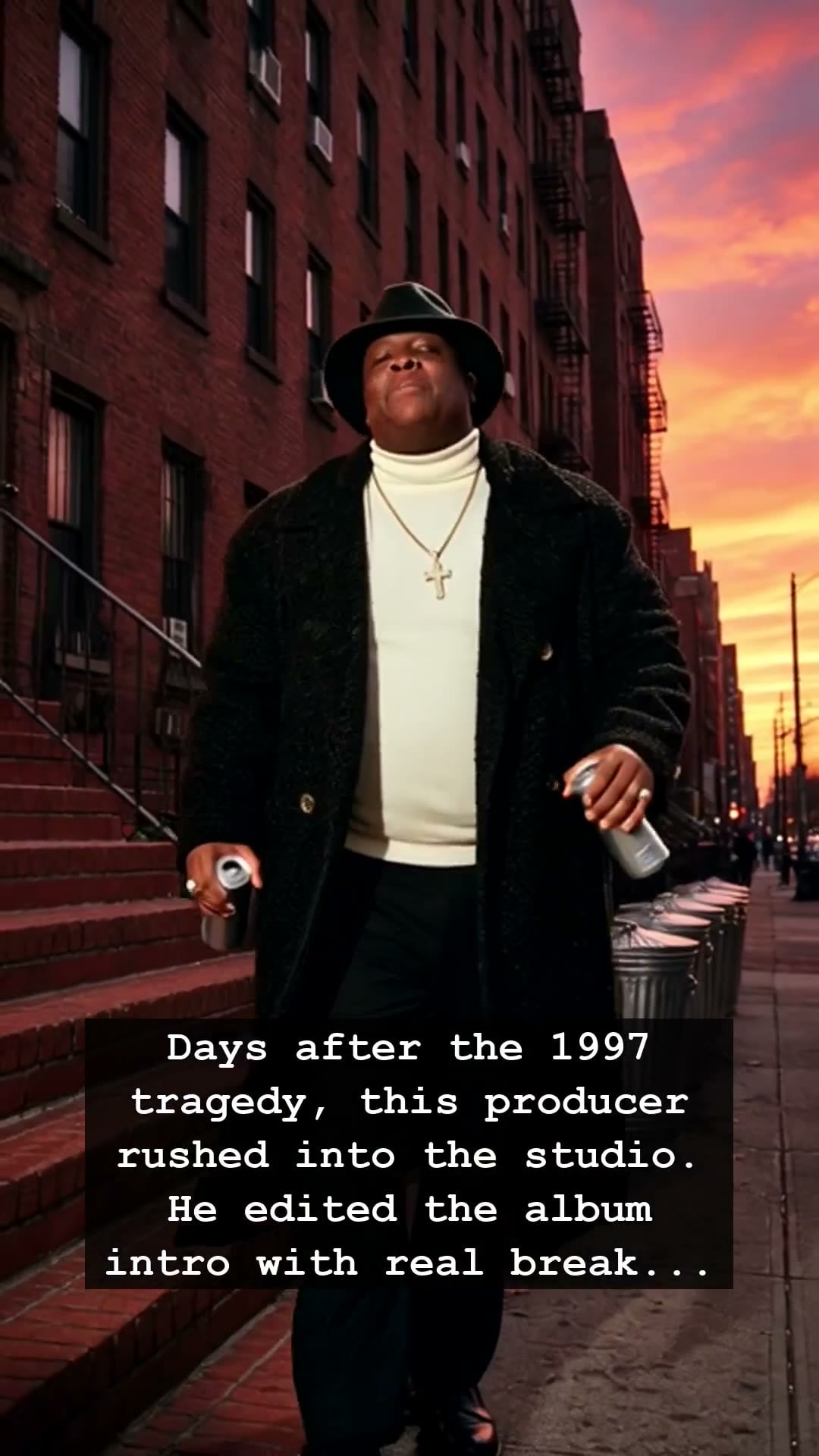
The neon lights of 1997 Los Angeles dimmed in an instant, forever changing the trajectory of hip-hop history. It was March 9th when the world learned that Christopher Wallace, known to the masses as The Notorious B.I.G., had been gunned down in a drive-by shooting. While fans wept in the streets and radio stations played his anthems on loop, something chilling was happening inside a recording studio. Deep in the heart of the industry, producers were scrambling to finalize his second studio album, Life After Death. The atmosphere was thick with grief and the smell of stale coffee, but they knew the project had to be completed. It was not just an album anymore; it was destined to become a final, agonizing testament.
In a move that remains one of the most haunting production decisions in music history, the team rushed to rework the album’s intro. They made a choice that blurred the lines between artistic narrative and cold reality: they embedded actual news reports of the fatal shooting directly into the track. For those listening to the album for the first time, the transition from the fictional storytelling of a kingpin to the harsh reality of a real-life morgue report was visceral. It turned a collection of songs into a mourning ritual, transforming the Notorious B.I.G. from a living legend into an immortal ghost of the nineties era.
This was the height of the East Coast versus West Coast rivalry, a time when lyrical wars were fought with a ferocity that eventually spilled off the vinyl and onto the asphalt. The Notorious B.I.G. stood at the epicenter of this cultural hurricane. Before his untimely departure, he was the charismatic king of Bed-Stuy, a storyteller whose gravelly flow painted vivid pictures of struggle and opulence. His presence was seismic, yet the industry he dominated was equally volatile, filled with shifting alliances and high-stakes tension that MTV crews and tabloid journalists couldn’t fully capture without losing their objectivity.
Looking back, the emotional weight of Life After Death carries the same gravity as the best soul records from the Motown era or the raw, unfiltered energy of mid-seventies funk. The tragedy of the Notorious B.I.G. forces us to reflect on the cost of fame in an age where the media cycle was just beginning to accelerate into the madness we recognize today. It was a moment when the music industry lost its innocence, and listeners realized that the figures they idolized were as fragile as the narratives they spun. That specific, chilling intro remains a bridge between the man and the myth.
Even decades later, playing the album feels like stepping into a time machine. We are transported back to a world of baggy denim, oversized leather jackets, and the unmistakable sound of a golden era struggling to process a profound loss. The Notorious B.I.G. left behind more than just hits; he left a footprint that continues to define the boundaries of modern storytelling. Whether you were there when the news broke or are discovering his genius now, his story remains a powerful reminder of how art can hold a mirror to our deepest vulnerabilities. Sometimes, the music that hurts the most is the music that stays with us forever.