
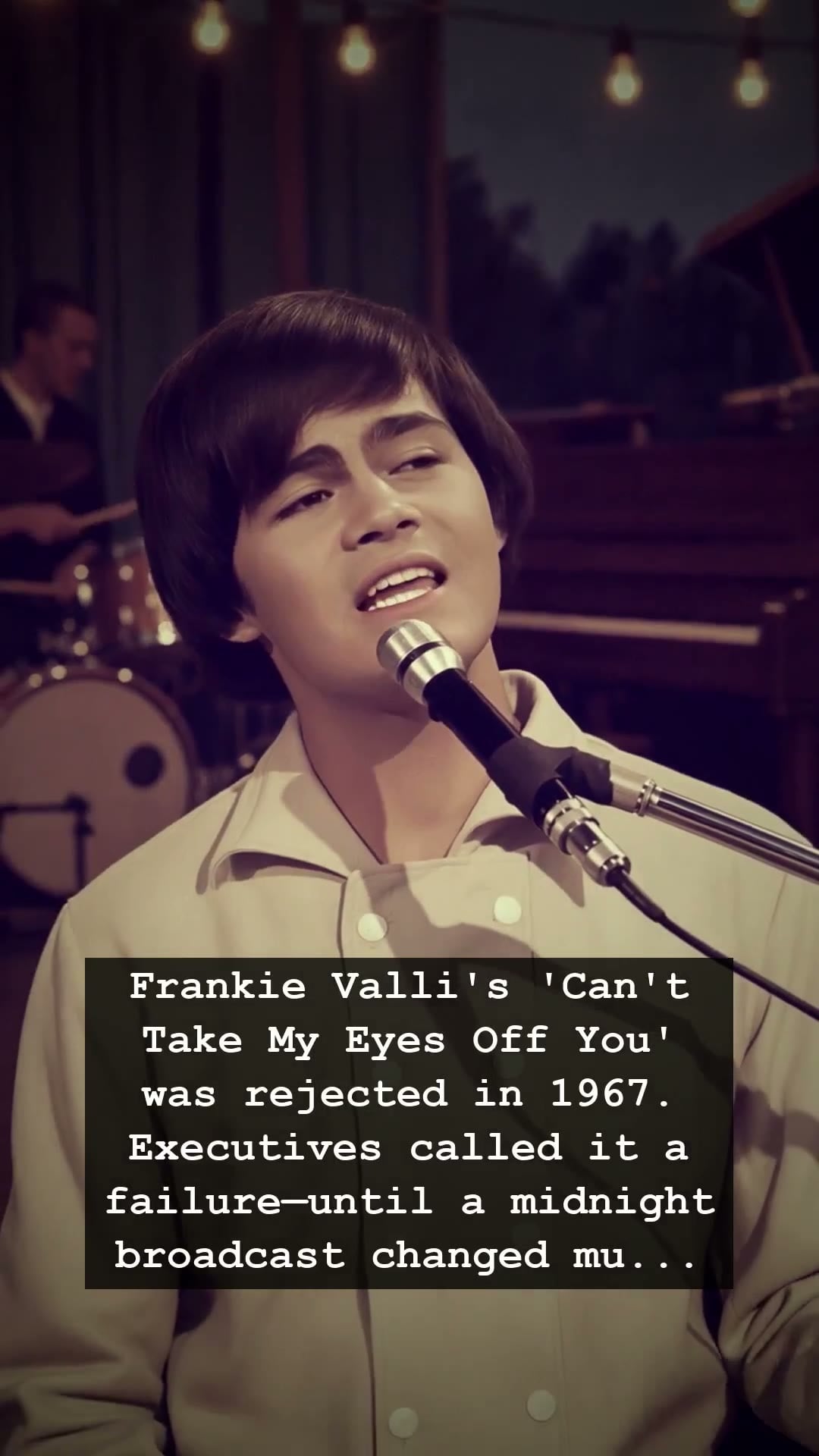
In the smoke-filled, neon-lit landscape of 1967, the music industry was a ruthless gatekeeper. Executives sat behind polished mahogany desks, deciding which melodies would grace the airwaves and which would vanish into the static of history. Among those deemed unworthy was a track destined to become one of the most recognizable love songs in the American canon. Frankie Valli, the falsetto king of the era, walked into the studio with ‘Can’t Take My Eyes Off You,’ a song that pulsed with a raw, desperate sincerity. Yet, the record label heads heard nothing but a failure. To them, the arrangement was too experimental, the tempo too unpredictable, and the overall sound far too risky for the conservative pop charts of the late sixties.
They essentially threw the master tape into the darkness of the archives, dismissing it as a recording that would never see the light of day. For Frankie Valli, whose career had been built on the impeccable harmonies of The Four Seasons, this rejection stung. It was a moment of vulnerability where the pressure of fame met the cold reality of corporate profit margins. In an era when the Jukebox was the heartbeat of every diner and the transistor radio was the lifeline of the American teenager, being rejected by the higher-ups meant artistic exile. The song remained a ghost, locked away in a vault, seemingly destined to be forgotten alongside the discarded records of less fortunate artists.
Then came the twist of fate that changed everything. A local radio disc jockey, sensing the undeniable magnetic pull of the track, decided to bypass the corporate mandate and aired it during a midnight broadcast. The city didn’t just listen; it woke up. The response was immediate and overwhelming. As the soulful horn section erupted and Frankie Valli climbed to those impossible heights, listeners were spellbound. Switchboards lit up, and requests flooded in, forcing the very executives who had dismissed the song to scramble in an attempt to salvage their mistake. The song was pulled from the scrap heap and thrust into the pantheon of classics.
Why does this story still resonate in our modern digital age? Perhaps because it speaks to the resilience of true art against the cynicism of the machine. Frankie Valli captured something timeless in those three minutes—an unadorned, frantic confession of love that transcends the shifting trends of the decades. From the gritty disco clubs of the seventies to the polished pop radio of the nineties, the song has remained a constant, proving that greatness often finds its way despite the doubters.
Decades later, we still find ourselves entranced by that soaring voice. It is a reminder of a time when radio was a mystical conduit for cultural transformation, long before the algorithmic curation of today. When you hear that opening guitar riff, you are transported back to 1967, to a world of fast cars, vinyl records, and the undying hope embedded in a perfectly crafted chorus. The legacy of Frankie Valli is not just in his chart-topping hits, but in the songs that refused to stay buried, waiting for their moment in the midnight spotlight.