
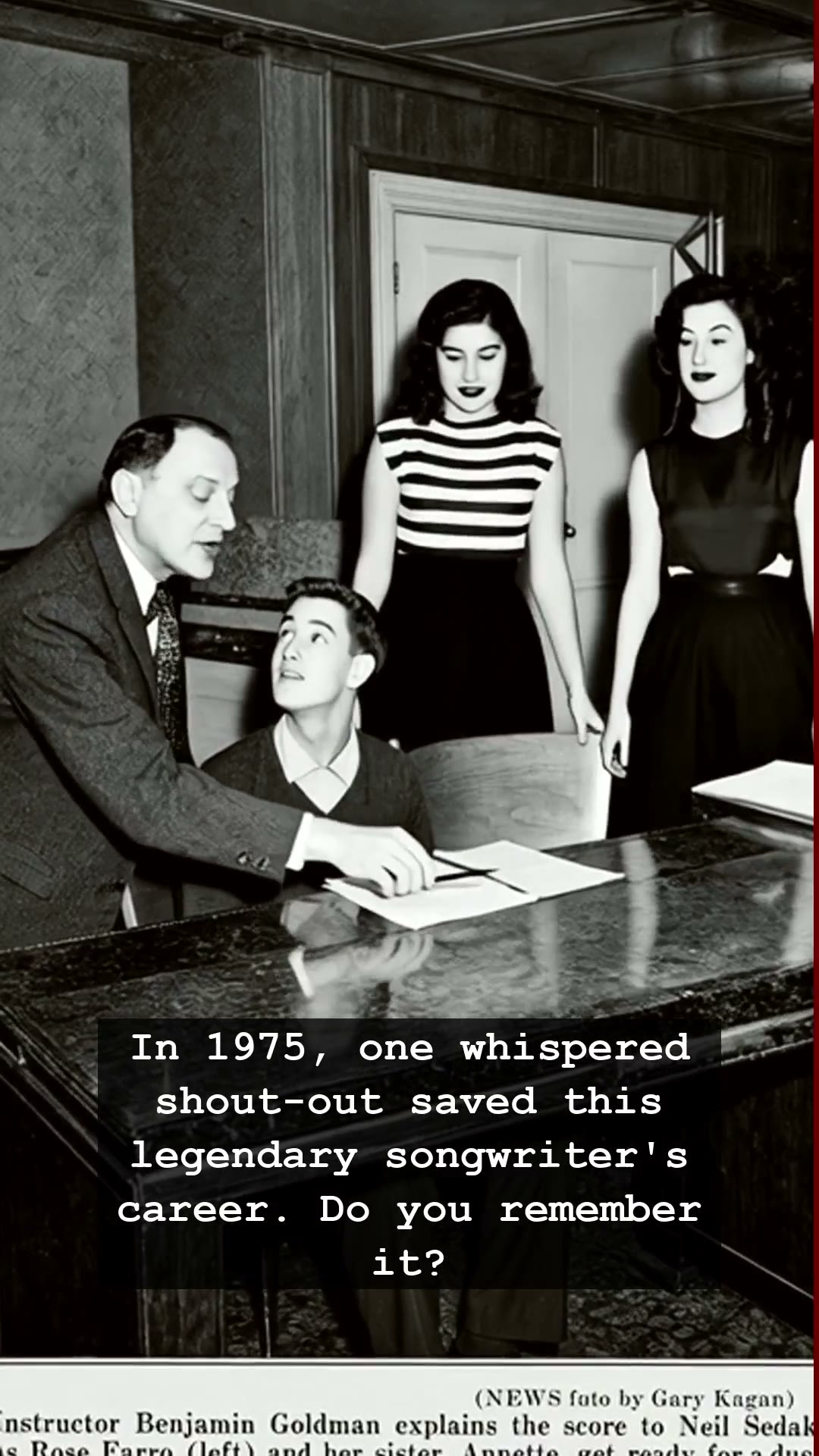
It was 1975, the era when the smooth, polished sounds of soft rock began to dominate the airwaves, pushing aside the grit of the late sixties. Neil Sedaka, a titan of the Brill Building era who had defined the early days of rock and roll with hits like Breaking Up Is Hard to Do, found himself staring into the abyss of obscurity. His brand of music felt like a relic from the jukebox age, an old-fashioned memory fading into the background noise of the disco revolution. He was a songwriter in exile, cast out by an industry that had moved on to the newer, glossier sounds of the mid-seventies.
Then came a stroke of fate that felt like a script written in the stars. A duo named Captain and Tennille, who were rising rapidly to stardom, decided to cover Neil Sedaka’s song Love Will Keep Us Together. As the track reached its infectious, groovy peak, Toni Tennille leaned into the microphone and whispered, Sedaka is back. It was a simple, improvised shout-out, yet it acted like a lightning bolt through the industry. That single, fleeting whisper didn’t just add a touch of personality to a pop song; it served as a cultural reset button for an entire generation of music lovers who had forgotten the magic Sedaka once brought to their radios.
The impact was seismic. The song rocketed to number one, and in that instant, Neil Sedaka was no longer a ghost of the past but a current sensation. This moment of grace from Captain and Tennille invited listeners to revisit his vast catalog. It was a rare, harmonious intersection of old guard and new blood that rarely happens in the cutthroat music business. While rock history is often defined by ego-driven rivalries and bitter breakups, this story stands out as a genuine, quiet act of professional reverence that fundamentally altered the trajectory of a legend’s life.
Beyond the glitz of the radio charts, this era was defined by the transition from the analog soul of the early seventies to the polished production of the late decade. Seeing Neil Sedaka return to the top was a validation for those who grew up in the golden age of American pop. It reminded audiences that quality, heart-tugging songwriting is timeless, even when the world is busy chasing the latest synth-pop trends or rushing toward the dance floors of Studio 54. The resurgence proved that even the most fading stars could find their light again if the right melody crossed the right path at the perfect moment.
Decades later, that whisper still echoes in the minds of anyone who remembers the warmth of their first Walkman or the crackle of a vinyl record playing on a Sunday morning. It reminds us that behind every massive hit, there is often a hidden story, a moment of kindness, or a whisper that shifts the world on its axis. Neil Sedaka’s comeback remains one of music’s most heartwarming fairy tales, a testament to the fact that while trends in rock and soul may come and go, true talent never truly disappears.