
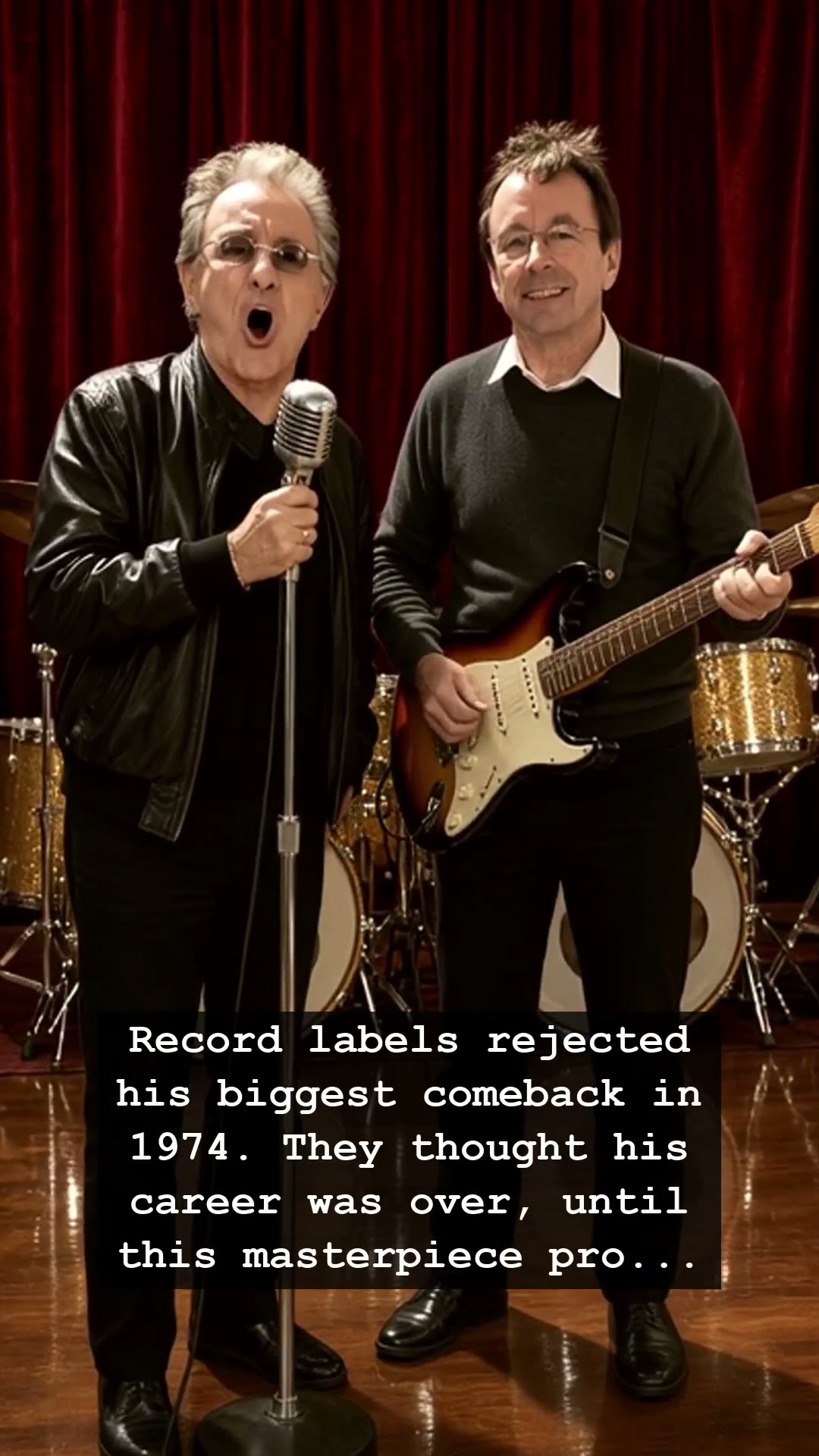
By 1974, the music industry had moved on, or so the men in suits behind the mahogany desks at major record labels believed. For Frankie Valli, the golden voice of the Four Seasons, the writing on the wall seemed painfully clear. The era of Doo-wop and early 60s pop was rapidly fading, replaced by the gritty sounds of arena rock and the shimmering, emerging pulse of disco. Executives told him to his face that his career was dead, treating his legacy like a relic of a bygone era. They turned him away, closing doors that had once swung wide open, convinced that the man who defined a generation had absolutely nothing left to offer a changing radio landscape.
But they had drastically underestimated the partnership between Frankie Valli and his long-time creative collaborator, Bob Gaudio. Behind the scenes, the two men were not ready to surrender their place in the sun. Bob Gaudio, a brilliant songwriter who understood the mechanics of a hit better than the executives, held onto a piece of music that the industry had deemed irrelevant. They were laboring in the shadows, fighting against the crushing weight of public indifference and the bitter sting of industry rejection. It was a classic narrative of the underdog, fueled by raw talent and an stubborn refusal to let the music die in a dusty archive.
Then came the moment that changed everything. The song was My Eyes Adored You, a haunting, vulnerable ballad that stripped away the bombast and focused entirely on the fragile, unmistakable power of Frankie Valli. When the record finally hit the airwaves, the world reacted with a collective gasp. It climbed the charts with a persistence that forced those same dismissive executives to eat their words. It wasn’t just a hit; it was a vindication. The song became a massive number one, soaring to the top of the Billboard Hot 100 and proving that true talent does not expire, no matter what the trends of the year suggest.
Reflecting on that era, it is impossible not to feel the nostalgia of the mid-70s. This was the age of the Walkman starting to change how we consumed music and the fading echo of the Woodstock generation. Yet, in the middle of this transition, Frankie Valli reminded us that a well-crafted melody is timeless. His comeback was not just a commercial triumph; it was a personal victory against a ruthless corporate machine. Bob Gaudio’s production choices, perfectly balancing classic sentimentality with the sleek polish required for the mid-70s, turned a rejected demo into an anthem of persistence.
Today, when you hear those opening chords, you are instantly transported back to a time when music felt like a battle of wills. The story of Frankie Valli and Bob Gaudio serves as a reminder that the best art often comes from those who have been told ‘no’ the most. Their resilience turned a potential obituary into one of the most celebrated second acts in pop history. We still listen because the passion remains, proving that even when the labels slam the door, a true legend will find a way to make the whole world listen.