
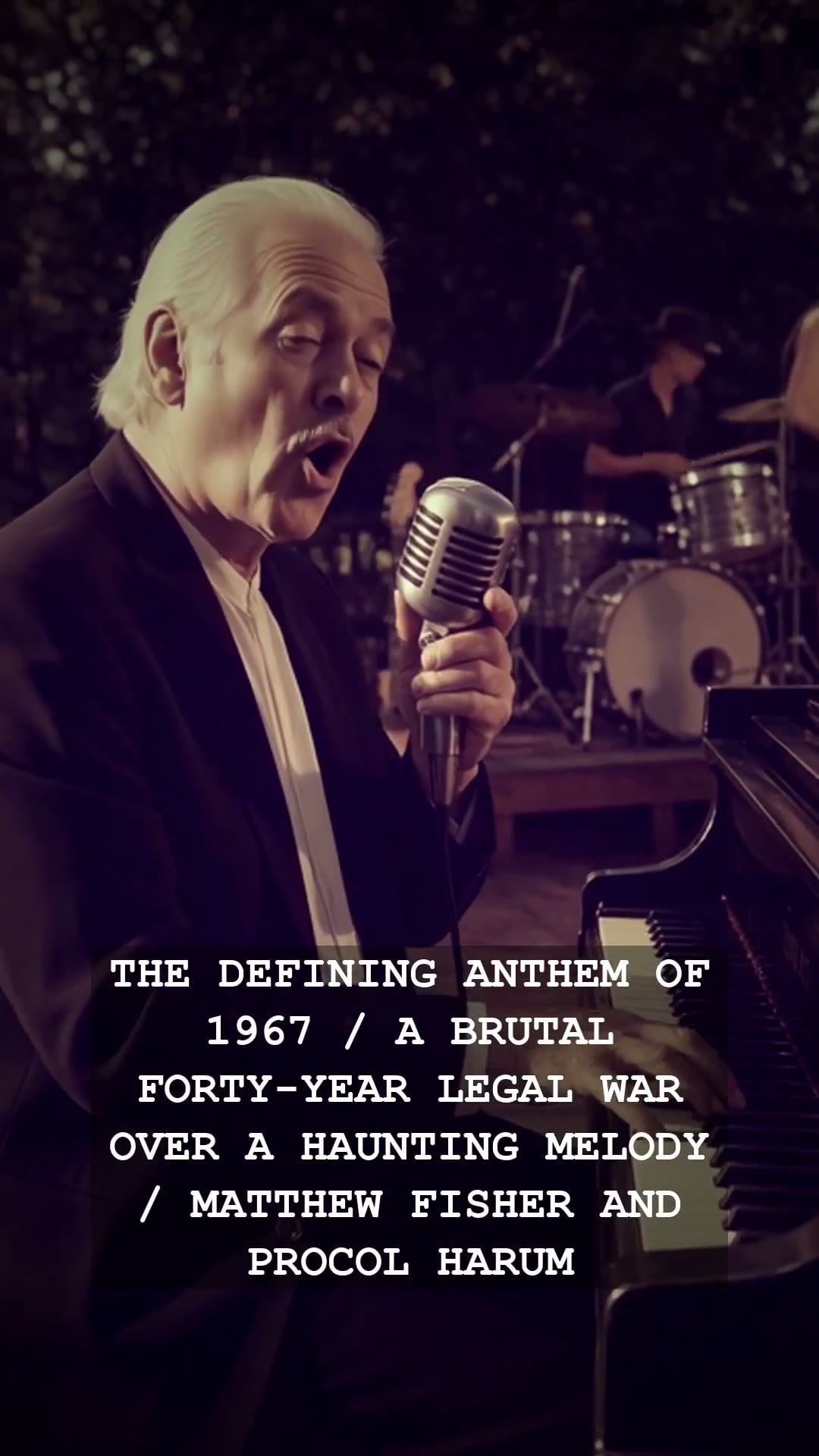
The year was 1967. The air was thick with the scent of patchouli and the hazy promise of the Summer of Love. As the psychedelic revolution took hold, one song rose above the static of the radio waves, haunting listeners with its ethereal organ melody. A Whiter Shade of Pale became the definitive anthem of a generation, a track that felt like it had been pulled from a dream state. Yet, beneath the surface of this baroque masterpiece, a bitter, brutal conflict was brewing—a legal war that would drag on for four decades, turning brothers into enemies and threatening to erase the true legacy of Procol Harum forever.
At the heart of this controversy sat the Hammond organ line, a swirling, majestic sound that defined the song’s mysterious aura. While lead singer Gary Brooker became the face of Procol Harum, the creative tension centered on Matthew Fisher, the organist who brought that haunting melody to life. For years, the official history of the band kept Fisher in the shadows, his contribution relegated to the role of a hired hand. The music industry of the late sixties was a treacherous landscape, often favoring charisma over composition rights, and Fisher found himself sidelined as the track ascended into legend.
The resentment simmered for years, mirroring the internal fractures that often plague iconic groups during the rise of the counterculture. By the time the legal battle officially erupted, it was no longer just about royalties; it was about the fundamental authorship of a piece of history. For forty years, the courts wrestled with the question of who truly deserved credit for the song that captured the melancholy of a decade. The drama was a stark departure from the peace-and-love aesthetic that Procol Harum was often associated with, revealing the gritty, cutthroat reality hidden behind the velvet curtains of the rock music business.
When the case finally reached the House of Lords, the verdict sent shockwaves through the industry. The ruling acknowledged Fisher’s crucial role in crafting the iconic organ hook, finally granting him a portion of the credit he had been denied for so long. It was a bittersweet victory, coming after a lifetime of bitterness, yet it served as a poignant reminder of the power struggles that defined the era. Procol Harum had created something timeless, but they had also been human enough to let greed and ego cloud their artistic brotherhood.
Looking back today, the song remains a haunting artifact of the 1960s, a testament to a time when music could change the world while simultaneously tearing its creators apart. Every time that famous organ swells, we aren’t just hearing a hit record; we are listening to a decades-long struggle for recognition and a piece of rock and roll history that refused to be silenced. As the needle drops on the vinyl, the drama of the past seems to dissipate, leaving behind only the cold, beautiful ghost of a melody that never truly faded away.