
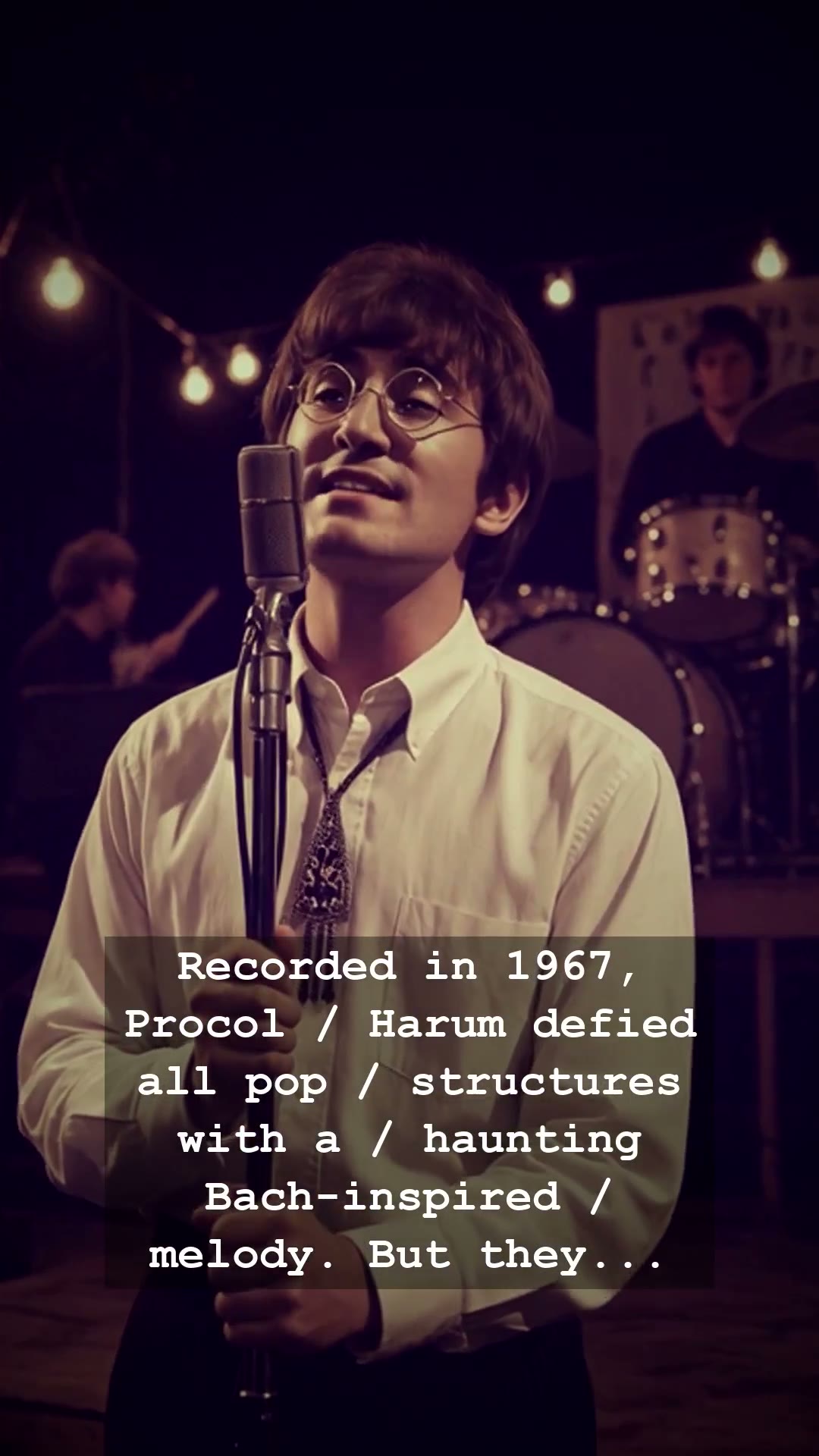
In the sweltering heat of the 1967 Summer of Love, while the world was obsessed with the vibrant colors of psychedelic rock and the upbeat rhythms of Motown, a sound emerged that felt like it had been carved from centuries of classical sorrow. It was a melody that defied every rule of the era. Before the audience could even process the name of the band, Procol Harum had already cemented their place in history with an organ line that felt both divine and deeply melancholic. It was a haunting Bach-inspired masterpiece that didn’t just top the charts; it pierced the very soul of the nineteen-sixties, lingering in the air long after the Jukebox stopped spinning.
Most listeners at the time assumed they were hearing a traditional pop track, but the story behind the creation of A Whiter Shade of Pale is far more complex and filled with the kind of tension that defined the music industry’s Golden Age. The band, Procol Harum, had assembled with a unique vision that blended classical rigor with the raw, rebellious spirit of rock. When that iconic, descending Hammond organ riff began to play, it didn’t sound like the typical radio fodder of the time. It sounded like an ancient prayer being broadcast into the smoke-filled clubs and quiet living rooms of a generation on the brink of profound cultural change.
Behind the curtains of success, the tension within Procol Harum was as palpable as the music itself. The track was a commercial juggernaut, yet the mystery of its lyrics left fans and critics in a state of perpetual confusion. Was it about a wedding, a voyage, or something more celestial? The song’s poetic ambiguity became its greatest strength. It was the perfect companion for a generation carrying a Walkman and seeking depth in a world that was becoming increasingly fast-paced. Procol Harum managed to capture the exact frequency of yearning, a sensation that remains just as potent today as it was half a century ago.
What makes the legacy of this song so enduring is the refusal of Procol Harum to bow to the pressures of the industry. They weren’t just another group chasing a hit; they were architects of an atmosphere. They navigated the pitfalls of sudden fame—the ego clashes, the recording studio drama, and the relentless exhaustion of the road—with a sound that remained hauntingly consistent. To listen to them today is to step back into a landscape where music felt like an act of rebellion against the mundane, a testament to the raw talent that defined an era of artistic exploration.
Decades later, the ghost of that organ melody still resonates in our collective memory. Procol Harum left an imprint that few bands can claim, proving that you don’t need to chase trends to become immortal. Whether you were there in 1967 or you discovered their sound through the echoes of vinyl collections, the magic remains. It is a reminder that some songs are not merely recorded; they are captured, preserved in the amber of time, waiting for the next listener to be captivated by their haunting, timeless beauty.