
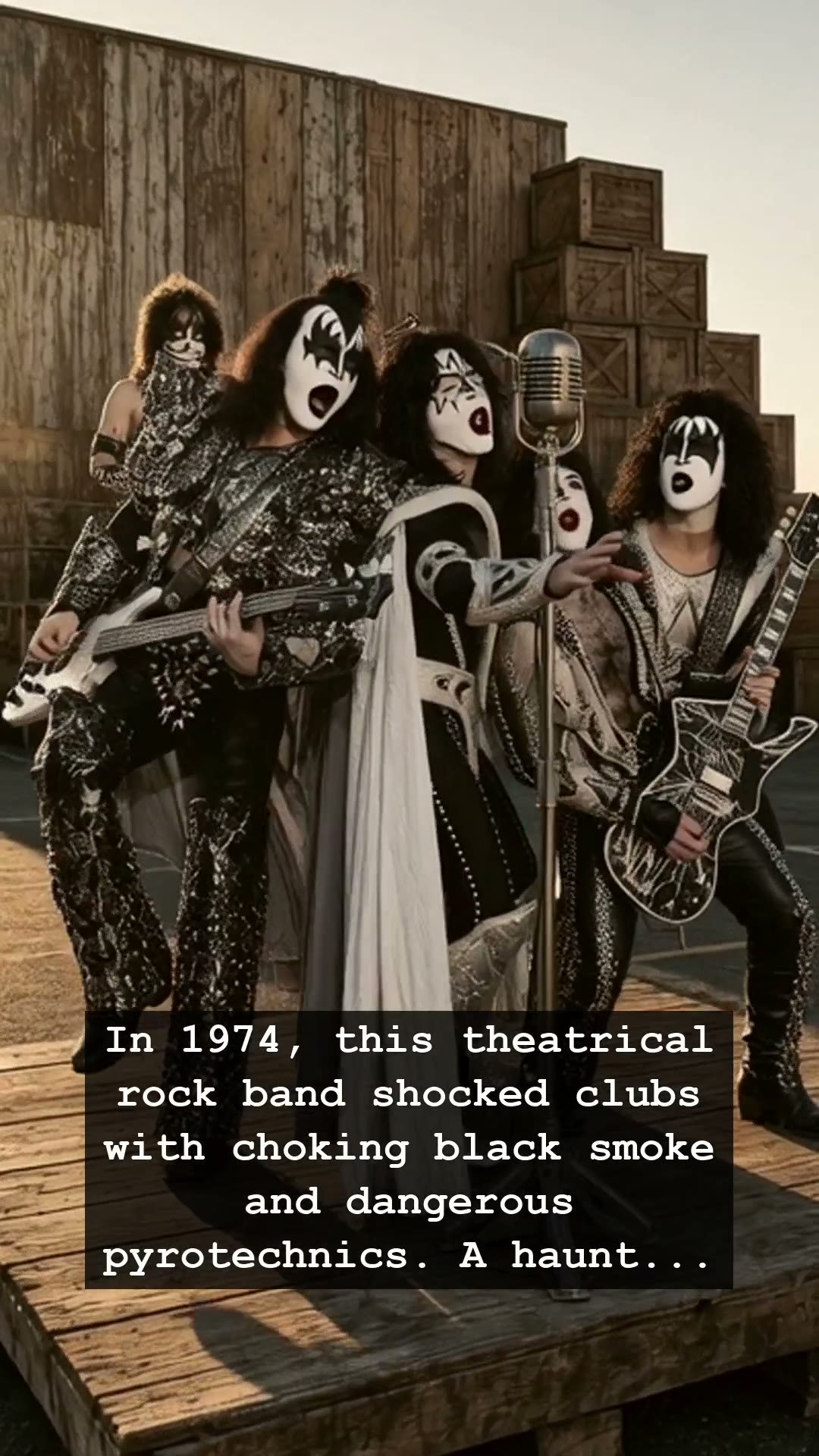
It was 1974, and the air inside the grimy, sweat-soaked clubs of New York City felt thick enough to swallow you whole. Before the sold-out stadiums and the global merchandise empire, KISS was just a group of hungry, leather-clad outsiders stalking the dark streets of Times Square. They didn’t just play music; they staged a sensory assault. Audiences didn’t know whether to run for the exit or press closer to the stage as the band unleashed a barrage of choking black smoke and uncontrolled pyrotechnics that turned every small venue into a terrifying, beautiful inferno. It was the birth of theatrical rock, an era where the stage became a sacrificial altar for raw ambition.
At the center of this chaos were Gene Simmons and Paul Stanley, men who understood that in the age of the Jukebox and burgeoning television exposure, being good wasn’t enough—you had to be dangerous. Their aesthetic, a haunting hybrid of comic book villainy and kabuki theater, was designed to shock the sensibilities of a society still reeling from the cultural tremors of the post-Woodstock era. When KISS hit the stage, they weren’t mere musicians; they were larger-than-life demons emerging from the underbelly of Manhattan. Their music, defined by heavy riffs and anthemic hooks, captured the grime and the grandeur of the mid-seventies American landscape perfectly.
The real magic, and perhaps the tragedy, lay in the lengths to which KISS went to maintain the illusion. Behind the greasepaint and the monstrous platform boots, the band members were orchestrating a revolution in live entertainment. The pyrotechnics were often amateurish and incredibly hazardous, with sparks singeing the eyebrows of front-row fans and smoke machines obscuring the band’s frantic movements. Yet, this high-stakes gamble paid off. It created a level of tension that defined a generation of hard rock, setting the bar for every arena-filling spectacle that followed in the wake of the eighties glam metal explosion.
This era of rock and roll was defined by a specific kind of excess. While disco began to dominate the radio waves at Studio 54, KISS remained the antithesis of the smooth, polished pop sound. They embraced the sweat, the danger, and the raw, unadulterated noise of the urban underground. Their shows became a rite of passage for teenagers seeking an escape from the mundanity of suburban life. To see KISS in the mid-seventies was to witness the death of the humble garage band and the dawn of the corporate rock behemoth that would soon dominate the airwaves via MTV.
Today, the legacy of KISS remains as polarized and powerful as it was back in the smoky clubs of 1974. Whether you view them as the ultimate cynical marketing machine or as the pioneers who invented the modern live concert experience, their impact is undeniable. They turned the stage into a theater of the grotesque and paved the way for generations of performers who put image on equal footing with melody. As the echoes of their early anthems continue to haunt our collective nostalgia, we are reminded of a time when rock and roll wasn’t just a genre; it was a fire that threatened to burn the house down.