
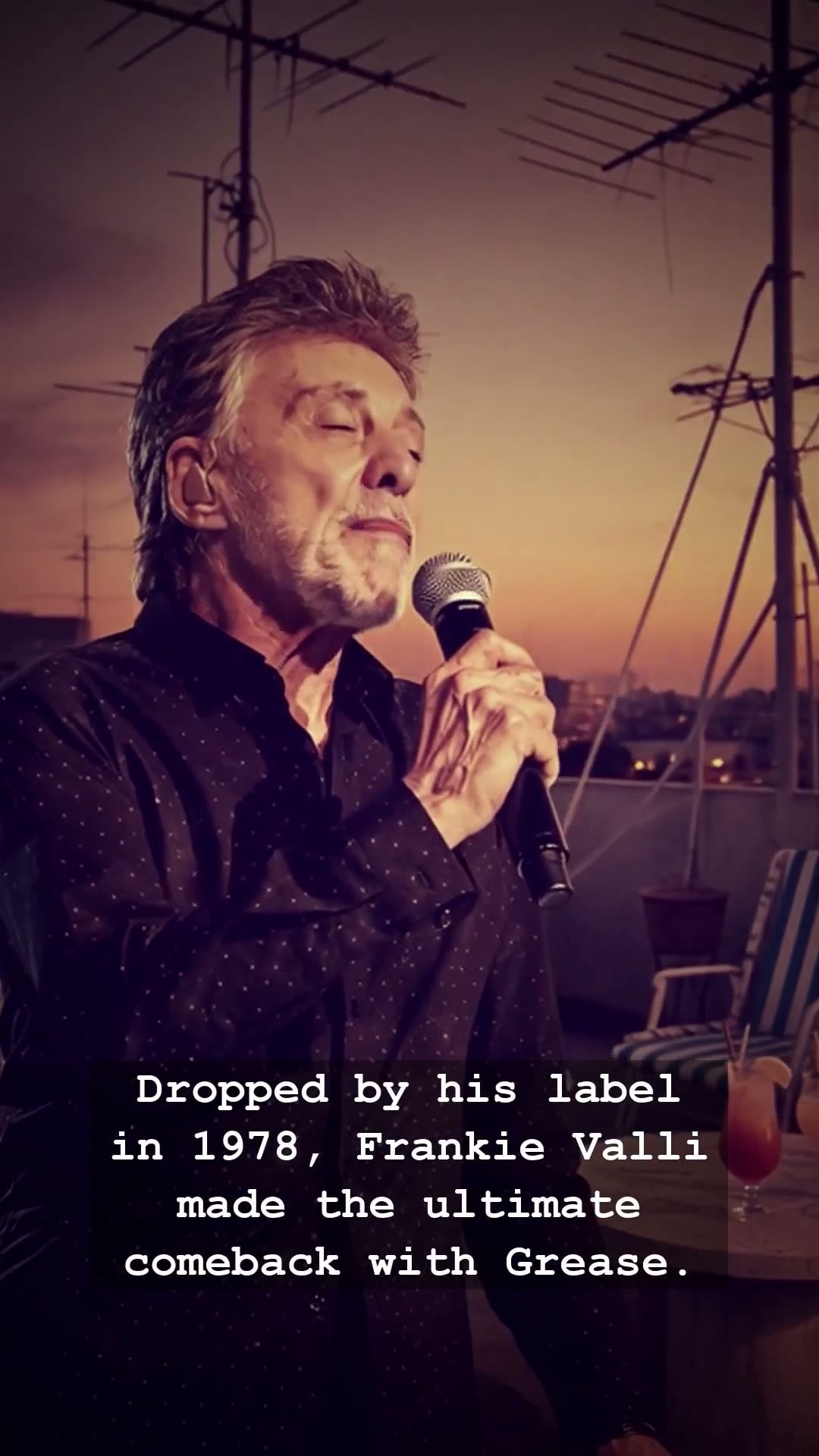
The year was 1978, and for Frankie Valli, the lights were dimming. After decades of ruling the airwaves with his unmistakable falsetto and leading The Four Seasons through the changing tides of the music industry, the unthinkable happened. His record label, feeling that his sound had become a relic of a bygone era, unceremoniously dropped him. At forty-four, an age often considered the twilight of a pop star’s relevance in the late seventies, Frankie Valli found himself standing at a professional crossroads. He was a legend without a home, staring into the uncertainty of a post-disco world that seemed to have no space for his brand of classic pop.
To understand the gravity of this moment, one must look at the landscape of the late seventies. This was the era of the Walkman, the hedonistic pulse of Studio 54, and the transition toward the synthesized soundscapes of the coming decade. Frankie Valli was a man defined by the Jukebox era, a time of doo-wop harmonies and earnest emotional delivery. Being discarded by his label was more than just a business decision; it felt like a final verdict on his cultural impact. He was effectively told that his voice, which had defined a generation, was no longer the sound of the future. The silence that followed his exit from the label was deafening, leaving the singer to ponder if his best days were truly behind him.
Then came the lifeline that would rewrite his legacy. Barry Gibb, the mastermind behind the Bee Gees and an architect of the era’s most iconic disco anthems, had written a song that required a singular, soaring vocal performance. It was a track with a distinct, infectious energy that perfectly encapsulated the late seventies zeitgeist. When Frankie Valli stepped into the studio to record Grease, it was not merely another job; it was a desperate gamble against the odds. The recording process was charged with a palpable tension, as the pressure to deliver a number-one hit for the eponymous blockbuster musical was immense. The result was a miracle of timing and talent.
When the song exploded across the airwaves, it shattered the skepticism of the music industry. The film itself became a cultural phenomenon, forever immortalizing the story of Sandy and Danny, and Frankie Valli found himself back at the top of the Billboard Hot 100. It was the ultimate comeback, a defiant roar from a veteran who refused to be relegated to the history books. That iconic opening line and the smooth, shimmering production served as a reminder that true vocal talent does not expire, no matter how much the musical trends shift around it.
Today, the legacy of Frankie Valli remains a testament to the resilience of artists in the face of shifting cultural tides. His journey from being dropped by a major label to achieving one of the most recognizable number-one hits in history is a masterclass in professional reinvention. We listen to that track now and we are instantly transported back to a time of drive-ins and teenage rebellion, yet it feels entirely timeless. It is the story of a man who held onto his craft when the world tried to move on, proving that a classic voice will always find a way home to the hearts of the audience.