
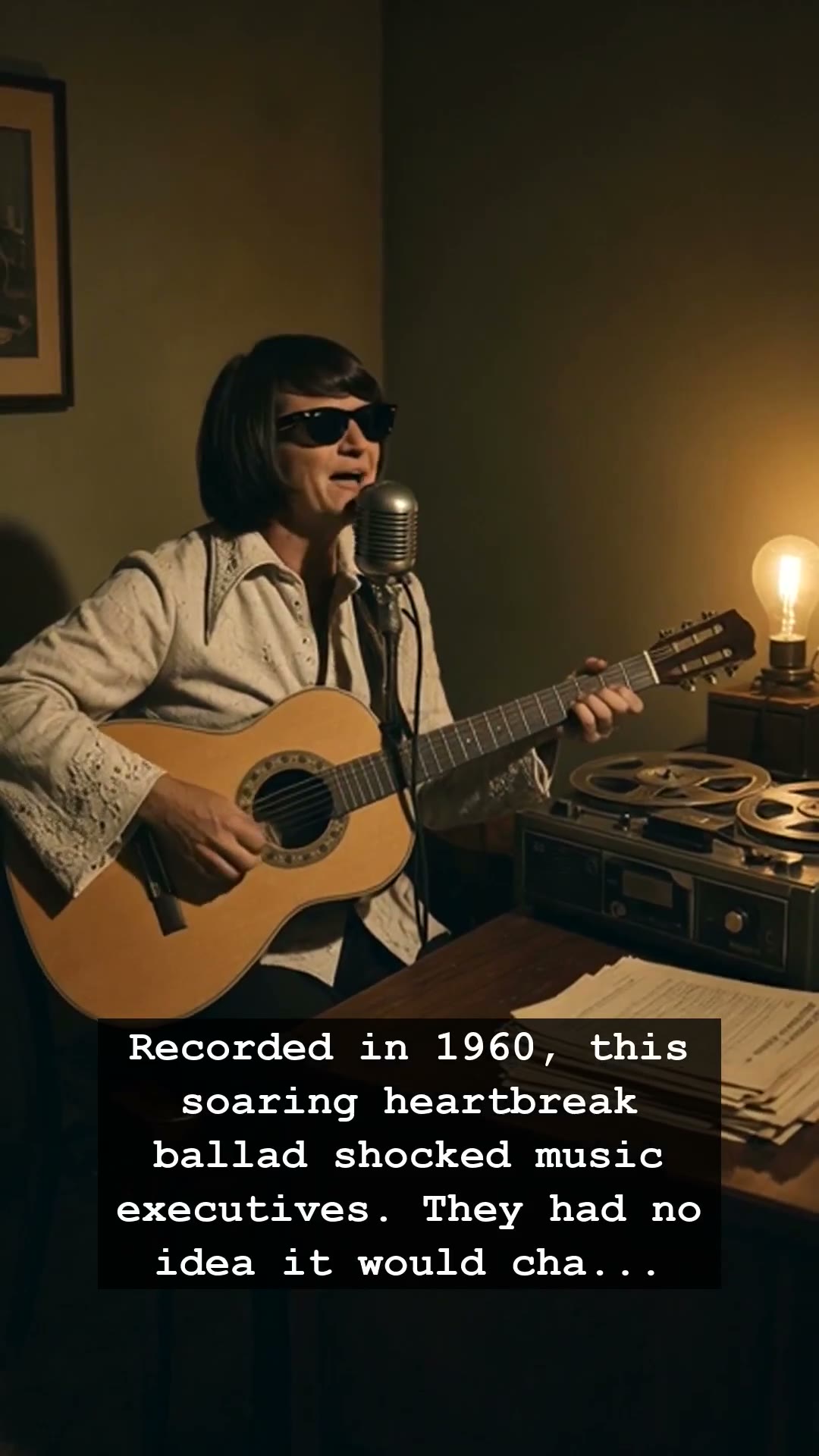
It was 1960, and the air in the Nashville studio was thick with the scent of cheap cigarettes and the rigid expectations of executives who wanted rock and roll to remain predictable, bouncy, and safe. Then, a man with dark sunglasses and a voice that sounded like a velvet shadow stepped up to the microphone. Roy Orbison was about to record a track that would shatter the status quo. The song was Only the Lonely, a soaring, operatic heartbreak ballad that moved at a tempo which defied every radio rule of the era. When the brass at the label first heard the master tape, they were not impressed; they were terrified. They told him it was too long, too sad, and far too strange for the jukebox generation of the mid-century.
Roy Orbison did not care for the industry formula. He carried a heavy, private grief behind those signature dark lenses, a darkness that often mirrored the tragic isolation felt by the teenagers of the early sixties. While the world was dancing to the surf rock rhythms beginning to bubble up from the coast, Roy Orbison was plumbing the depths of human solitude. His voice didn’t just sing a melody; it climbed octaves with a haunting intensity that felt less like a pop song and more like an aria from a shattered heart. He was an outsider in his own industry, a man who preferred the lonely glow of a late-night streetlamp to the bright, artificial lights of the television studio.
That recording session would eventually change the landscape of rock and roll forever. By stripping away the upbeat bravado of his contemporaries, Roy Orbison tapped into a raw, visceral loneliness that resonated with millions of listeners. It was the soundtrack to a thousand broken hearts, the song playing in the background as people sat by their rotary phones waiting for a call that would never come. This was the era of the Walkman’s distant future, yet in 1960, the intimacy of the record player was enough to make you feel like Roy Orbison was singing that sorrow directly into your living room.
Looking back at his career, one cannot help but notice the profound shadow that followed him. Despite the massive commercial success of his hits, Roy Orbison often lived in the periphery of the spotlight, a phantom figure whose personal tragedies seemed to seep into every lyric he wrote. His ability to weave pain into a beautiful, symphonic arrangement made him a pioneer of the power ballad long before the genre had a name. He proved that rock and roll could be sophisticated, dramatic, and deeply vulnerable without losing its soul.
Even today, in an age of over-produced digital tracks, the crystalline quality of his voice remains a gold standard. When you listen to the way he builds the tension in his ballads, you are hearing a master craftsman who refused to compromise his vision for the sake of a quick hit. Roy Orbison was not just a singer; he was the architect of our collective nostalgia. Do you remember where you were when that soaring melody first found its way into your heart? Perhaps it is time to put on the record once more and let that lonely, beautiful voice guide you through the night.