
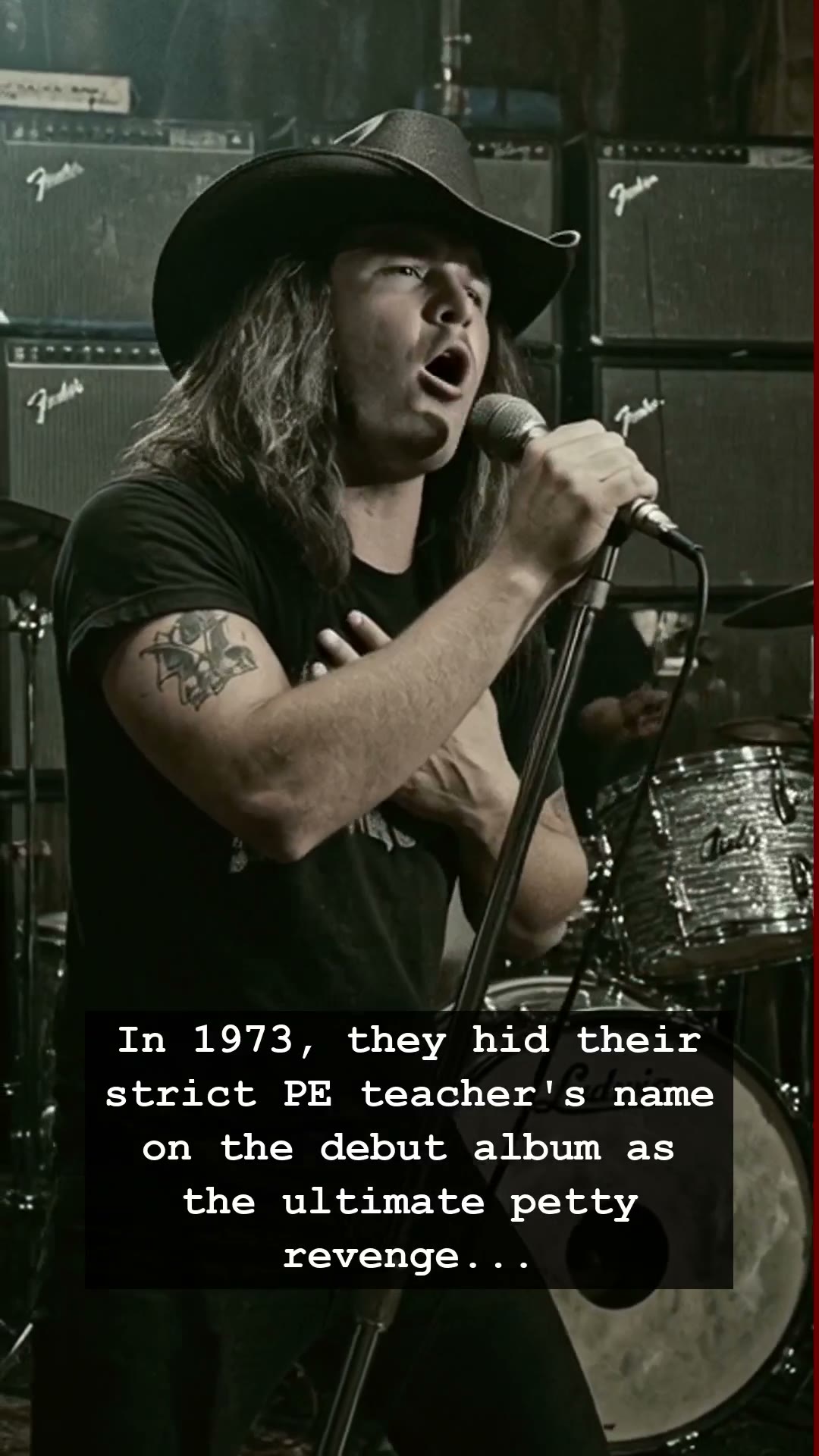
In the sweltering heat of the American South in the early 1970s, long before they became the architects of a permanent Southern Rock identity, the members of Lynyrd Skynyrd were just a group of restless teenagers trapped in the rigid hallways of Robert E. Lee High School in Jacksonville, Florida. Life for the band members was a constant tug-of-war between their burning musical ambitions and the suffocating discipline imposed by their faculty. Among these authority figures, one man stood out for his relentless obsession with grooming standards and physical education protocols: Leonard Skinner. He was the kind of teacher who thrived on the power of the whistle and the strict enforcement of dress codes, making life particularly difficult for boys with long hair and rock-and-roll dreams.
By 1973, when the band was finally ready to unleash their debut studio album, Pronounced ‘Lĕh-‘nérd ‘Skin-‘nérd, they decided to strike back with a legendary act of passive-aggression that has echoed through the decades. They took the name of their most feared tormentor, Leonard Skinner, and morphed it into a phonetic spelling that would grace the cover of their record forever. It was the ultimate petty revenge, hidden in plain sight, ensuring that the man who once mocked their appearance would be the very name cemented into the annals of American music history. It was a bold, defiant statement that captured the rebellious spirit of the Southern Rock movement perfectly.
The irony was delicious and profound. As the album began to climb the charts, propelled by the raw, triple-guitar attack that would become their signature, Leonard Skinner himself found his name being shouted in arenas across the country. From the smoky clubs where they cut their teeth to the massive festival stages that defined the 1970s, the name Lynyrd Skynyrd became synonymous with freedom, grit, and the unapologetic pride of the South. The teacher who once tried to curb their individuality had inadvertently become the permanent brand identity for one of the greatest bands to ever pick up an instrument.
This story is more than just a piece of band trivia; it is a time capsule of an era when rock music was the primary outlet for youth frustration against the status quo. In the days of the Jukebox and the spinning vinyl, Lynyrd Skynyrd represented the voice of the working class, a band that carried their scars and their grievances directly onto the vinyl grooves. Their music was a testament to the fact that talent and tenacity could overcome any obstacle, even the small-minded authority figures of a public high school system.
Today, listening to the crackle of their early recordings evokes a powerful sense of nostalgia for a time when music felt dangerous and authentic. The legacy of Lynyrd Skynyrd remains untarnished by the years, serving as a reminder that the best stories are often the ones born from a sense of spite and a desire to be heard. Next time you spin their debut, think of the smirk on the band members’ faces as they immortalized their old PE teacher, turning a grudge into a masterpiece that defined a generation. It is the kind of rock and roll mythos that keeps the spirit of the seventies alive, forever etched in our collective consciousness.