
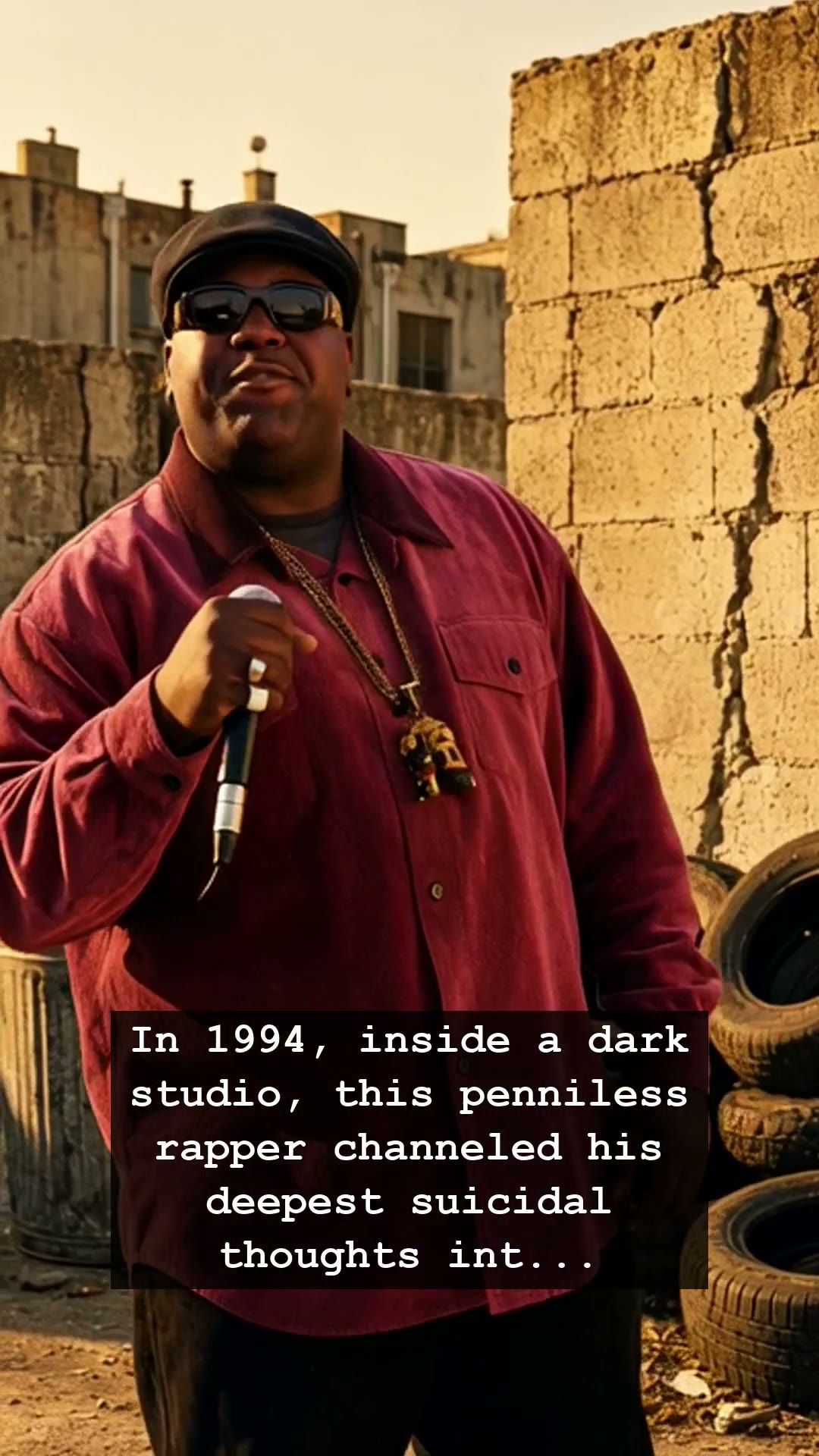
In 1994, inside a cramped, smoke-filled studio in New York City, a man who would soon be crowned the king of hip-hop was battling ghosts of his own making. Christopher Wallace, better known to the world as The Notorious B.I.G., was not yet the superstar who would dominate the charts. He was a penniless kid from Bed-Stuy, burdened by the crushing weight of poverty and an internal darkness that threatened to consume him entirely. While the rest of the world was catching the tail end of the golden era of boom-bap, Biggie was capturing something far more visceral: his own mortality. This was the raw, unfiltered genesis of Suicidal Thoughts, a track that would forever change the landscape of hip-hop music.
Most listeners remember the hit singles that defined the era, but Suicidal Thoughts stood apart as a haunting confession. As the beat pulsed with a low, ominous bassline, Biggie poured his darkest depression and genuine suicidal ideation into the microphone. It was a terrifyingly intimate moment, one that felt like a breach of privacy rather than a studio recording. For those who grew up during the nineties, watching the rise of Bad Boy Records was a cultural phenomenon, but beneath the flashy suits and the allure of Studio 54-style excess, the reality was often grim. The song was a stark departure from the party anthems of the time, anchoring itself in the harsh, concrete truths of street life and the mental toll of surviving it.
The genius of The Notorious B.I.G. lay in his ability to translate pain into poetry. Even with the impending shadow of the East Coast versus West Coast rivalry that would later tear the industry apart, Biggie remained a storyteller of unparalleled depth. When he stepped into the booth, he shed the persona of the charismatic hustler and left himself completely exposed. This track wasn’t just a song; it was a psychological autopsy of a young man caught between his desperate past and a future that felt increasingly like a trap. The chilling sincerity of his delivery still sends shivers down the spine of anyone who listens to his debut album, Ready to Die, today.
Looking back, it is impossible to divorce the music from the atmosphere of 1994. It was a time when the Walkman was our portal to the soul of New York, and every lyrical bar felt like a newspaper headline delivered by the street. The Notorious B.I.G. managed to articulate the existential dread of a generation that felt trapped in the cycle of fame and violence. His words resonated because they weren’t manufactured for radio play; they were born from a place of absolute, suffocating truth. Even now, decades later, the emotional weight of that recording remains a pillar of hip-hop history.
Today, we look back at the legacy of The Notorious B.I.G. not just as a pioneer of rhythm and rhyme, but as a tragic poet whose life ended far too soon. His ability to confront his inner demons in such a public forum gave voice to many who felt equally hopeless. As we listen to those haunting opening lines, we are reminded that music is most powerful when it stops being a product and starts being a confession. Does his legacy still haunt you, or is it the raw humanity behind the icon that keeps you coming back?