
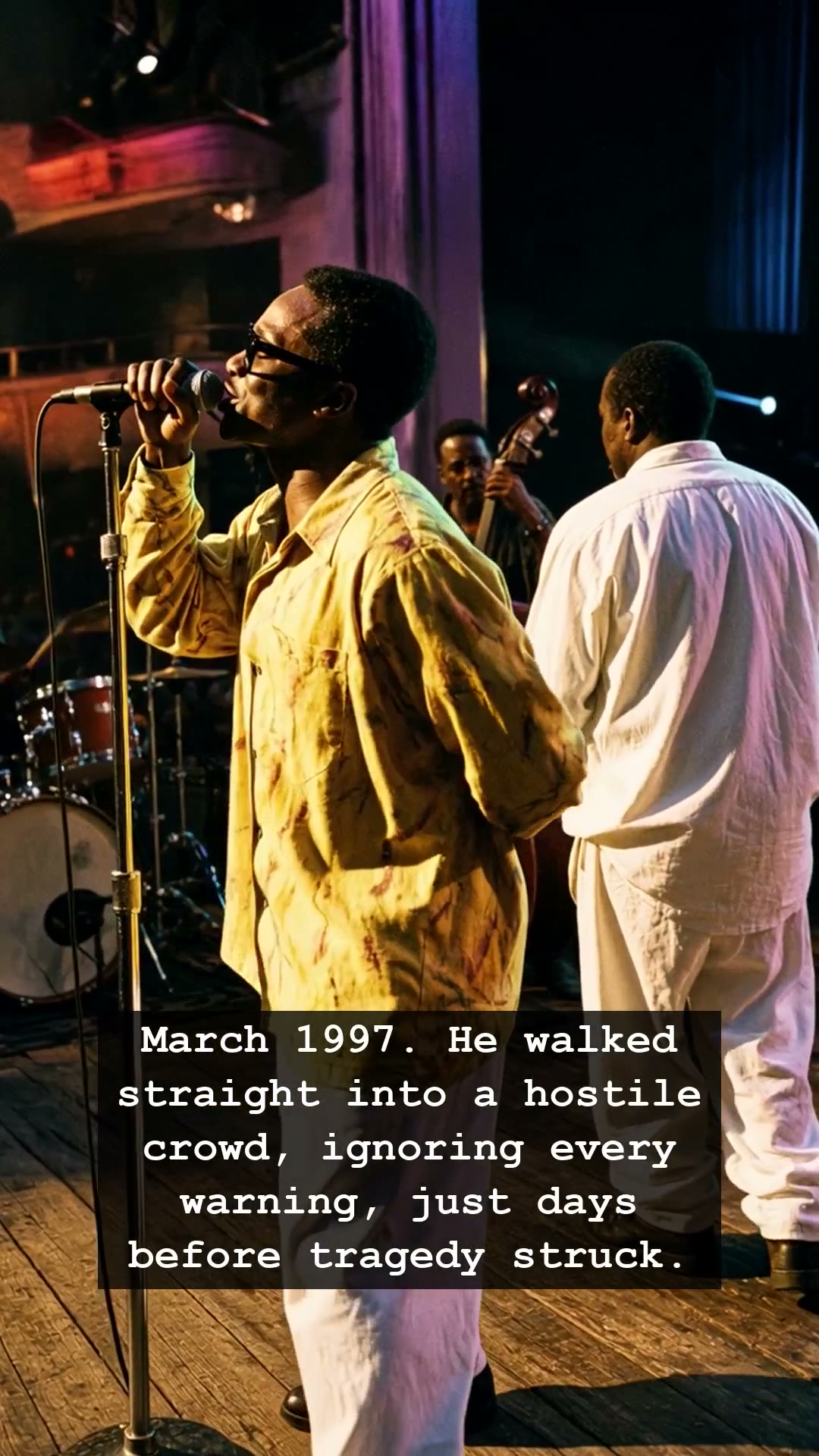
March 1997 remains a haunting chapter in music history, a time when the glitz of the entertainment industry was violently punctured by a bullet. Just days before the world lost a lyrical titan, Christopher Wallace, better known to the globe as The Notorious B.I.G., made a choice that still haunts his inner circle. Ignoring every frantic warning from his security team and label executives, he walked into a Los Angeles arena filled with a palpable, icy hostility. The East Coast versus West Coast rivalry was not just a narrative for the press; it was a powder keg ready to ignite, and Biggie Smalls stepped right into the center of the flames.
To understand the gravity of that moment, one must look back at the era. This was the time of the Walkman and the burgeoning influence of MTV, where rap music had shifted from a subculture into the dominant pulse of American youth. The Notorious B.I.G. was at the absolute peak of his craft, a king of storytelling whose voice carried the weight of Brooklyn in every syllable. Yet, the fame that brought him platinum records also brought him into a crossfire of ego, territory, and misguided loyalty. The tension between Bad Boy Records and Death Row Records had reached a fever pitch, creating an atmosphere where the simple act of appearing in a rival city felt less like a promotional trip and more like a tactical error.
Witnesses who were present in that Los Angeles arena remember the tension as suffocating. The Notorious B.I.G. moved with a calm, almost defiant confidence, seemingly unfazed by the murmurs of disapproval and the cold stares from the crowd. He was a man who had built an empire from the street corners of Bedford-Stuyvesant, and his pride would not allow him to hide, even when his intuition surely told him that the climate was turning toxic. It was the hubris of a legend, a belief that his presence was greater than the brewing storm of violence that defined that dark mid-nineties period.
The tragedy that followed just days later silenced one of the greatest poets of the hip-hop generation. For those of us who grew up spinning his records on heavy vinyl or fading cassette tapes, the loss of The Notorious B.I.G. felt personal. It was a sobering reminder that even the most gifted stars are not immune to the chaotic friction of their environments. The industry that had celebrated his rise to prominence suddenly stood still, paralyzed by the realization that the music had finally cost a life. It was a breaking point that forced hip-hop to look into the mirror and face the consequences of the feud that had consumed it.
Today, we look back at the legacy of The Notorious B.I.G. not just for his chart-topping hits or his smooth flow, but for the human tragedy that remains etched in our collective memory. His life serves as a poignant, cautionary tale about the fragile line between untouchable fame and human vulnerability. As the echoes of his rhymes continue to play in clubs and car radios across the country, we are reminded of the heavy price paid during a time when music felt like it held the power to change the world, for better or for worse. Rest easy, Biggie, your story remains the heartbeat of hip-hop.