
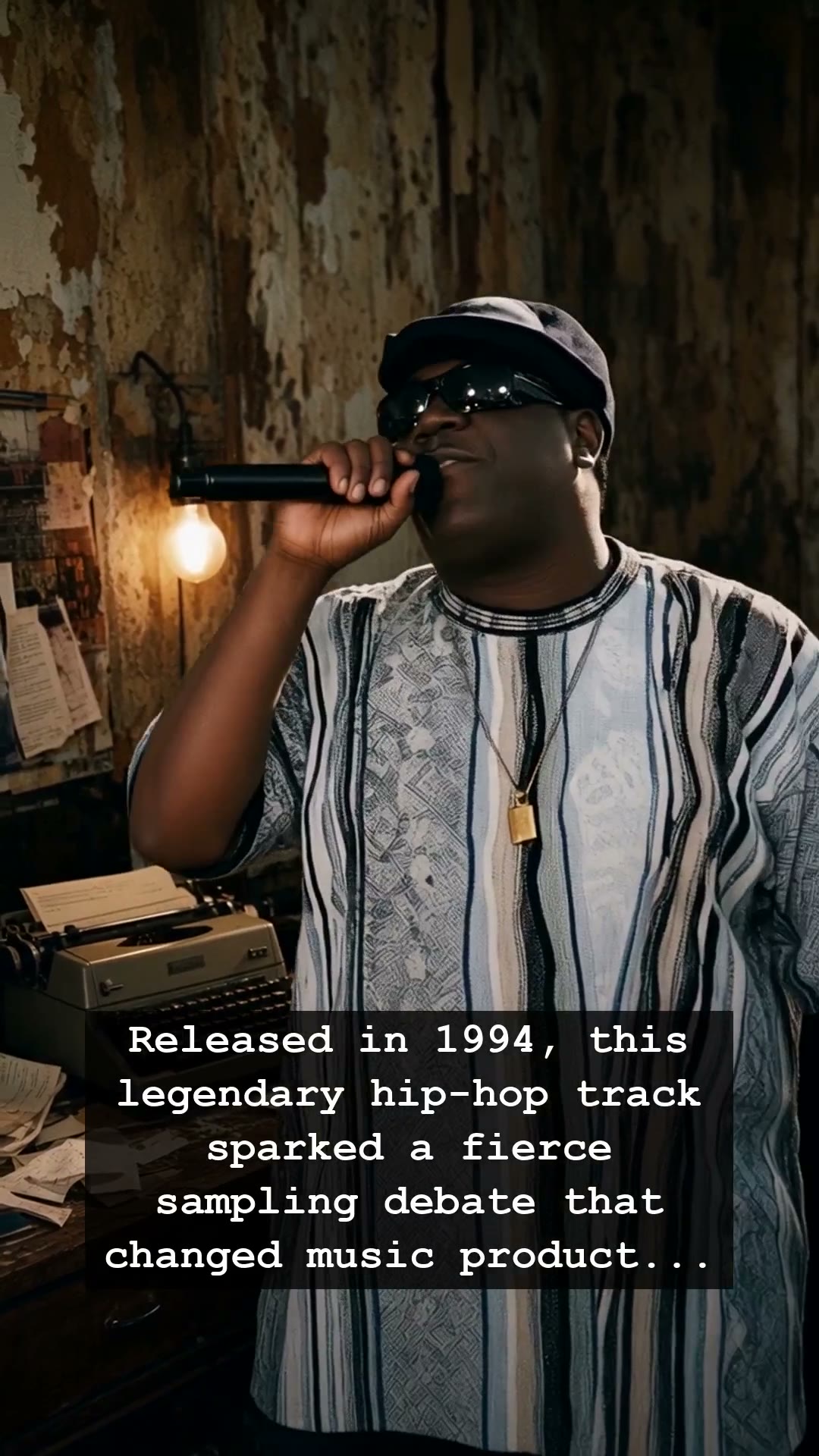
The year was 1994, and the airwaves of New York were thick with the grimy, unfiltered reality of Brooklyn street life. When The Notorious B.I.G. dropped his debut masterpiece, Ready to Die, the world was not just introduced to a new rapper; they were hearing the birth of a legend who would define the Golden Era of Hip-Hop. Yet, behind the heavy basslines and the smooth, effortless flow of Biggie Smalls lay a dark, simmering tension. While listeners were lost in the rhythmic brilliance of his tracks, a silent, legal war was brewing in the boardrooms, ignited by the very jazz samples that gave his music its soulful, haunting texture.
At the heart of this controversy was the aggressive hunt for the perfect sound. Producers in the mid-nineties were scavengers of the vinyl era, digging through crates of forgotten jazz and soul records to find the loops that would become the backbone of modern rap. The Notorious B.I.G. became the epicenter of this shift when his production team faced intense scrutiny over uncleared samples. This was long before the digital age made tracking every millisecond of audio simple, back when artists operated in a legal gray area that often ended in explosive lawsuits. The industry was forced to reckon with the ethics of sampling, forever altering how hip-hop producers approached their craft.
Walking down memory lane, it is easy to recall the sensation of popping a cassette into a Walkman and hearing the booming voice of The Notorious B.I.G. for the first time. The music felt dangerous and authentic, a stark contrast to the polished pop tunes that dominated the airwaves before MTV began its complete takeover of music culture. Biggie brought a cinematic quality to his storytelling, turning his life’s struggles into a visceral experience for the listener. However, the legal battles over his tracks served as a sobering reminder of the dark side of fame, where artistic vision frequently clashed with the rigid machinery of copyright law.
Beyond the studio drama, the influence of The Notorious B.I.G. remains unparalleled. He stood at the center of the coastal rivalry that would eventually define the late nineties, yet his artistry transcended geography. The grit of his lyrics acted as a mirror, reflecting the chaotic environment of the nineties while pushing the technical boundaries of what a rap record could achieve. Even today, the samples that once caused such fierce debate are recognized as ingenious bridges between the sophisticated jazz of the past and the raw energy of urban youth culture, a testament to his creative genius.
Looking back, the legacy of The Notorious B.I.G. is not just found in the records he sold, but in the evolution of music production itself. The firestorm sparked by his early tracks forced the industry to mature, leading to the structured licensing models we see today. His voice remains a haunting reminder of an era that was as volatile as it was innovative. Do you remember the first time you heard his flow cut through the noise, and did you realize you were witnessing the moment history shifted?