
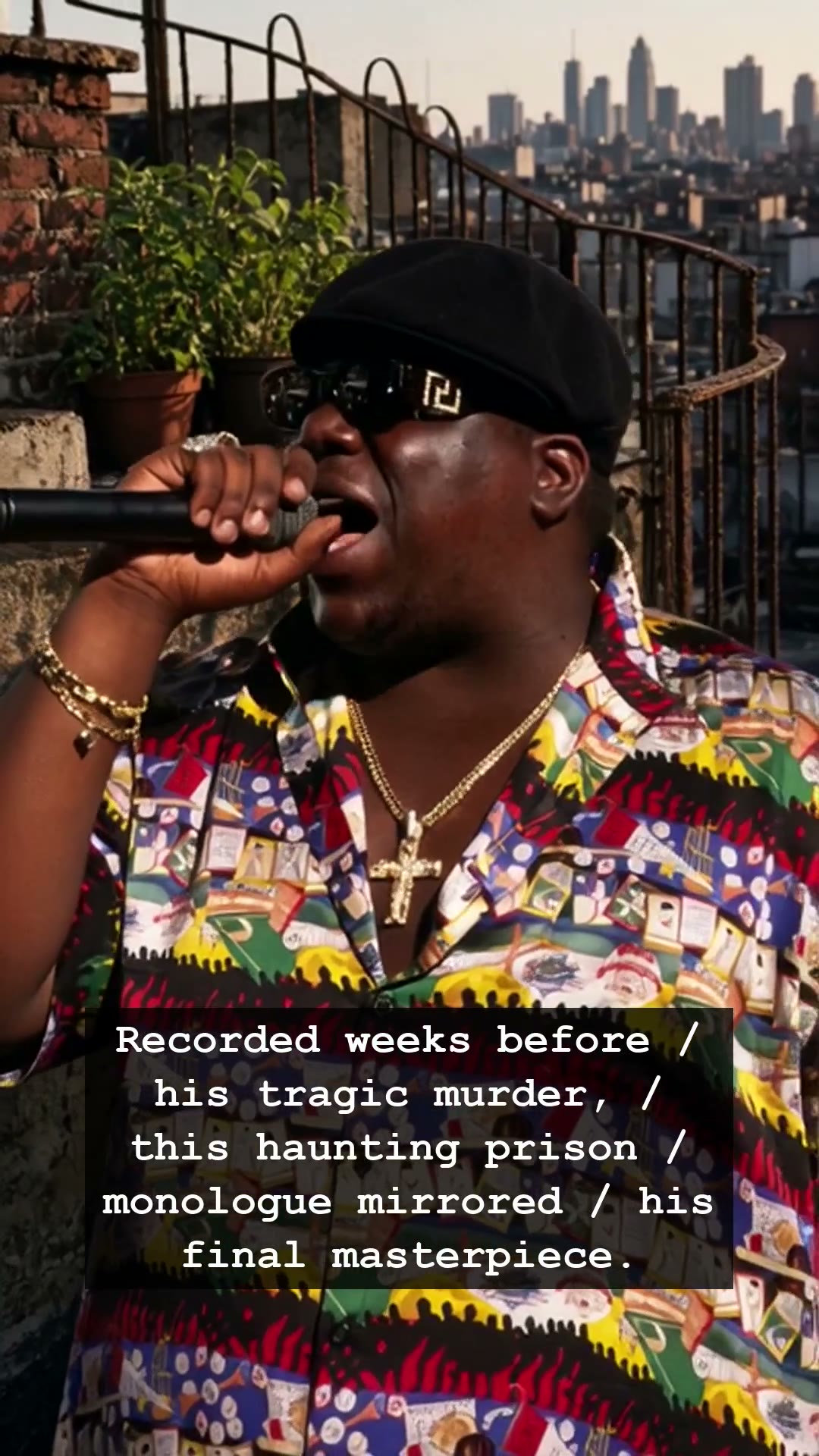
It is a peculiar, haunting sensation to hear a man speak his own eulogy before his heart has even stopped beating. In the neon-soaked haze of the mid-1990s, where the air was thick with the scent of cheap perfume and the tension of a looming coastal war, Christopher Wallace—better known to the world as The Notorious B.I.G.—was the undisputed King of New York. Yet, just weeks before his life was extinguished in a hail of gunfire on a Los Angeles street, Biggie Smalls stepped into the recording booth to deliver a monologue that still sends shivers down the spines of hip-hop historians today. It was a dark, prison-themed narrative that felt less like a creative exercise and more like a grim, prophetic premonition of his own impending departure from this world.
To understand the gravity of that moment, you have to transport yourself back to the era of the Walkman and the unfiltered grit of the streets. The hip-hop landscape was fracturing, caught in the bitter crossfire of the East versus West Coast rivalry that defined the decade. The Notorious B.I.G. stood at the center of this storm, a massive talent burdened by the weight of expectations and the encroaching shadow of a lifestyle that promised everything but guaranteed nothing. His final masterpiece, Life After Death, was already brewing, but the studio walls seemed to trap something darker during those last sessions. The prison monologue he recorded wasn’t just a track; it was a psychological confession, an eerie reflection of a soul caught between fame and mortality.
There is a vivid, tragic irony in how The Notorious B.I.G. framed his own narrative. His lyrical prowess was unmatched, turning gritty reality into poetic gold, but in those final weeks, the lines between fiction and fate blurred. The recording captures a voice that sounds weary, reflective, and perhaps deeply aware of the target painted on his back. While the mainstream media was obsessed with chart positions and the glitz of award shows, Biggie was confronting the very real, claustrophobic reality of confinement—even if he was physically walking free. It remains one of the most unsettling moments in the history of rap, a chilling piece of audio that serves as a bridge to his final goodbye.
Why does this haunt us so many years later? Because, even amidst the tragedy of his murder, The Notorious B.I.G. remains a titan of storytelling. When we listen to those tapes now, we aren’t just hearing a rapper; we are hearing a man staring into the abyss and realizing it has finally stared back. It adds a layer of sorrow to every beat and every rhyme he left behind. Even now, as the nostalgia for that golden era of hip-hop deepens, his words serve as a permanent reminder of how quickly the lights can go out. As you listen to the echo of his final recorded thoughts, you can’t help but feel that Biggie knew exactly how the story would end.