
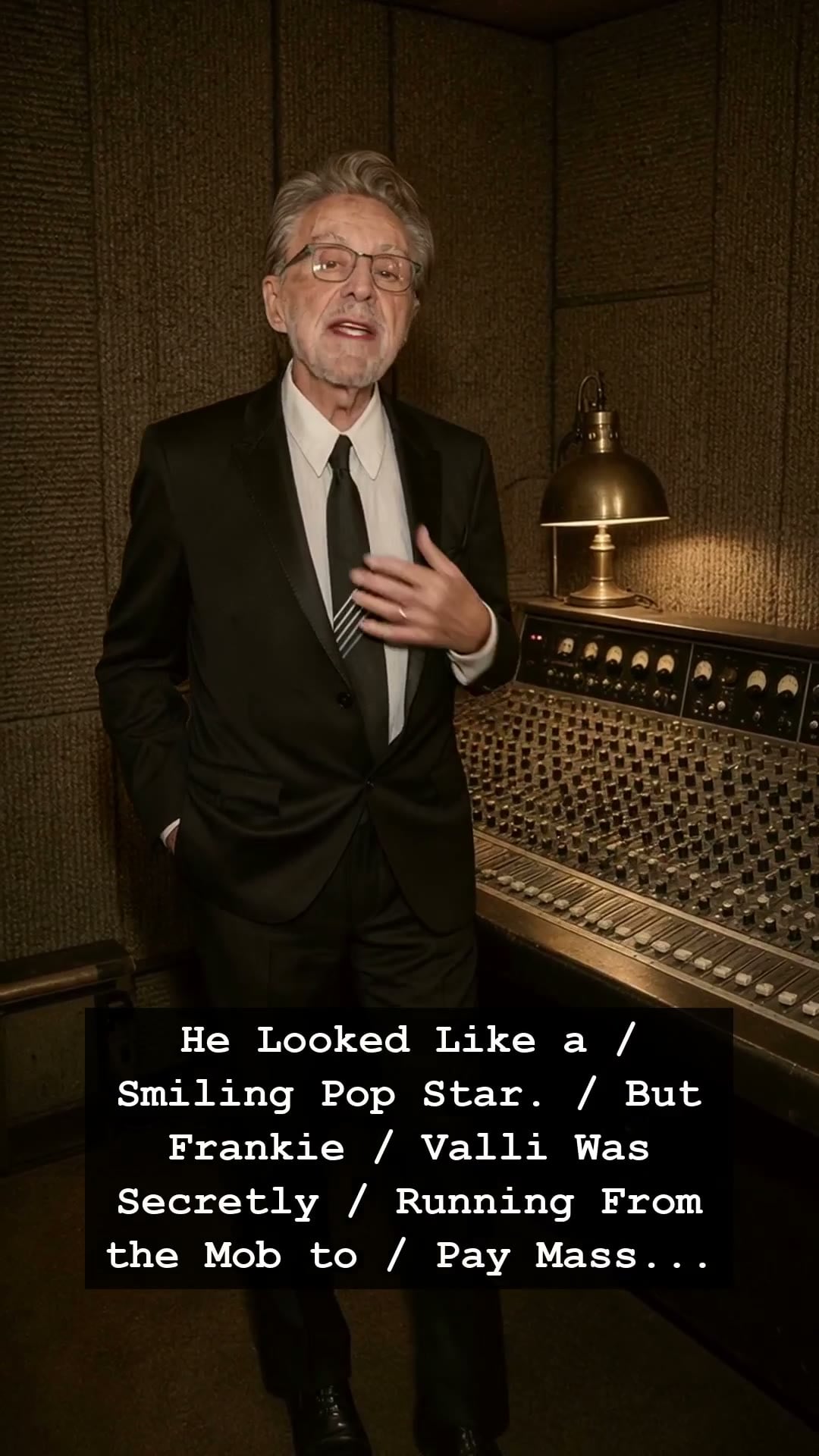
To the fans listening to the crackle of a jukebox in the early 1960s, Frankie Valli was the golden boy of American pop. With that impossibly high, angelic falsetto that could pierce through the smoke of a crowded lounge, he was the face of success. From his polished suits to that signature charming smile, Frankie Valli looked like a man who had the world at his feet. But behind the glitz of the stage lights and the record-breaking charts, there was a reality that felt more like a scene from a gritty crime thriller than a pop music fairy tale. While radio stations played his hits, Frankie Valli was fighting a silent, terrifying battle to keep his family safe from the clutches of organized crime.
The shadows behind the success were cast long and deep. In an era where the music industry often intertwined with dangerous characters, the pressure on Frankie Valli was suffocating. He was not just performing to capture the hearts of teenagers; he was working off a crushing debt owed to the mob—a debt that threatened far more than his career. Every relentless night on the road, every grueling recording session, and every sold-out performance was another step toward paying his dues and ensuring the safety of those he loved. The smiling pop star the public adored was, in private, a man carrying the weight of a life-or-death ultimatum on his shoulders.
This era of American music, defined by the rise of doo-wop and the evolution of the pop star, masked these struggles with infectious melodies and polished production. People flocked to the dance floors, finding escape in the rhythm, never imagining that the voice filling the room belonged to a man desperately trying to outrun a past that refused to stay buried. Frankie Valli possessed a grit that far exceeded the lyrics of his songs. He lived in a world of high stakes, where a single wrong move could end his life. It is this duality that makes the music of the 1960s feel so hauntingly resonant today; we aren’t just listening to melodies, we are hearing the heartbeat of a survivor.
The tension he lived with never bled into his performance, which remains a testament to his raw talent and discipline. While his peers were chasing fame and fortune, Frankie Valli was mastering the art of the poker face, singing songs of love and heartbreak while his own life was balanced on a razor’s edge. This hidden history changes how we perceive the classic soundscape of the mid-century; it adds a layer of sorrow and urgency to those high notes we once thought were purely about romance.
Today, as we look back at the golden age of American music, Frankie Valli remains a symbol of enduring resilience. His story serves as a reminder that the legends we celebrate often carried burdens the public never saw. Whenever you hear that unmistakable voice today, remember the man behind the song, who kept the music playing even when his world was collapsing. Behind the records and the fame lies a tale of a man who traded his peace of mind to save his life, leaving us with a legacy of sound that echoes louder than any secret ever could.