
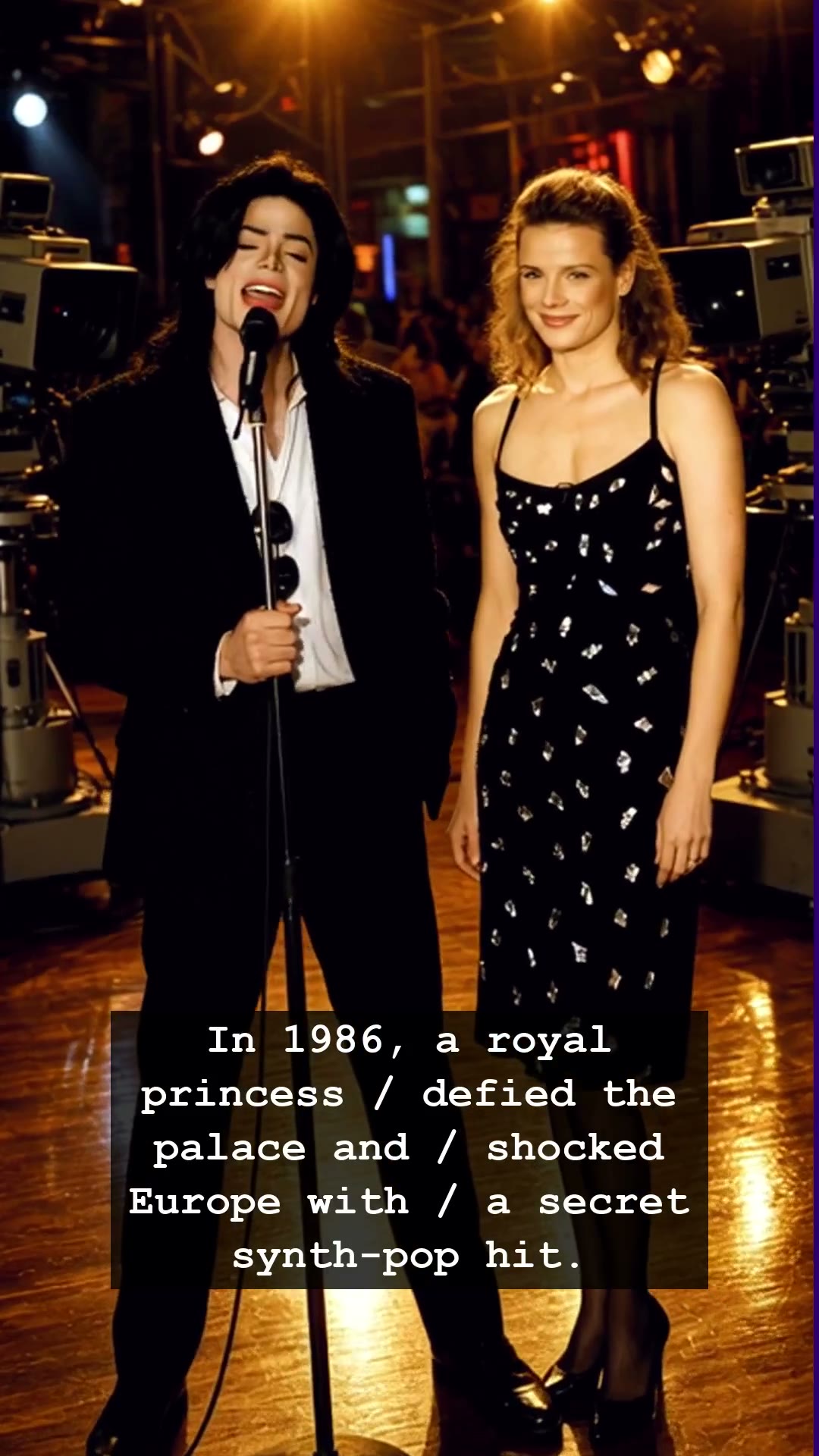
In the gilded halls of the Grimaldi palace, the expectations were as rigid as the crown jewels. But in 1986, the world was changing. As the era of the Walkman and neon-drenched MTV videos began to redefine global pop culture, a quiet rebellion was brewing within European royalty. Princess Stephanie of Monaco, the youngest daughter of Prince Rainier III and the legendary Grace Kelly, decided she would not be defined by royal decrees or protocol. Instead, she stepped away from the velvet curtains of the palace and into the electric pulse of a recording studio, delivering a synth-pop anthem that would leave the aristocracy breathless and the charts reeling.
Her debut single, Ouragan, which was also released in English as Irresistible, became an overnight sensation. It was a sleek, pulsating track dripping with the signature glossy production of the mid-eighties. While the European press clamored for details about royal weddings and state affairs, Princess Stephanie was busy selling millions of copies, proving that she had a natural ear for the infectious, melancholic melodies that defined the decade. It was a daring move—the daughter of a Hollywood icon turning into a chart-topping pop star—and it effectively shattered the illusion that a princess had to remain a mere figurehead.
For those of us who remember the mid-eighties, the sound of Stephanie’s music feels like a time capsule. It captures the spirit of an era where synthetic beats could make the world feel infinite. Behind the glitz and the synthesizers, however, lay a deeper narrative of a young woman attempting to find her own voice amidst the crushing weight of public scrutiny. The palace was not particularly pleased with her musical dalliance, but the public was fascinated. The contrast between her royal bloodline and the provocative imagery of her music videos created a tension that made her one of the most talked-about figures of the late 20th century.
There was an undeniable raw vulnerability in how Princess Stephanie approached her brief but explosive music career. She was never just a novelty act; she was a woman seizing her independence in the only way she knew how: through art. The success of her music remains a fascinating footnote in pop history, a collision of the old-world nobility and the burgeoning, rebellious spirit of the synth-pop revolution. It serves as a stark reminder of a time when the lines between celebrity culture and true high society were being irrevocably blurred.
Today, listening to her tracks brings back the scent of hairspray and the flicker of neon lights in a decade that refused to look back. Princess Stephanie of Monaco taught a generation that even the most protected individuals crave the stage. Her musical rebellion remains a testament to the fact that identity is not inherited, but forged in the fires of personal risk. As we look back through the lens of history, we see that her synth-pop experiment wasn’t just a shock—it was a bold statement of liberation that still resonates with anyone who has ever dreamed of breaking the rules.