
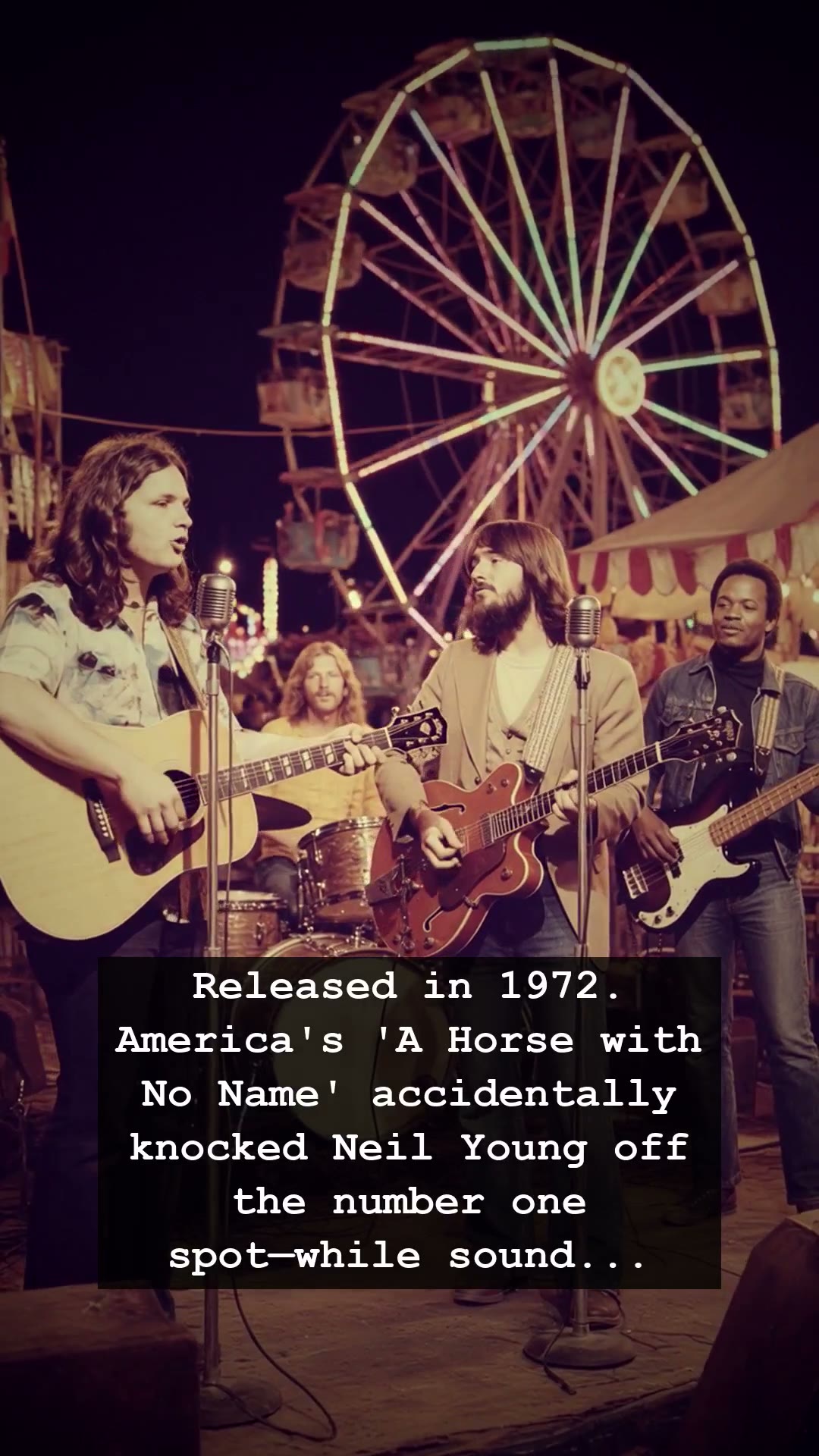
In the golden era of 1972, the airwaves were dominated by the introspective, folk-rock sounds of icon Neil Young. When a mysterious, haunting melody began climbing the charts, millions of listeners were convinced they were hearing the latest masterpiece from the Canadian legend. The song was A Horse with No Name, a track that felt like a desert sunset captured in audio. Yet, the voice behind the track was not Neil Young, but a young, relatively unknown trio called America. In one of the most ironic twists in music history, this newcomer band accidentally knocked the very legend they mimicked off the number one spot, sparking a conversation about influence that lingers decades later.
The members of the band America—Dewey Bunnell, Dan Peek, and Gerry Beckley—were essentially transplants, military brats living in England who found their identity through the lens of American folk. When they crafted the iconic, steady rhythm of A Horse with No Name, they were not trying to deceive the public. Instead, they were channeling the sonic atmosphere of the American West. The song’s distinctive acoustic guitar riff and melancholic, breathy vocals hit the radio at a time when the world was moving away from the chaotic experiments of the late sixties and craving a return to storytelling. The irony of the situation was palpable; the music industry, usually obsessed with uniqueness, had been completely fooled by a group of unknowns.
Neil Young, famously sharp-tongued and protective of his craft, did not take the comparison lightly at the time. To him, the song sounded like an imitation, a musical shadow that borrowed too heavily from his own stylistic fingerprints. The controversy became a hot topic in the music press, creating a classic rock drama that pitted the perceived original against the usurper. It was a moment of peak tension, where the boundary between artistic inspiration and calculated copycatting blurred. For listeners back then, reaching for their bulky cassette decks or tuning in to the radio, it was an irresistible scandal that added a layer of mystery to the song’s desert-bound lyrics.
Despite the drama, A Horse with No Name became an undeniable cultural anchor. It captured the essence of a specific moment in the seventies, finding its way into the jukeboxes of dingy bars and the record collections of suburban homes alike. It proved that in the fast-paced, cutthroat world of the music industry, timing is everything. While the band America would go on to have a storied career of their own, they would forever be tied to that initial, lightning-in-a-bottle moment where they briefly became the most famous mystery in pop music history.
Today, the song remains a haunting staple, a relic of an era when radio was the primary gatekeeper of taste. It reminds us of a time when you could truly be fooled by a melody and when a band could emerge from the shadows to rewrite the charts overnight. Whether you are a devotee of Neil Young or a fan of the band America, the story of this 1972 hit serves as a bittersweet reminder of how easily the lines between legend and newcomer can blur, leaving behind a legacy that continues to resonate with every listener who appreciates the art of the perfect, misunderstood hook.